
Understanding the Role of the Designated Survivor During the State of the Union Address
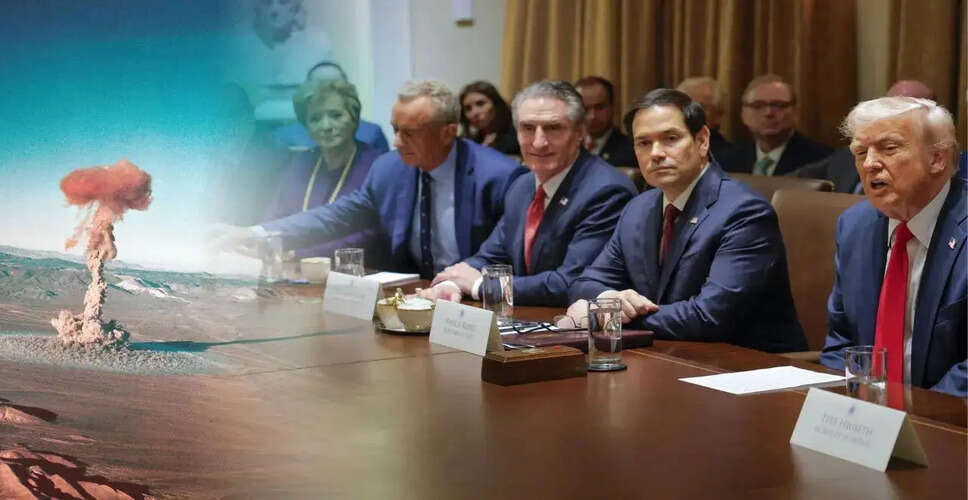
The Importance of the Designated Survivor
As President Donald Trump prepares to deliver his State of the Union address on Tuesday evening, a significant aspect of the event involves the presence of nearly all federal leaders at the Capitol. However, one official will intentionally be absent, serving as the designated survivor. This precaution is part of a broader strategy to ensure continuity in government operations.
The designated survivor is a Cabinet-level official who is in the line of presidential succession but remains away from the main gathering. This individual is relocated to a secure, undisclosed location during the address. The rationale behind this practice is straightforward: in the event of a catastrophic incident that incapacitates the President, Vice President, and congressional leaders, a constitutionally eligible individual will be available to assume the presidency.
While the US Constitution does not mandate the practice of having a designated survivor, it originated during the Cold War era, driven by concerns over the potential for a nuclear attack that could target the entire federal leadership. Over the years, this precaution has become a standard protocol for significant events where all branches of government convene.
Defining the Designated Survivor
What Is A Designated Survivor?
The concept of a designated survivor is closely linked to the presidential line of succession. To qualify for the presidency, the individual must meet specific constitutional criteria, including being at least 35 years old and a natural-born citizen of the United States. Typically, a member of the President’s Cabinet is chosen, as they follow the Vice President, Speaker of the House, and Senate leaders in the order of succession.
There is no formalized public process for selecting the designated survivor. In practice, the decision is made by the President or the Chief of Staff, and the identity of the designated survivor is usually kept confidential until shortly before or even after the State of the Union address begins. For instance, during last year's joint congressional address, Veterans Affairs Secretary Doug Collins was the designated survivor, although this role was not prominently featured during the event, highlighting how routine yet crucial this safeguard has become. As for the upcoming State of the Union in 2026, the White House has yet to announce the selected individual.
Congressional Designated Survivors
Why Congress Picks Its Own Designated Survivors
In addition to the executive branch, congressional leaders have also begun to designate lawmakers to remain absent during significant events. This practice gained momentum following the September 11 attacks in 2001, prompting lawmakers to reevaluate the vulnerabilities in federal continuity planning. Unlike the executive designated survivors, congressional representatives do not have the authority to assume the presidency but ensure that the legislative branch can continue functioning.
For the upcoming State of the Union in 2026, California Representative Mike Thompson has been appointed by House Minority Leader Hakeem Jeffries to serve as the Democrats’ designated survivor. Thompson will observe the address from a secure location rather than the House floor, and his office has indicated that he has fulfilled this role for the Democrats multiple times since 2020.
The existence of designated survivors underscores a serious reality: national leadership must be prepared for worst-case scenarios, even during ceremonial occasions. While the State of the Union aims to convey stability and confidence, the quiet absence of one Cabinet member serves as a reminder of the ongoing awareness of potential vulnerabilities. As Trump delivers his address, the continuity planning will be taking place discreetly behind the scenes.