
Understanding the Earnings of Luxury Buses: Costs and Profits Explained

The Rise of Luxury Bus Travel
Traveling by luxury buses has gained immense popularity in the country, especially for long-distance journeys. AC sleeper buses, Volvo models, and multi-axle buses are particularly favored for their comfort. The business surrounding these buses is substantial. However, have you ever wondered how much a luxury bus earns daily, the expenses involved in its operation, and the profit that remains for the owner after all costs?
Factors Influencing Earnings
The earnings of a luxury bus depend on various factors such as the route, ticket prices, passenger count, distance traveled, and the type of bus. Buses that maintain high occupancy rates can generate significant revenue, while those with fewer passengers or rising diesel prices may see reduced profits.
Daily Earnings from a Luxury Bus
For instance, consider a bus with 40 seats. If it averages 30 to 34 passengers per trip, with each ticket priced at ₹1,200, the total earnings from a single trip could range from ₹36,000 to ₹40,800. However, this is just a hypothetical scenario; actual earnings vary based on the route, distance, fare, and number of passengers.
Understanding the Costs Involved
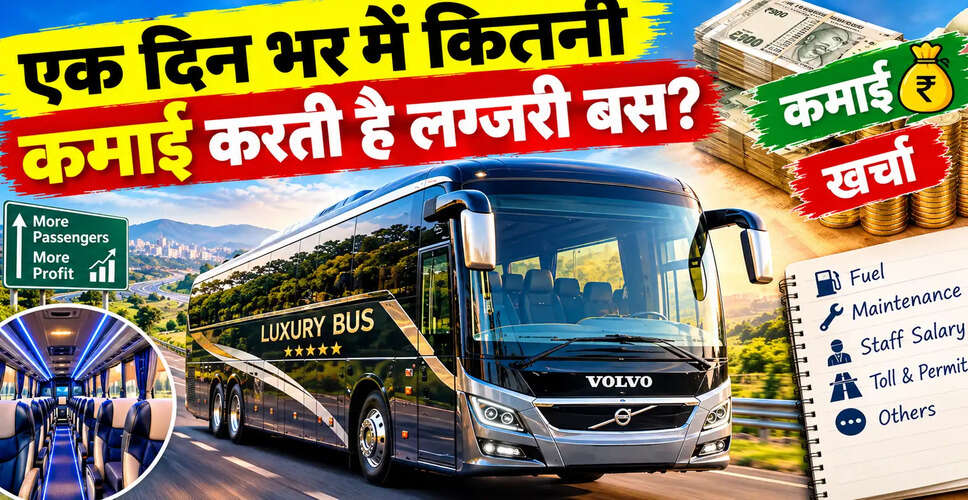
Diesel is one of the largest expenses for long-distance luxury buses. Other costs include toll taxes, salaries for drivers and assistants, maintenance, tires, insurance, permits, commissions for booking platforms, and loan EMIs. Therefore, the total revenue from ticket sales does not equate to the owner's profit.
Investment in Luxury Buses
Purchasing a luxury bus requires a significant investment. According to industry estimates for 2026, the cost of a premium sleeper coach can range from ₹99 lakh to ₹2 crore, depending on the model and features. In addition to the bus purchase, capital is also needed for permits, insurance, taxes, and initial operations.
Potential Profits from Bus Operations
The profit for a bus owner is contingent upon the number of seats filled, passenger turnout, and daily distance traveled. If bookings are strong and expenses are managed well, the business can remain profitable. Conversely, empty seats, high diesel prices, or increased EMIs can lead to reduced profits or even losses.
According to estimates published on the tourist bus industry, with good bookings and consistent operations, a bus can yield profits ranging from ₹50,000 to ₹1.5 lakh per month after accounting for all expenses and EMIs. However, this is not guaranteed; earnings can significantly drop during off-peak seasons or with weak bookings.
Conclusion
The luxury bus business is not merely about the revenue generated from ticket sales. Factors such as the purchase price of the bus, routes, passenger numbers, diesel costs, tolls, staff salaries, and EMIs collectively determine the owner's profit. Thus, understanding the difference between total ticket revenue and actual net profit is crucial.