
Understanding Iran's Military Structure: The Role of IRGC and Artesh

Iran's Military Forces: A Closer Look
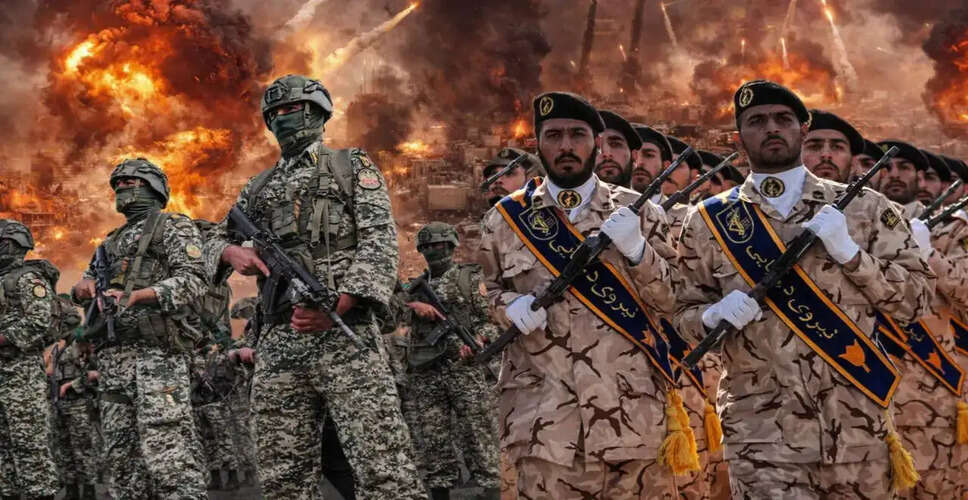
As tensions rise in the Middle East, the Islamic Revolutionary Guard Corps (IRGC) of Iran is gaining significant attention. Contrary to popular belief, the IRGC is not the sole military force in Iran; the country also maintains a conventional army known as Artesh. Each of these forces has distinct responsibilities: the Artesh focuses on safeguarding Iran's borders, while the IRGC has a broader mandate. Additionally, they are identifiable by their unique uniforms.
Regular Iranian Army (Artesh): This conventional military force is dedicated to maintaining Iran's territorial integrity through standard military operations. The Artesh comprises several branches, including the Ground Forces, Air Force, Navy, and Air Defense Force, all operating under the direct authority of Iran's President.
IRGC Overview: Established in May 1979 following the Islamic Revolution, the IRGC's primary mission is to uphold the ideological principles of Iran's Islamic regime. This force is also responsible for managing the country's ballistic missile capabilities and reports directly to the Supreme Leader. Notably, Ayatollah Ali Khamenei, the Supreme Leader, was killed in a coordinated airstrike by the United States and Israel on February 28.
Currently, the IRGC plays a crucial role in Iran's military strategy, particularly in the Persian Gulf, and has expanded its influence into various sectors of the economy, including construction and energy, with a personnel strength of approximately 150,000.
Formation of the IRGC: The IRGC was created after the Iranian Revolution, which saw Ayatollah Ruhollah Khomeini overthrow Mohammad Reza Pahlavi's regime. The new Islamic government was wary of the regular army and thus established the IRGC to safeguard its ideology and counterbalance the conventional military. The IRGC operates independently and includes ground, naval, and air units, mirroring the structure of the Artesh. Its Quds Force is instrumental in forming the 'Axis of Resistance' against Israel and the United States.
IRGC's Role in Ongoing Conflicts: In the current conflict, the United States has claimed to have targeted the IRGC's command and control facilities. Following the assassination of Khamenei, the IRGC vowed to retaliate against those responsible, promising a severe response. In a statement on its Telegram channel, the IRGC declared that the Iranian nation would not forget the murderers of their leader and would deliver a decisive punishment. The IRGC, along with the Armed Forces and Basij forces, pledged to continue defending their legacy and retaliating against aggressors threatening Iran's sovereignty.