
Understanding How the Eiffel Tower Withstands Lightning Strikes

Introduction to the Eiffel Tower's Resilience
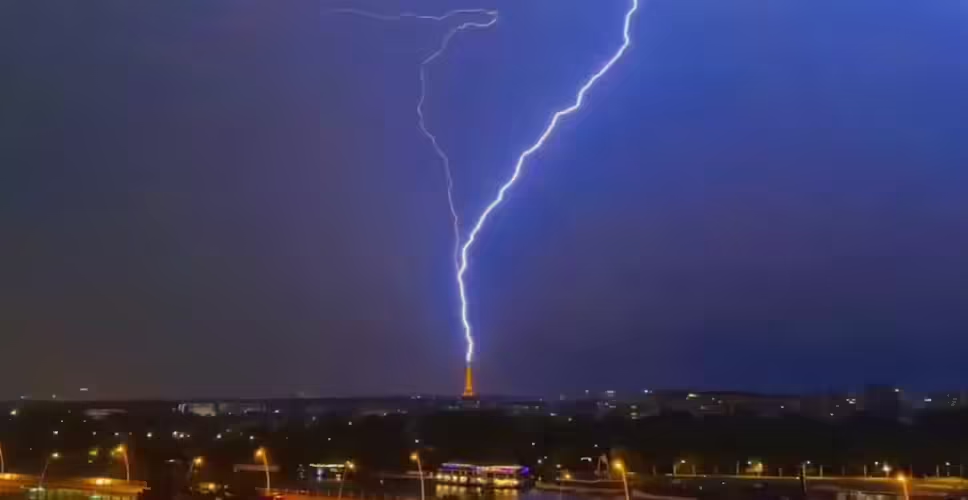
Located in Paris, the Eiffel Tower is one of the world's most iconic tourist attractions. This towering structure frequently encounters natural lightning strikes, particularly during severe thunderstorms. Despite these occurrences, the tower remains largely unharmed, thanks to advanced engineering and robust safety systems.
Why Does the Eiffel Tower Attract Lightning?
Standing at approximately 330 meters, the Eiffel Tower is among the tallest structures in Paris. Its height and metallic composition make it a prime target for electrical charges present in storm clouds, leading to frequent lightning strikes during storms.
The Safety Mechanism Behind Its Protection
A key question arises: how does the tower remain safe despite frequent lightning strikes? The answer lies in its specialized lightning protection system.
Role of the Grounding System
At the base of the tower, a strong grounding network disperses electrical currents safely into the ground, eliminating risks of electrical overload or fire. This system ensures that electricity follows a 'safe path' during strikes.
Metal Structure as a Shield
Constructed entirely of iron, the Eiffel Tower allows electricity to pass through it. This means that lightning either travels along the exterior or through designated pathways, preventing damage to the internal structure.
According to engineering principles, the tower functions similarly to a large 'Faraday Cage,' effectively dispersing electrical effects and ensuring safety.
Frequency of Lightning Strikes
Reports indicate that the Eiffel Tower experiences multiple lightning strikes each year during storms, sometimes recording several strikes in a single event. Despite this, the structure remains strong and secure, showcasing the effectiveness of its engineering.
Can Other Buildings Be Made Safe?
Experts suggest that modern buildings can also be equipped with lightning protection systems to mitigate damage from strikes. Such systems are typically mandatory for tall buildings, towers, and factories.
Conclusion
The frequent lightning strikes on the Eiffel Tower are a natural phenomenon, yet its robust engineering, lightning protection system, and grounding techniques ensure its safety. This structure is not only an architectural marvel but also a remarkable example of modern science and safety technology.