
Understanding How Airplanes Survive Lightning Strikes
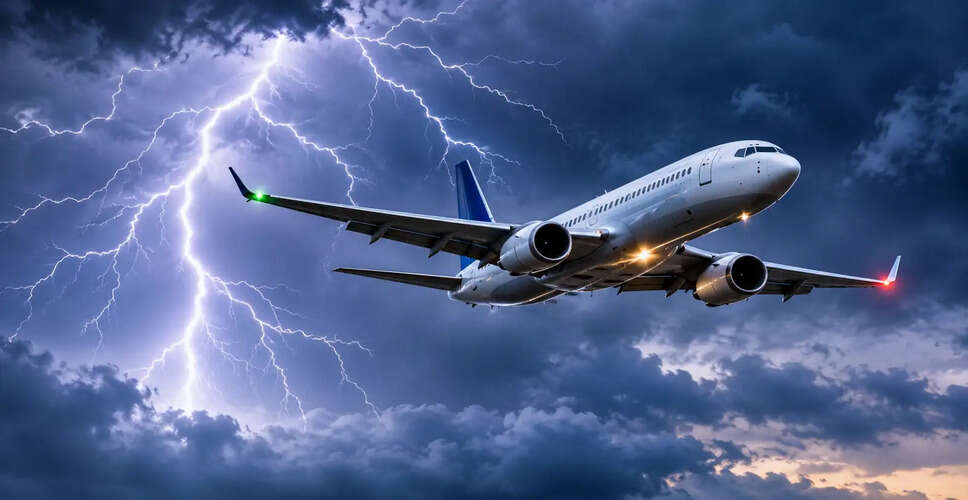

The Science Behind Airplane Safety During Thunderstorms
When thunder rumbles and lightning flashes in the sky, it often instills fear in those on the ground. A common question arises: what happens if lightning strikes an airplane flying at thousands of feet? How do aircraft remain safe despite flying through stormy clouds? The answer lies in advanced technology and scientific principles.
Can Lightning Strike an Airplane, and Why Is It Less Dangerous?
First, it’s essential to understand that airplanes can indeed be struck by lightning. In fact, they can sometimes become part of the lightning discharge process. However, modern aircraft are designed to withstand such electrical shocks.
The aircraft's outer structure facilitates the flow of electrical current along a predetermined path. This design ensures that most of the lightning's impact is confined to the exterior of the plane, keeping the passenger cabin safe.
What Role Does the Faraday Cage Play?
The principle of the Faraday Cage is crucial for airplane safety. According to this principle, an enclosed conductive structure allows electrical charges to distribute across its outer surface, effectively protecting the interior.
The metal body of the aircraft provides this protective barrier. The electrical current travels through the outer shell and exits from another point, without affecting the passenger cabin directly.
How Are Airplane Electronic Systems Protected?
Modern aircraft are equipped with special safety measures to shield electronic devices and navigation systems from electrical impacts. These include electrical shielding, secure wiring, and various technical safeguards.
Additionally, the fuel tanks and other sensitive components are designed according to strict safety standards to minimize the risk of fire or severe damage in the event of a lightning strike.
Is There an Inspection After a Lightning Strike?
Yes, if there is a possibility that lightning has struck an aircraft, a thorough technical inspection is conducted. Engineers examine the outer surface, electrical systems, and other critical components.
So, the next time you see lightning in the sky while an airplane is flying, remember the sophisticated engineering and safety technologies at play. While the risk of lightning strikes cannot be entirely eliminated, regular inspections and adherence to safety standards are vital.