
Understanding Earth's Rotation: Fascinating Facts You Should Know
The Significance of Earth's Rotation
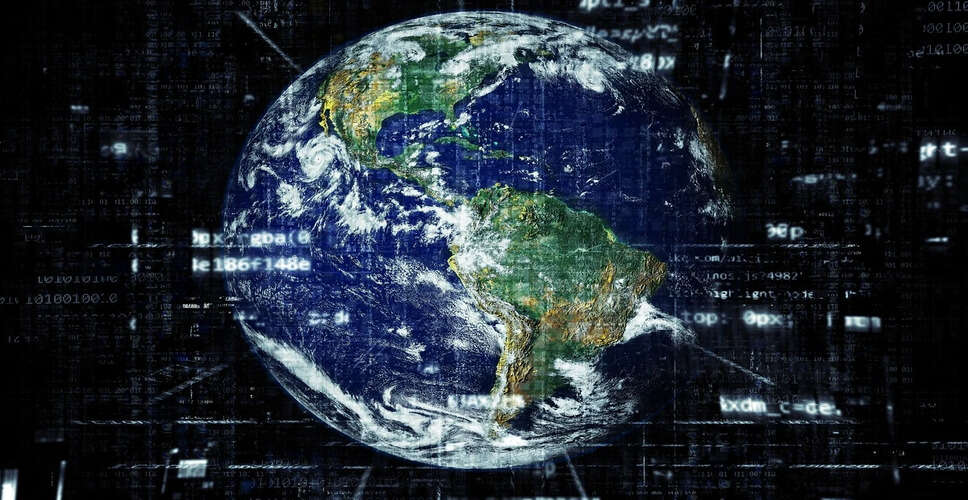
The rotation of Earth on its axis is a phenomenon that, while invisible to us, is essential for life as we know it. Every second, our planet spins at an incredible speed, completing a full rotation in just 24 hours. This simple yet vital process forms the foundation of our existence, influencing the cycle of day and night, seasonal changes, and the measurement of time.
A Day is Not Exactly 24 Hours
While we commonly refer to a day as lasting 24 hours, the actual rotation of Earth is slightly more complex. In relation to distant stars, it takes about 23 hours, 56 minutes, and 4 seconds for Earth to complete one full rotation, a duration known scientifically as a 'sidereal day.'
Speed at the Equator
Although we may not feel it, at the equator, Earth spins at an astonishing speed of approximately 1,670 kilometers per hour. This means that whether we are walking or sleeping, our planet is rotating beneath us at an incredible velocity.
Balance of Day and Night
If Earth were to stop rotating, one half would experience perpetual daylight while the other would be plunged into constant darkness. It is this rotation that maintains a balance in temperature across the globe.
Influence on Weather and Oceans
The rotation of Earth generates the 'Coriolis effect,' which is fundamental to the movement of winds and ocean currents. This effect causes storms in the Northern and Southern Hemispheres to rotate in opposite directions.
Storms and Cyclones: The Coriolis effect shapes the unique form and direction of cyclones.
Ocean Currents: Currents like the Gulf Stream, which transport warm water globally, are influenced by Earth's rotation.
Temperature Balance: If Earth ceased to rotate, weather patterns would drastically change, rendering many regions uninhabitable. From monsoon rains to coastal ecosystems, everything relies on this balanced spin.
Earth's Shape: Not Perfectly Round
Due to the centrifugal force from its rapid rotation, Earth is slightly flattened at the poles and bulges at the equator, a shape referred to as an 'oblate spheroid.'
Slowing Rotation Over Time
The gravitational pull of the Moon causes Earth's rotation to slow down by approximately 1.7 milliseconds every century. This indicates that millions of years ago, days on Earth were significantly shorter than they are today.
Foucault's Historic Experiment
In 1851, French physicist Léon Foucault demonstrated Earth's rotation for the first time using a large pendulum, providing direct evidence of this phenomenon.
Essential Protective Shield for Life
Earth's rotation keeps its metallic core active, generating a powerful magnetic field that protects us from harmful solar radiation.
Celebrating Earth Rotation Day
Earth Rotation Day is not just a celebration of science; it is a day to express gratitude for the delicate balance that makes life possible. The next time you witness a sunset, remember that you are part of a vast, spinning spacecraft journeying through the universe.