
Uncertainty Surrounds Iran's Participation in 2026 World Cup Amid Middle East Conflict
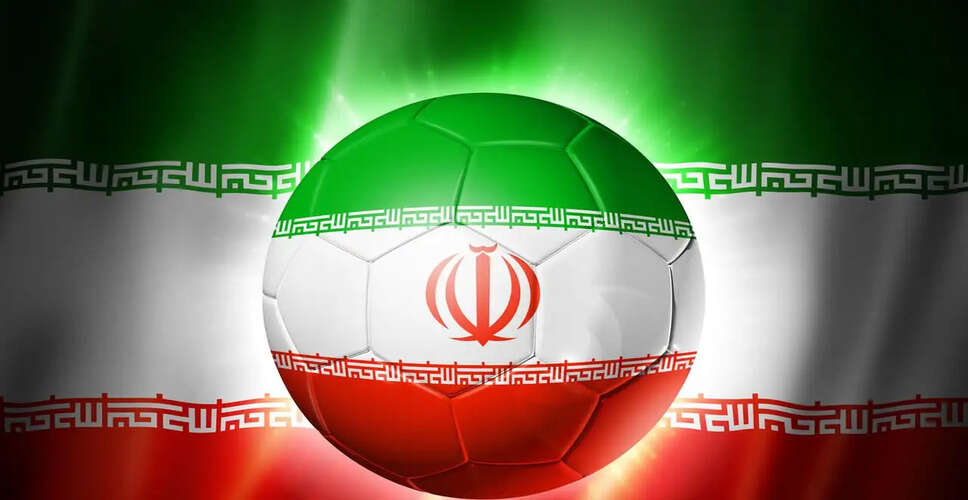

Rising Concerns Over Iran's World Cup Involvement
The ongoing conflict in the Middle East, sparked by US and Israeli military actions against Iran, has led to unexpected questions regarding the participation of Iran's national football team in the upcoming 2026 World Cup.
With just 100 days remaining until the tournament kicks off, doubts are mounting about the future of Team Melli, as the Iranian national team is known.
Iran's Potential Boycott of the Tournament
Public discussions about a possible boycott of the World Cup have emerged in Iran since the onset of the conflict.
Mehdi Taj, the president of the Iranian Football Federation, expressed a grim outlook during an interview on Iranian television.
He stated, 'Given the current violence and cruelty, we cannot look forward to the World Cup with optimism.'
Additionally, Taj confirmed that Iran's domestic football league has been halted due to the escalating crisis.
Despite these uncertainties, Iran had already secured its spot in the tournament last March, marking their seventh appearance and fourth consecutive World Cup.
Challenging Circumstances for Iran at the Tournament
Iran has been placed in Group G for the 2026 World Cup, competing against Belgium, Egypt, and New Zealand.
Two of Iran's matches are scheduled to take place in Los Angeles, with the third in Seattle, adding layers of political and emotional complexity due to the ongoing conflict.
Los Angeles hosts a significant Iranian diaspora, many of whom left Iran after the 1979 Islamic Revolution and historically supported the Pahlavi dynasty.
FIFA's Cautious Monitoring of the Situation
Currently, FIFA is adopting a careful stance regarding the situation.
FIFA's secretary general, Mattias Grafstrom, mentioned that internal discussions have started, but it is premature to draw any conclusions.
'We had a meeting... and it is too early to comment in detail, but we will keep an eye on developments globally,' he stated.
A source close to FIFA indicated that there have been no formal talks with the Iranian Football Federation about a potential withdrawal.
This situation poses a delicate challenge for FIFA president Gianni Infantino, who has emphasized his relationship with US President Donald Trump.
The regional conflict has also escalated, with retaliatory Iranian strikes reportedly targeting Saudi Arabia, Qatar, and Jordan, raising concerns about broader instability as the tournament approaches.
FIFA Regulations on Team Withdrawal
FIFA's regulations do not specifically address the scenario of a boycott by a qualified team.
However, Article 6 of the tournament regulations provides guidance for unforeseen circumstances.
It states that if a member association withdraws due to force majeure, FIFA 'shall decide on the matter at its sole discretion and take whatever action is deemed necessary.'
This means FIFA could potentially replace Iran with another national team if a withdrawal occurs.
With the tournament expanding to 48 teams, Asia already has eight qualified teams, and a ninth could join depending on the outcome of an intercontinental playoff involving Iraq against either Bolivia or Suriname later this month.
If Iran were to withdraw, another Asian nation could logically be selected as a substitute.
Historical Context of Sporting Boycotts
In the modern era, a complete boycott of the FIFA World Cup by a qualified team has never happened.
However, political disruptions have historically impacted major sporting events.
The Olympics experienced significant boycotts during the Cold War, particularly at the Moscow Games in 1980 and the Los Angeles Games in 1984.
In football, there have been rare instances of late withdrawals, such as several teams pulling out of the 1950 World Cup due to financial or logistical issues.
A notable parallel occurred before the 1992 European Championship when Yugoslavia was removed following the outbreak of war in the Balkans, leading to Denmark's replacement and eventual victory.
More recently, Russian teams have faced suspensions from international competitions by FIFA and UEFA due to the invasion of Ukraine in 2022.
Future of Iran's Participation Remains Uncertain
As of now, Iran is officially qualified and scheduled to participate in the tournament.
However, the coming weeks could be crucial.
With ongoing conflict in the region and rising international tensions, the fate of Team Melli at the 2026 World Cup may hinge more on geopolitical factors than on football itself.