
UN Voices Concerns Over Mass Detentions Amid Protests in Delhi
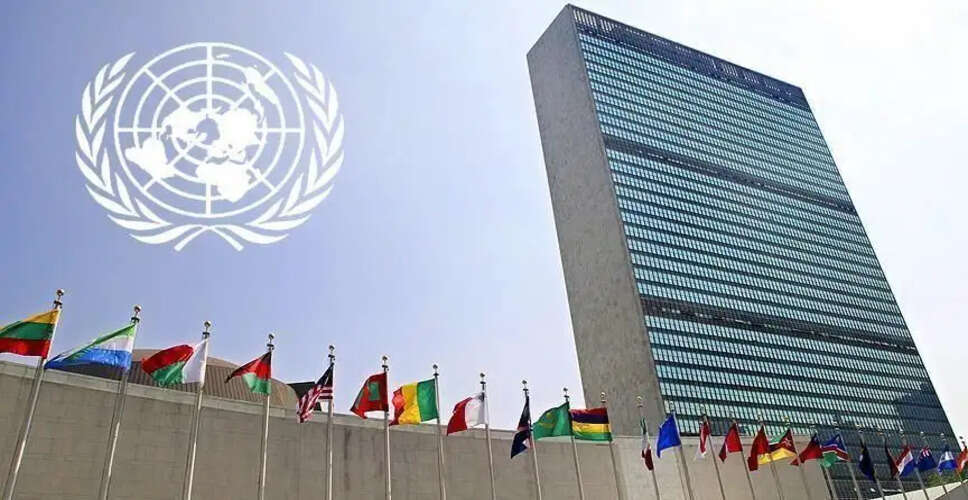

UN Human Rights Office Raises Alarm
Geneva: The United Nations human rights office has expressed serious concerns regarding the mass detentions that occurred during significant protests in Delhi on Saturday. The organization urged Indian officials to uphold the right to peaceful assembly and called for the immediate release of individuals who were detained without justification.
Numerous protesters were taken into custody as security forces obstructed a planned demonstration by the Gen Z-led Cockroach Janta Party (CJP) from reaching Jantar Mantar, a central location in Delhi.
The protest aimed to advocate for electoral reforms and the resignation of Chief Election Commissioner (CEC) Gyanesh Kumar, who faces allegations of manipulating voter lists. Both the Election Commission and the ruling Bharatiya Janata Party (BJP) have refuted these claims.
In a statement issued on Saturday, UN human rights spokesperson Thameen Al-Kheetan remarked that the office was "troubled by reports of mass detentions in India involving demonstrators, protest leaders, civil society members, lawyers, and journalists, both prior to and during the large-scale protests in Delhi."
"We urge the authorities to fully respect and uphold the right to peaceful assembly," the statement continued. "Any restrictions on peaceful protests must adhere to strict standards of necessity and proportionality."
Al-Kheetan further emphasized the need for Indian law enforcement to exercise "utmost restraint" when dealing with peaceful protesters, in line with the country’s democratic principles and human rights commitments.
"All individuals who have been arbitrarily detained should be released immediately and unconditionally," he stated.
The UN also called on the authorities to engage in constructive dialogue to address the widespread concerns raised.
The CJP had intended to hold a demonstration at Jantar Mantar, a significant site in central Delhi.
However, Delhi Police denied permission for the protest, implementing heavy security measures and roadblocks that hindered most demonstrators from accessing the area.
The founder of the CJP, Abhijeet Dipke, along with two other leaders, Saurav Das and Ashutosh Ranka, were detained shortly after arriving in Delhi from Mumbai, according to the group.
Delhi Police have not publicly addressed the circumstances surrounding their detentions.
The CJP and various opposition parties have accused CEC Kumar of favoring the BJP during the electoral roll updates. The Election Commission has stated that its nationwide revision of voter lists, known as Special Intensive Revision (SIR), is a standard procedure aimed at removing the names of deceased, duplicate, or ineligible voters.
Despite tens of thousands of individuals in multiple states claiming their names were incorrectly removed from the electoral rolls, the Election Commission has denied any allegations of political interference.
The CJP is a satirical movement led by Gen Z that is not officially registered as a political party. It originated in May after its founder, Dipke, posted a question on social media in response to India's chief justice comparing some unemployed youth to "cockroaches." This post gained significant traction, leading to the movement's formation.
The group has emerged as a prominent protest force during weeks of demonstrations over the summer, advocating for education reforms and the resignation of Education Minister Dharmendra Pradhan. These protests concluded in July following Pradhan's resignation.
Now, the CJP has returned to the streets, demanding electoral reforms and the resignation of CEC Kumar.
The BJP has criticized the protests that took place on Saturday, accusing opposition factions led by Congress leader Rahul Gandhi and Aam Aadmi Party leader Arvind Kejriwal of attempting to destabilize the nation.
BJP president Nitin Nabin claimed that these groups were pursuing their political agendas "at the behest of foreign forces."
He further accused them of refusing to acknowledge the people's verdict and attempting to create instability, asserting that Indian democracy is robust enough to counter their efforts.