
UN Reports Highlight Systematic Discrimination Against Baha'i Community in Egypt
UN Reports Expose Discrimination Against Baha'is in Egypt
Geneva—February 23, 2026—Three recent reports released by the United Nations have brought to light the ongoing and systematic discrimination faced by the Baha'i community in Egypt. These documents strongly criticize the civil and religious authorities in Egypt for decades of oppression against this religious minority and call for respect for their rights.
Dr. Saba Haddad, a representative of the Baha'i International Community in Geneva, welcomed the UN reports, stating, “The simultaneous publication of these three reports reveals and condemns the severe injustices endured by Baha'is in Egypt, indicating that this persecution is escalating and that the Baha'i community is at a critical juncture in their suffering.”
UN High Commissioner for Human Rights Volker Turk highlighted the “ongoing and systematic discrimination” faced by members of the Baha'i minority in his report, urging for its immediate cessation. Despite the Egyptian Constitution guaranteeing freedom of religion or belief, Baha'is are denied “official recognition as individuals under the law.” This intervention has led to a recent increase in systematic oppression through discriminatory policies and practices, underscoring the urgent need for corrective action by Egyptian authorities.
The report by Mr. Turk notes that due to the lack of legal status and adequate protection, Baha'is are unable to register their marriages, participate in their community's cultural life, and face numerous other restrictions.
In the past, Baha'is attempted to marry outside Egypt through civil ceremonies to remain in the country as married couples. However, they discovered that the Ministry of Interior had issued a regulation denying them the right to certify these marriages.
In another instance, the Ministry of Justice advised Baha'is to appeal through the courts to change their marital status to “married” on their identification cards. This was possible for several years, but in 2022, the Ministry of Interior abruptly halted these appeals. Those who had previously succeeded in changing their status found it reverted to “unmarried” upon renewing their ID cards.
The ongoing atrocities against Baha'is in Egypt have resulted in severe humanitarian consequences. If a Baha'i man’s wife is not Baha'i, their children are often denied education in several schools due to their father's religion. A single mother of two was expelled from Egypt and separated from her children because one of her parents was not an Egyptian citizen. Despite meeting all conditions, she was denied citizenship solely due to her Baha'i faith.
Special Rapporteurs on freedom of religion or belief, Nazila Ghanea, and on minority issues, Nicolas Levrat, have also shed light on the situation of the Baha'i community in their reports.
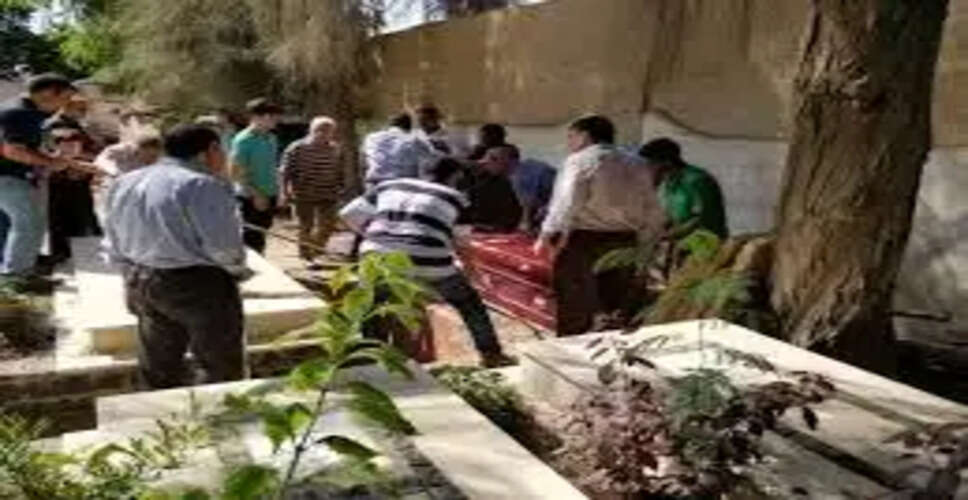
Dr. Ghanea's report focused on violations of burial rights for minorities worldwide, noting that following President Gamal Abdel Nasser's decree in 1960, Baha'i faith was banned in Egypt. Consequently, the Baha'i community has been unable to acquire land for cemeteries and faces restrictions on the use of public land. They are thus forced to bury their loved ones in a historic Baha'i cemetery, where space constraints necessitate burying the deceased in a standing position.
Dr. Levrat's report stated that Baha'is in Egypt are prohibited from stating their religion on official documents, violating international agreements on civil and political rights that Egypt has signed. He condemned this discrimination and called for its immediate cessation.
Dr. Haddad emphasized, “The Baha'is in Egypt need united support from the international community, civil society, media, and justice-loving individuals worldwide. When UN officials and experts unanimously acknowledge the plight of Baha'is in Egypt, it is time for Egyptian authorities to stop yielding to reactionary religious elements and to abolish decades of discriminatory laws and policies.”
Recently, there has been an increase in arbitrary questioning and detention of Baha'is under the guise of security by Egyptian authorities. Dr. Ghanea mentioned in her report the fatwas issued by Al-Azhar University, which have led to Baha'is being barred from public cemeteries. In April 2025, eleven UN experts issued a statement against the Egyptian government, which was denied by Egypt, but the experiences of the Baha'i community contradict this denial.
Dr. Haddad concluded, “These three reports send a strong message to Egyptian authorities. We call on the international community to support the recommendations of the UN High Commissioner for Human Rights and special rapporteurs and to hold Egypt accountable for its domestic and international obligations.”
She further stated, “Egyptian authorities must cease their new surveillance strategies and pressure tactics aimed at instilling fear among the Baha'i community and their friends and neighbors—both of which are gross violations of civil rights.”