
UN Declares Major Humanitarian Emergency Amid West Asia Conflict
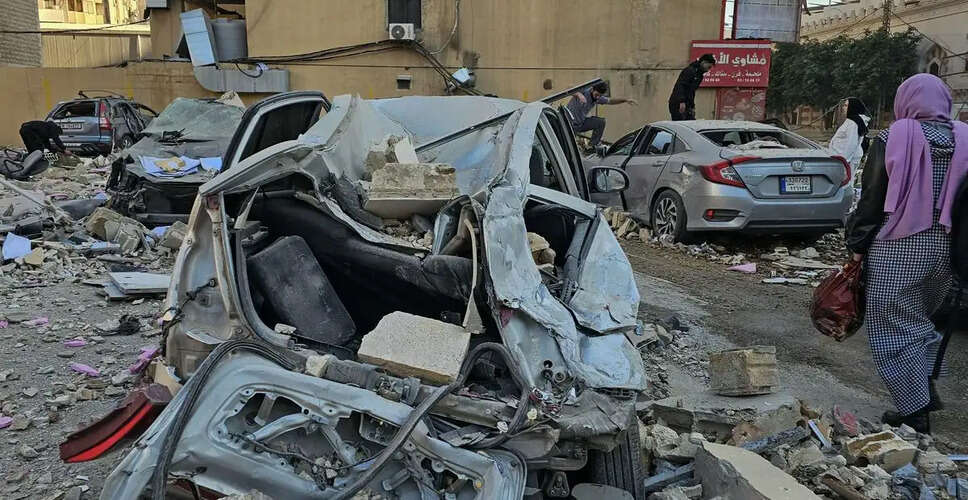
UN Refugee Agency Responds to Crisis
The United Nations High Commissioner for Refugees has labeled the ongoing conflict in West Asia as a significant humanitarian crisis, urging that all civilians fleeing the violence be allowed safe passage. The agency reported a substantial number of individuals are being displaced from their homes due to the escalating situation.
“The UNHCR has identified the intensifying crisis in the Middle East as a major humanitarian emergency that necessitates an urgent response throughout the region,” stated Ayaki Ito, the director of emergency and program support at the agency.
Conflict Origins and Global Reactions
The conflict erupted on February 28 when Israel and the US initiated a joint military operation aimed at the Iranian government, which prompted a retaliatory response from Tehran.
Israel has accused Iran of nearing the capability to develop nuclear weapons, while Iran insists that its nuclear ambitions are strictly for peaceful purposes.
US Oil Waiver for India Amid Rising Prices
In a related development, the United States has granted Indian refiners a 30-day waiver to purchase Russian oil that is currently stranded at sea due to the conflict. This temporary measure aims to stabilize global oil supplies amidst ongoing disruptions, according to US Treasury Secretary Scott Bessent, who noted that it “will not provide significant financial benefit” to Russia.
This decision comes as crude oil prices have surged, with Brent crude reaching $84 per barrel, reflecting a 15.9% increase since the joint operation against Iran commenced.
India relies heavily on imports for its oil and gas needs, fulfilling approximately 80% to 85% of its energy requirements through foreign sources.
Political Reactions in India
Following the announcement of the waiver, Congress leader Rahul Gandhi criticized the Modi administration, asserting that the current foreign policy reflects the influence of a compromised individual. He expressed that the situation is not indicative of a coherent policy, questioning the government's stance in light of the West Asia conflict.
Congress president Mallikarjun Kharge supported Gandhi's remarks, claiming that the waiver illustrates the Modi government’s ongoing concession of diplomatic authority. “This language is typically reserved for sanctioned nations, not for India, which has been a responsible global partner,” Kharge stated.
Nepal Election Update
Vote counting is currently in progress for the Nepal elections, with the newly-established Rastriya Swatantra Party showing a strong lead over its competitors. The party, which has been active for three years, is leading in 109 seats, while the Nepali Congress is ahead in 12.
Balendra Shah, the former mayor of Kathmandu and the Rastriya Swatantra Party’s candidate for prime minister, is outpacing former Prime Minister KP Sharma Oli with 11,945 votes in the Jhapa-5 constituency.
The election aims to fill 275 parliamentary seats, with 165 determined through direct voting and the remainder allocated via proportional representation based on party vote shares.