
UN Chief Urges Ongoing Dialogue Between Iran and the US Amidst Ceasefire Efforts

Continued Engagement Essential for Peace
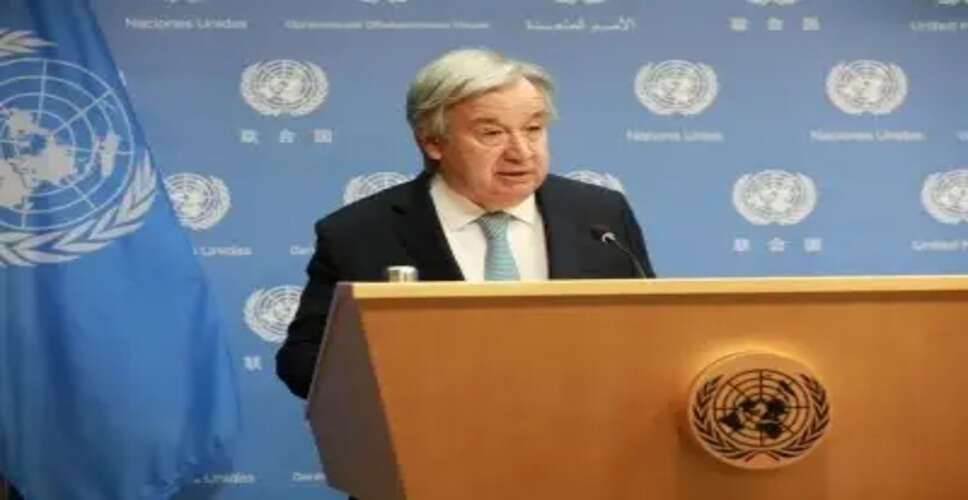
United Nations: The Secretary-General of the UN, Antonio Guterres, has emphasized the importance of ongoing constructive discussions between Iran and the United States, highlighting the necessity of maintaining the ceasefire following inconclusive talks regarding the West Asia conflict.
The lengthy negotiations, which lasted 21 hours and involved US Vice President JD Vance, took place in Pakistan but ended without a resolution to the ongoing war.
A statement from Guterres' spokesperson noted that although no agreement was achieved, the talks indicated a serious commitment to dialogue and represented a significant step forward.
During a press briefing in Islamabad, Vance remarked, "They have chosen not to accept our terms. We leave here with a very simple proposal: a method of understanding that is our final and best offer," adding that they would await Iran's response.
Guterres acknowledged the deep-seated differences between the parties, stating that an agreement would not be reached quickly and urged for continued constructive dialogue.
"At the same time, the ceasefire must absolutely be preserved. All violations must cease," he asserted, noting the extensive destruction and suffering that has occurred, which underscores that a military solution is not viable in the Middle East.
Recently, both the US and Iran declared a two-week ceasefire amid the ongoing conflict.
Guterres expressed gratitude for the mediation efforts by Pakistan, which hosted the recent talks, as well as contributions from Saudi Arabia, Egypt, and Turkiye, urging the international community to support these initiatives.
The UN Secretary-General's Personal Envoy, Jean Arnault, remains actively involved in the region, engaging with key stakeholders to foster a comprehensive and lasting agreement.
Guterres also highlighted the necessity for all conflict parties to uphold freedom of navigation, particularly in the Strait of Hormuz, in accordance with international law.
"We must remember that approximately 20,000 seafarers are trapped in this conflict, facing increasing hardships while stranded on ships. Disruptions in maritime trade through the Strait of Hormuz have far-reaching effects, contributing to global economic instability and insecurity across various sectors," he stated.
He further pointed out that interruptions in fertilizer supply worsen food insecurity for millions globally, exacerbating the rising cost of living due to fuel, transportation, and supply chain issues.