
Umar Abdullah's Shift in Political Stance in Jammu and Kashmir
Political Dynamics in Jammu and Kashmir
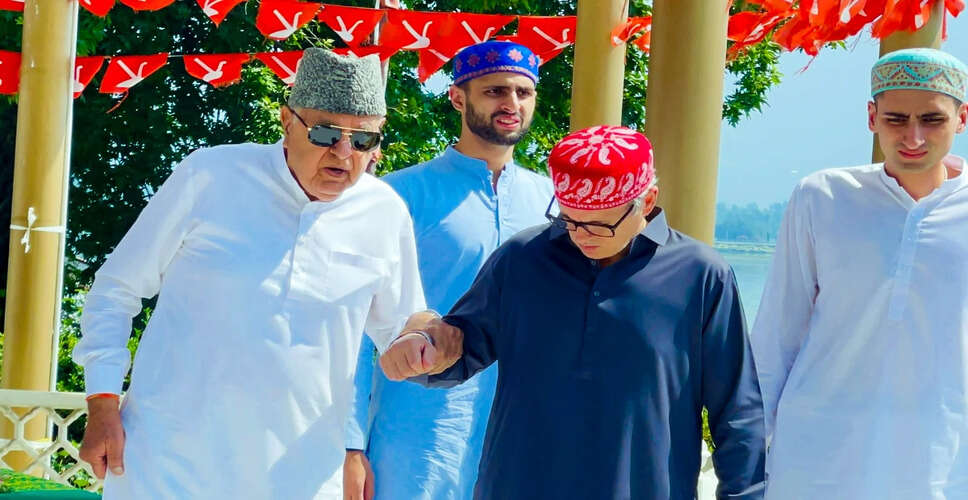
Since Umar Abdullah assumed leadership in Jammu and Kashmir, his approach towards the central BJP has notably changed. Issues that once dominated his agenda during his tenure with the National Conference and the India Alliance seem to have taken a backseat. Abdullah appears to be stepping back from these contentious topics, which previously put him on the defensive against the BJP. Despite this shift, it seems that he is not causing significant harm to the political landscape. In fact, the initiatives he is taking with the central government's support for the development of Jammu and Kashmir are commendable. Interestingly, Abdullah often sidesteps aggressive questions from journalists regarding the BJP's stance, focusing instead on constructive dialogue. He even expressed discomfort at home due to disagreements with his father, Farooq Abdullah, on certain political matters.
Disagreements and Political Strategy
Umar Abdullah has made it clear that he does not share his father's views on the BJP or the EVM controversy. He openly stated his disbelief in the theory that EVMs can be hacked, which has led to uncomfortable discussions at home. Furthermore, he has begun to challenge his own coalition, indicating a shift in strategy. Abdullah has also voiced concerns regarding the India Block, suggesting that regional parties must either unite or contest elections separately in each state. He emphasized the necessity of aligning with the Congress party, as it remains the only national party with significant influence across the country. Praising the BJP's electoral strategy, he noted that their leaders campaign vigorously, unlike regional parties that often arrive late to the electoral scene.