
ULFA(I) Leader Criticizes Political Parties for Lack of Dialogue
Concerns Over Political Solutions
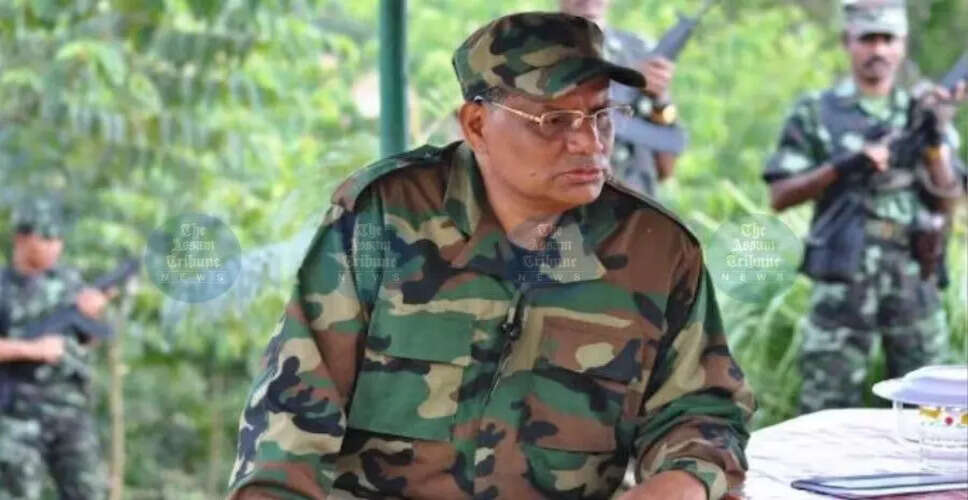
In a recent statement, Paresh Baruah, the leader of the United Liberation Front of Asom (Independent), accused both the Congress and BJP of neglecting genuine political solutions to ongoing issues. He emphasized that while ULFA(I) is open to discussions, the government must demonstrate genuine commitment to the dialogue process.
Critique of Political Strategies
Speaking via phone, Baruah criticized the Congress for employing a divide-and-rule strategy during its tenure, rather than seeking lasting resolutions. He also condemned the BJP's approach, which he claims relies heavily on military force to eliminate ULFA(I).
Baruah argued that military action cannot extinguish a movement, citing historical operations against ULFA that began in 1990, which involved five army divisions. Despite numerous military campaigns, including Operation All Clear in Bhutan, the organization remains resilient. He drew parallels with the ongoing conflict in Ukraine, suggesting that even powerful nations struggle to resolve such issues through force.
Recent Military Actions
Regarding the recent drone strikes on ULFA(I) camps in Myanmar that resulted in the deaths of three senior members, Baruah claimed these attacks originated from two helipads located in Arunachal Pradesh and Nagaland. He noted that the army transported numerous drones to these sites for the operation, with some drones reportedly landing in nearby forests and one near a People's Liberation Army camp.
In response to the army's denial of the attacks, Baruah stated, "We have credible information about the strikes. Former army generals have publicly acknowledged and commended these actions on television. If they were fabricating stories, why haven't they faced arrest?"
Ongoing Armed Struggle
Baruah reaffirmed ULFA(I)'s commitment to its armed struggle but assured that they would not target Assamese civilians or police officers unless provoked. He referenced a bomb blast in Dhemaji on Independence Day, claiming that a ULFA member had warned a police officer about the bomb, but no action was taken.
On the topic of illegal immigration, he criticized the government's failure to establish an accurate National Register of Citizens (NRC) to identify undocumented migrants in Assam, suggesting that the issue has been politicized without effective measures to prevent forest land encroachment.
Dialogue with Government Officials
When asked about his communication with Chief Minister Himanta Biswa Sarma, Baruah mentioned that they occasionally converse, but not on a regular basis. He expressed hope that the Chief Minister might influence the central government to engage in talks with ULFA(I) regarding core issues.
Baruah concluded by expressing concerns about the state of democracy in India, noting that even high-ranking officials like the Vice President have faced undue pressure to resign.