
Ukrainian F-16 Achieves Historic Air-to-Air Victory Against Russian Fighter

Significant Milestone in Air Combat
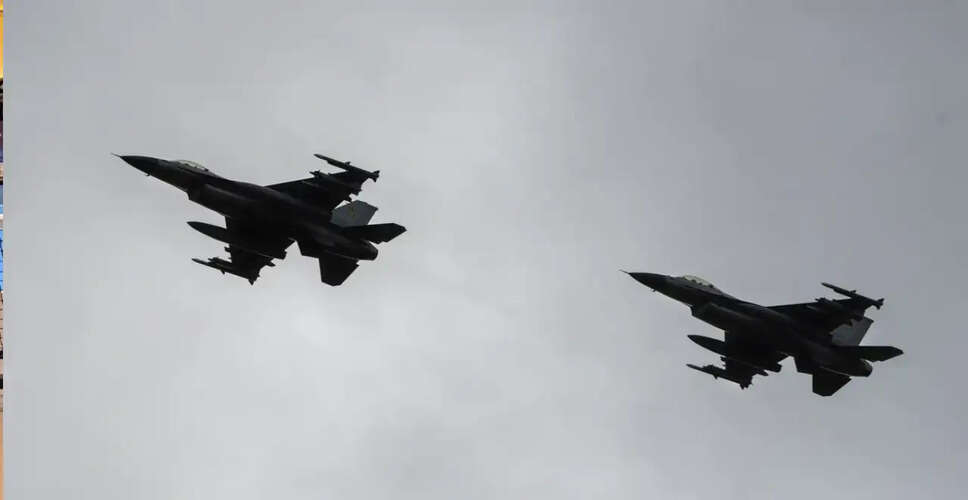
In a groundbreaking event, a Ukrainian F-16 fighter jet has successfully downed a Russian combat aircraft during an air-to-air confrontation, marking a pivotal moment for Ukraine's fleet of Western-supplied fighters. This information was revealed by General Dan Caine, the chairman of the US Joint Chiefs of Staff, during a session with US lawmakers on Tuesday. He stated, "Recently, we had the first air-to-air kill where a Ukrainian F-16 shot down a Russian fighter." While the specific Russian aircraft involved was not disclosed, Ukrainian media connected this incident to a statement from Ukraine’s Air Force on July 8, which claimed that an Su-35 fighter was destroyed over eastern Ukraine.
A well-known Russian Telegram channel, purportedly linked to the Russian Air Force, provided an alternative narrative, suggesting that the Su-35 was engaged by three Ukrainian jets and a Patriot air-defense system. According to their report, the Russian pilot survived, and two of the Ukrainian aircraft involved were F-16s. However, the accounts from both sides have not been independently verified.
This reported shootdown has reignited interest in the F-16, which has had a relatively low profile in Ukraine since the first aircraft were delivered in 2024. Both the F-16 and the Su-35 are classified as fourth-generation fighter jets, recognized for their capabilities, although they are not as advanced as fifth-generation stealth fighters like the US F-35 and F-22. For Ukraine, the F-16 signifies a substantial technological leap from the Soviet-era MiG-29 and Su-27 fighters that have been the backbone of its Air Force for many years.
Posso dire buongiorno ☀️,aggiungendo che la potenza aerea di Kyiv ha superato una soglia storica…È stato confermato il primo abbattimento aereo aria-aria mai registrata da un F-16 🇺🇦 ucraino contro un caccia russo di prima linea.Il generale @Deancain ha confermato… pic.twitter.com/00Q2gH6wnp
— VADYM 🇺🇦🌐🇮🇹 (@VadymVietrov) July 22, 2026
Ukraine commenced operations with F-16s in the summer of 2024 after four NATO nations committed to supplying around 80 Lockheed Martin-built aircraft. However, the delivery process has been slower than anticipated, with some jets allocated for combat and others reserved for spare parts and maintenance. For years, Kyiv has been advocating for F-16s, asserting that these aircraft are crucial for safeguarding Ukrainian airspace against Russian missiles, drones, and fighter jets.
While there were hopes that the jets might conduct deep strikes into Russian territory, Ukraine has mainly utilized its F-16s for air defense, intercepting missiles and drones targeting Ukrainian cities and military installations. This role has gained importance as Russia has escalated its aerial bombardment campaign in recent months. Ukraine continues to grapple with shortages of air-defense systems and interceptor missiles, leading to a greater reliance on available fighter jets to counter incoming threats. Reports earlier this year indicated that Ukrainian F-16s faced periods of limited missile availability in late 2025.
According to estimates from the specialist Ukrainian outlet Defense Express, Kyiv currently operates around 39 F-16s. The fleet has also experienced losses, with Ukraine acknowledging the loss of at least three F-16s, and another aircraft was reported damaged in late June 2025, resulting in the death of its pilot. Furthermore, Ukraine is expanding its future fighter inventory beyond the F-16, having recently signed a deal to acquire 16 Swedish-made Gripen fighter jets, expected to be operational within approximately three years. Sweden has also committed to transferring 16 older Gripen aircraft from its own fleet.
If confirmed, the F-16's downing of an Su-35 would represent both a symbolic and operational victory for Ukraine, showcasing that Western-supplied fighters can not only defend against missiles and drones but also engage advanced Russian combat aircraft in contested airspace. This engagement occurs as the air conflict over Ukraine intensifies, with both sides increasingly depending on a mix of fighter jets, drones, long-range missiles, and air-defense systems to secure an advantage in the ongoing conflict.