
Ukraine's Daring Sea Drone Strike: Russian Warship Sunk in Libya

Kyiv's Bold Attack on Russian Naval Assets
Kyiv: President Volodymyr Zelenskyy announced on Monday that Ukraine executed a successful operation against a Russian warship docked in Libya, claiming that sea drones were responsible for sinking the vessel during a surprise attack the day before.
According to Zelenskyy, Ukrainian forces utilized seven domestically produced sea drones to target the Russian navy corvette in the Mediterranean Sea. This ship was among the latest additions to Russia's fleet, having been commissioned shortly after the onset of the 2022 invasion of Ukraine.
Kremlin spokesperson Dmitry Peskov refrained from commenting on the incident, stating that the Russian Ministry of Defence would release information as deemed necessary.
This operation took place approximately 2,400 kilometers from the front lines in Ukraine, marking yet another audacious long-range strike by Ukrainian forces.
Throughout the conflict, Ukraine has occasionally caught Russia off guard with operations that have embarrassed the Kremlin, such as the June 2022 Operation Spiderweb, where drones launched from trucks targeted over 40 aircraft stationed at various air bases across Russia. On the extensive 1,250-kilometer front line in eastern and southern Ukraine, Kyiv's drones and ground robots are effectively countering Russia's larger military force.
Meanwhile, Russia's bombardment of Ukraine has severely impacted the power infrastructure as winter approaches, causing significant damage to civilian structures.
In a separate incident, a Russian missile strike on a five-story apartment building in a village near Kyiv resulted in 11 fatalities, according to local police reports. Rescue teams managed to recover a 7-year-old child and a 79-year-old woman from the debris following the attack on Sunday morning.
On the same day, three individuals lost their lives due to a Russian strike on a hospital in Zaporizhzhia, while two others were killed when Russian forces targeted an evacuation vehicle in Kramatorsk.
Zelenskyy Highlights Ukraine's Strategic Operations
Zelenskyy characterized the recent attack as exemplary, asserting that the objectives set were successfully met.
He emphasized that Ukraine continues to operate in designated waters as a response to Russian aggression, while also advancing its domestic weaponry.
In his address to the NATO Parliamentary Assembly in Berlin, Zelenskyy noted that Ukraine has targeted Russian oil refineries as far away as western Siberia and Russian naval vessels in the Mediterranean.
Following a significant drone and missile assault that lasted over six hours, an oil refinery in Russia's Rostov region ceased operations, as reported by Governor Yuri Slyusar.
Zelenskyy stated, "We keep finding ways to recover after every Russian attack."
Ukrainian forces also targeted the Russian cargo ship MV Angara, which Zelenskyy claimed was utilized for transporting weapons, and successfully destroyed a Ka-27 military helicopter during the operation.
Reports indicate that Ukrainian forces are conducting operations in western Libya under a covert agreement supported by Western nations, having previously used Libyan territory to strike a Russian tanker in the Mediterranean in March.
According to Libyan officials, the Ukrainian forces, primarily drone specialists, were operating from an air base in Misrata and other military sites in Tripoli and Zawiya.
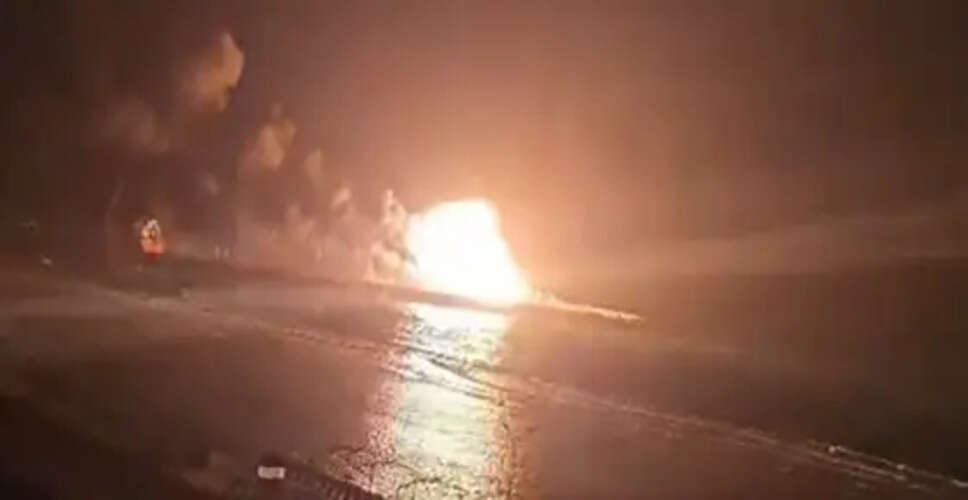
The attack on Sunday caused significant damage to the Russian corvette at the Benghazi Naval Base, as confirmed by two Libyan officials.
Residents in Benghazi reported hearing loud explosions and witnessing flames at the naval base early Sunday morning, prompting civil defense units to respond and extinguish the fire.
The vessel had docked for refueling and resupply as part of a cooperation agreement between Russia and the eastern Libyan government, although details regarding the ship and its cargo were not disclosed.
The eastern Libyan government has since reached out to UN Secretary-General Antonio Guterres and the UN Security Council, requesting an international investigation into the potential use of western Libya for planning and executing the attack.
Details of the Attack Emerge
Libyan officials briefed on the incident reported that at least four drones were intercepted, while two successfully struck the corvette, which is designed for coastal patrol and escort missions.
The attack resulted in injuries to at least 10 individuals, including both Libyan and Russian nationals, according to one official.
These officials, linked to the self-proclaimed Libyan National Army controlling eastern and southern Libya, spoke on the condition of anonymity due to restrictions on communicating with the media.
Ambrey, a UK-based maritime security and risk intelligence firm, suggested that some explosions at the Benghazi Naval Base were likely caused by munitions detonating aboard the Russian warship.
Shortly after the attack on the warship, another sea drone strike targeted a Maltese-flagged commercial vessel off the coast of Benghazi, as reported by the Libyan coast guard.
Ukraine's Security Service Comments on the Operation
Ukraine's Security Service (SBU) described the operation as unprecedented, stating that the MV Angara was sanctioned and used for transporting Russian military supplies, while the multipurpose corvette Merkury regularly escorted Russian naval convoys, including the MV Angara.
The drones were launched from a designated mother ship positioned near the target, according to the SBU.
The corvette also housed a Ka-27 helicopter, which was lost in the attack, the SBU added.
Russian defenses attempted to intercept the attacking drones from air, sea, and land, as reported by the SBU.
The SBU concluded that Ukraine's defense forces have demonstrated that the Russian navy and its logistics are vulnerable, even far beyond the Black Sea, which borders both Russia and Ukraine.