
UK Opens Military Bases to US Amid Rising Tensions with Iran
Britain's Involvement in the Iran Conflict
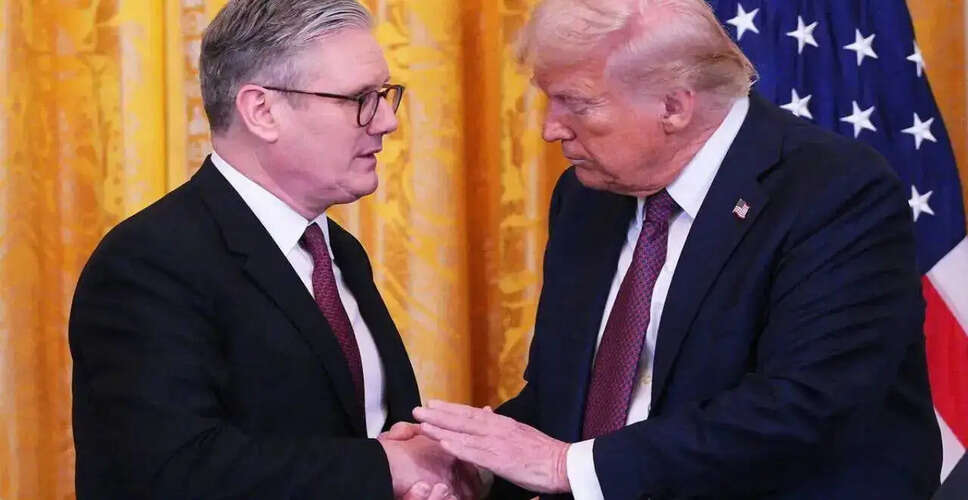
The United Kingdom has stepped into the ongoing conflict with Iran, not by launching its own attacks but by allowing American forces to utilize two of its military installations for operations aimed at Iranian missile sites. In a recorded address on Sunday evening, Prime Minister Keir Starmer announced this decision, emphasizing that it was a defensive measure rather than an aggressive act. He pointed out that Iran's actions have become increasingly reckless, endangering British lives. With around 200,000 UK citizens residing in Middle Eastern nations currently threatened by Iranian missiles, he stated that remaining passive was no longer an option. “We have agreed to this request to prevent Iran from launching missiles across the region, which could kill innocent civilians, jeopardize British lives, and target nations uninvolved in the conflict,” Starmer remarked.
Keir_Starmer
2028213832380826047
Starmer further stated, "The only effective way to neutralize the threat is to eliminate the missiles at their source, whether in storage facilities or at the launch sites." The US had formally sought permission to operate from British bases for what Starmer characterized as a "specific and limited defensive purpose," to which he consented. He added that British aircraft were already airborne as part of coordinated defensive measures and had successfully intercepted Iranian attacks. Shortly after Starmer's announcement, reports surfaced regarding an Iranian strike on a RAF base in Cyprus.
Internal Party Reactions
The Backlash From His Own Side
This decision has sparked significant controversy within the Labour Party. Emily Thornberry, chair of the foreign affairs committee and a member of Labour, has criticized the initial US actions against Iran as a violation of international law, directly opposing her prime minister's choice to facilitate further military actions. She is likely not alone in her dissent. The left wing of the Labour Party has historically been uneasy with British military involvement in the Middle East, and Starmer's announcement will challenge party unity in the upcoming days.
Liberal Democrats: 'Give Parliament a Vote'
The Liberal Democrats quickly responded to Starmer's statement. Party leader Ed Davey expressed strong disapproval, stating, "Regardless of how the prime minister attempts to frame offensive actions as defensive, this is a dangerous precedent." He cautioned against allowing Trump to entangle Britain in another extended conflict in the Middle East. The Liberal Democrats are insisting that Members of Parliament should have a formal opportunity to vote on whether American forces can use British bases. Davey urged Starmer to present the complete legal rationale to Parliament on Monday and seek a vote instead of making a unilateral decision from Downing Street.
Pressure From the Right Too
Starmer is not only facing challenges from the left. Both the Conservative Party and Reform UK have been advocating for stronger support for President Trump, placing Starmer in a difficult position from both sides prior to Sunday’s announcement. Whether this decision will appease the right while maintaining cohesion on the left is a political balancing act that will unfold in the coming days, especially if Parliament is reconvened and MPs engage in the debate the Liberal Democrats are calling for.