
Uddhav and Raj Thackeray Unite for Mumbai Municipal Elections Amidst Political Turmoil
Uddhav and Raj Thackeray have announced their alliance for the upcoming BMC elections, aiming to reshape the political landscape in Mumbai. The longstanding issue of 'Marathi Manus' remains central to their campaign, as they confront the challenges posed by demographic shifts and internal divisions within Shiv Sena. With the Marathi vote bank fragmented among multiple contenders, the election is poised to be a significant test of political strategies and community identity. As the Thackeray factions navigate these complexities, the outcome could redefine the future of Mumbai's governance.
| Jan 8, 2026, 16:16 IST
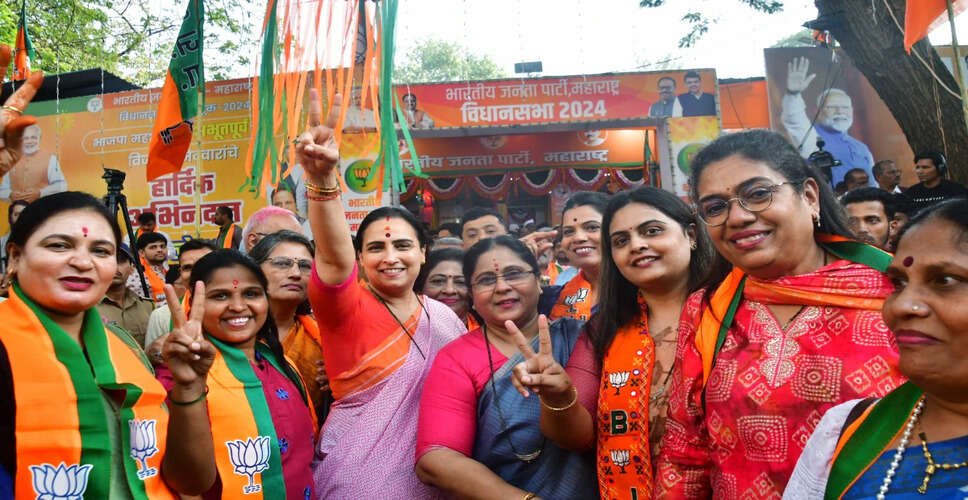
Alliance Announcement for Upcoming Elections
Uddhav Thackeray, the leader of Shiv Sena (UBT), and Raj Thackeray, head of the Maharashtra Navnirman Sena, have officially declared their alliance for the Brihanmumbai Municipal Corporation (BMC) elections scheduled for January 15. This coalition aims to significantly alter the political landscape in the race for control of the country's wealthiest municipal body. Raj Thackeray has launched a fierce critique against the BJP, accusing them of harboring intentions to separate Mumbai from Maharashtra. He cautioned that if they gain control over the municipal corporations, the 'Marathi Manus' will be rendered powerless.
The Historical Context of Marathi Identity in Mumbai Politics
The issue of 'Marathi Manus' has long dominated the BMC elections. For decades, this topic has been central to Mumbai's political discourse. Despite the city's evolving demographics and social fabric, the strong sense of linguistic identity among Marathi-speaking residents has significantly influenced local politics. This vibrant yet complex identity has given rise to various political movements, notably the emergence of Shiv Sena in the 1960s.
Shiv Sena's Evolution and Political Strategy
Shiv Sena emerged as a political force advocating for the rights of 'Bhumiputras,' or Marathi natives, who felt marginalized due to the influx of migrants seeking better opportunities in Mumbai. Balasaheb Thackeray, the party's founder, became a charismatic figure for Marathi youth. However, over time, Shiv Sena shifted its focus from its original agenda to a broader Hindutva ideology. This strategic pivot led to an alliance with the BJP, enabling both parties to contest the 1984 Lok Sabha elections together, thus expanding Shiv Sena's voter base beyond its traditional stronghold.
Challenges and Divisions Within Shiv Sena
Subsequently, Shiv Sena experienced internal divisions, with Raj Thackeray breaking away first. Nevertheless, as long as Balasaheb Thackeray was alive, Shiv Sena maintained a stronghold in Mumbai and its surrounding areas, largely due to the 'Marathi Manus' issue. The BMC elections have always been crucial for Shiv Sena, which has ruled for decades by leveraging this topic. The dynamics shifted in 2019 when Shiv Sena and BJP parted ways.
Current Political Landscape and Voter Dynamics
Under Uddhav Thackeray's leadership, Shiv Sena faced further fragmentation, leading to a gradual decline of his faction. This election is particularly significant for Uddhav, who is tasked with upholding Balasaheb Thackeray's political legacy while continuously raising the 'Marathi Manus' issue. Meanwhile, the faction led by Eknath Shinde has allied with the BJP, with Shinde emphasizing his commitment to advancing Balasaheb Thackeray's legacy.
Demographic Shifts and Voter Fragmentation
The underlying challenge is straightforward: approximately 35-37% of Mumbai's population comprises Marathi-speaking voters. For decades, this demographic has been the backbone of Shiv Sena's dominance in the BMC. However, it is also true that the Thackeray family has historically struggled to secure the full support of these Marathi votes, with Balasaheb Thackeray's peak performance reaching only about 50% during his tenure.
The Impact of Internal Divisions on Voter Unity
With Balasaheb no longer present, the once-unified Shiv Sena's voter base has fragmented. Backed by the BJP's organizational strength and resources, Shinde's faction has maintained loyalty among local councilors and grassroots networks in many Marathi-dominated areas, particularly in the eastern suburbs and mill worker regions, which have not aligned with the UBT camp. This indicates that while the Marathi vote bank remains numerically significant, it is no longer cohesive. The divisions within Shiv Sena have ensured that Marathi voters are now split among three contenders—Uddhav Thackeray, Raj Thackeray, and Shinde—diluting the impact of any single 'Bhumiputra' candidate in what was once considered Shiv Sena's bastion.
Concerns Within the Marathi Community
Additionally, there is growing discontent within the Marathi community due to the changing dynamics in areas like Mumbai, where the influx of migrants has increased significantly, pushing Marathi speakers to the margins. From economic to social empowerment, the Marathi populace now faces numerous challenges. Their businesses have become smaller and more limited, with outsiders gaining control over major economic activities. Consequently, the issue of Marathi identity may dominate this election, with a higher likelihood of vote fragmentation. Furthermore, there remains a pressing question regarding the lack of advancements in education for the Marathi language, particularly for those from Thane, Palghar, and Raigad districts who continue to struggle.