
Trump's White House Ballroom Project Faces Legal Challenges Amid Security Concerns

Overview of the Ballroom Project
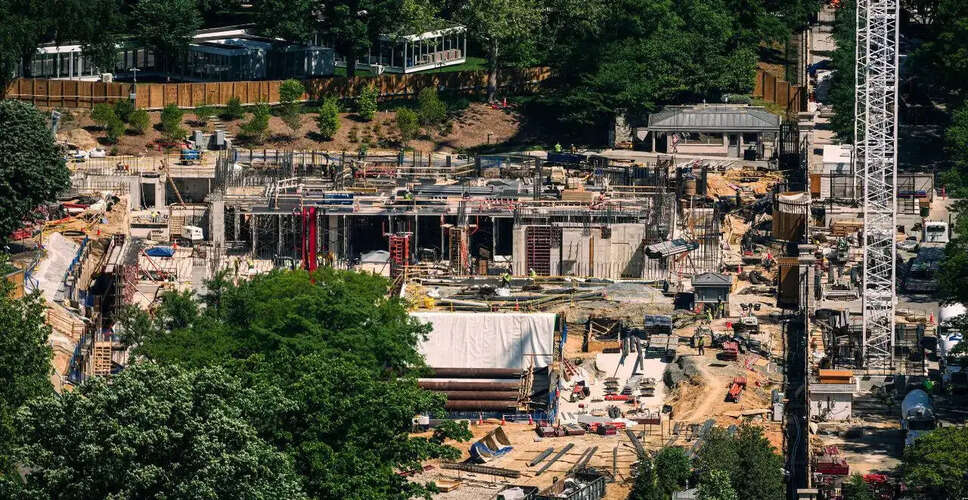
The White House is moving forward with President Donald Trump's ambitious ballroom project, asserting in a recent court document that the initiative is crucial for both security and to establish "state-of-the-art hospital and medical facilities" for the president. This latest court filing, presented by Acting Attorney General Todd Blanche late Thursday, is part of an ongoing legal dispute regarding the proposed 90,000-square-foot ballroom, which is projected to cost around $400 million. The National Trust for Historic Preservation initiated a lawsuit in December after the East Wing was demolished to facilitate the project without obtaining the necessary approvals. A federal judge has temporarily halted above-ground construction, although this order has been paused while awaiting an appeal. Oral arguments are set for June 5.
In the filing, Blanche characterized the ballroom as a "gift to the People of the United States" and accused detractors of hindering the project due to what he termed "Trump Derangement Syndrome." The administration has increasingly positioned the project as a matter of national security, particularly following an incident at the White House Correspondents' Dinner in April involving a suspected gunman.
Blanche criticized the National Trust for Historic Preservation for not withdrawing its lawsuit after the violent incident, stating, "The plaintiff refused to acknowledge the grave seriousness of that planned massacre, referring to it merely as the ‘recent incident at the White House Correspondents' Dinner.' Enough is enough." The filing outlines that the proposed ballroom would feature an underground bunker and advanced security measures designed to safeguard future presidents and senior officials during significant events.
"Presidents—not just President Trump, but all future Presidents—should not be forced to risk the safety of themselves, their families, and their Cabinet," Blanche emphasized. The document also disclosed new information about the planned complex, indicating it would include "state-of-the-art hospital and medical facilities, Top Secret military installations, bomb shelters, structures, and equipment, protective partitioning, and other features." Trump initially revealed the ballroom proposal last July, envisioning it as a privately funded venue for hosting visiting dignitaries and large events at the White House.
However, the administration's rationale for the project has evolved after a judge suggested that congressional approval might be necessary for aspects not directly related to security. Additionally, the assertion that private donors would fully finance the project has come under scrutiny, especially after Senate allies of the president sought $1 billion in federal funding for ballroom security enhancements. The White House has indicated that this funding would cover expenses for "bulletproof glass, drone detection technologies, chemical and other threat filtration and detection systems," while an extra $175 million would be allocated to enhance protection for Secret Service protectees. Earlier this week, Trump dismissed concerns regarding the project's expenses, labeling a female reporter who questioned him as a "dumb person." On Friday, he expressed optimism about the ballroom's completion by September 2028, calling it "the finest facility of its kind anywhere in the USA."