
Trump's Tariff Decision: What It Means for India and Global Trade
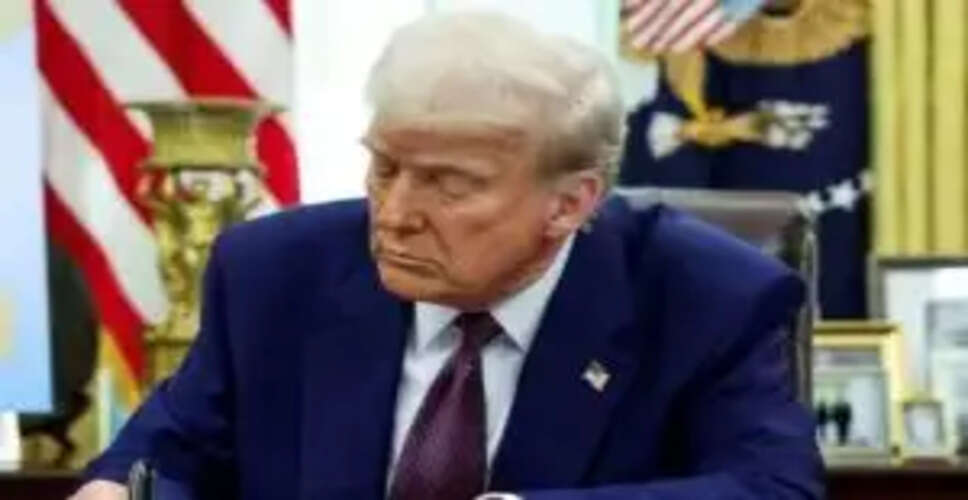

US Imposes 25% Tariff on India Amid Stalled Negotiations
New York: As the deadline for tariffs approached, President Donald Trump enacted a 25% tariff on imports from India, effective Friday, following stalled negotiations.
The executive order, issued late Thursday, did not impose additional tariffs on Russian energy purchases or BRICS membership, despite earlier threats.
In response to Trump's initial tariff warning, India asserted its commitment to safeguarding its national interests.
Trump justified the tariff by citing significant and persistent trade deficits with the US as a threat to national security and economic stability.
The 25% tariff on India surpasses the 15% to 19% rates applied to most other countries listed in the order, which takes effect at midnight (9:30 a.m. in India).
Although India was among the first nations to engage in negotiations with the US, talks appeared to have faltered, leading Trump to issue the tariff threat on Wednesday. However, he later expressed optimism, stating, 'We’re talking to India now, we’ll see what happens.'
Notably, Trump did not send a formal letter to India as he did to other nations.
Despite last-minute discussions, the tariffs remained unchanged.
Throughout the negotiation process, Trump referred to Prime Minister Narendra Modi and India as friends.
Just last week, he indicated that a deal was on the horizon.
India’s Commerce Minister Piyush Goyal also expressed optimism, claiming that negotiations were progressing well.
Trump's executive order indicated that some trading partners, despite negotiations, had not offered terms that adequately addressed trade imbalances or aligned with US economic and national security interests.
Among the countries listed, Myanmar faced the highest tariff at 41%, while Brazil and Britain received the lowest at 10%.
Brazil's rate was unexpected, given Trump's previous threats of a 50% tariff due to a dispute involving former President Jair Bolsonaro.
In a last-minute decision, Trump extended the deadline for Mexico, allowing negotiations to continue.
Canada, embroiled in a separate dispute with Trump, was not included in the order, although a 30% tariff had been set previously.
Ongoing discussions with China have resulted in a temporary tariff rate of 30%, significantly lower than initial threats of up to 145%.
Pakistan's tariff was set at 19%, while Sri Lanka and Bangladesh faced a 20% tariff.
A significant challenge for India was the US demand for increased access to its agricultural and dairy markets, which could adversely affect India's agricultural sector, employing nearly half of its workforce.
India's response to Trump's tariff threat emphasized the importance of protecting its farmers, entrepreneurs, and MSMEs (Micro, Small, and Medium Enterprises).
While countries like the European Union and Japan appeased Trump with promises of substantial investments in the US, India could not match such offers.
India also found itself caught in the escalating tensions between Trump and Russia, particularly after President Vladimir Putin ignored Trump's calls for a ceasefire in Ukraine.
Trump mentioned India's purchase of Russian oil during a recent address, and India became a focal point in a verbal exchange between Trump and former Russian President Dmitry Medvedev, despite having no involvement.
In a post on Truth Social, Trump remarked, 'I don’t care what India does with Russia. They can take their dead economies down together, for all I care.'
For months, Trump has criticized India's high tariffs, labeling it the 'Tariff King,' a title Finance Minister Nirmala Sitharaman has strongly contested.
In her February budget, she significantly reduced tariffs on premium motorcycles, including those affecting Harley Davidson, which had been a point of contention for Trump since his first term.
Trump may need to address India's pharmaceutical exports, valued at $12.7 billion last year, as they represent a crucial portion of generic medicines in the US, with any price increases likely to impact already high medical costs.
When questioned about penalties for purchasing Russian oil, which he previously suggested could be 100%, Trump sidestepped the issue and instead mentioned potential penalties for BRICS membership.
If penalties for Russian oil purchases are implemented, they will likely be tied to a deadline for Moscow to cease hostilities in Ukraine, expected around August 7.
Given that China is also purchasing Russian energy, imposing secondary sanctions could complicate matters as Washington and Beijing seek to avoid a full-blown trade war.
Similarly, a BRICS penalty would also affect China.