
Trump's Stark Warnings to Latin America: A Call for Action Against Drug Trafficking
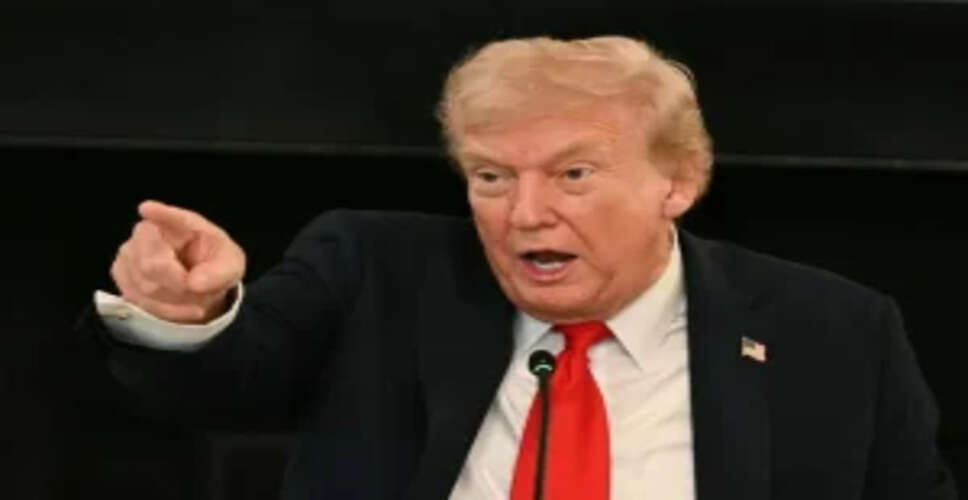
US President's Strong Stance on Regional Issues
Washington: President Donald Trump has issued stern warnings to the governments of Cuba, Colombia, and Mexico, expressing that the United States' patience is dwindling due to their roles in drug trafficking and regional instability. He indicated that his administration is ready to take action if there are no changes.
While speaking to reporters on Air Force One after returning from Mar-a-Lago, Trump noted that Cuba's situation has deteriorated significantly following US actions in Venezuela, claiming that Havana has lost a crucial economic lifeline.
According to Trump, "Cuba now has no income," emphasizing that the nation relied heavily on Venezuelan oil. He stated, "They got all of their income from Venezuela… and Cuba literally is ready to fall."
He clarified that the US does not currently intend to engage militarily with Cuba, suggesting that an internal collapse is more probable. "We’re not (going in)," he remarked. "I think it’s just going to fall. It’s going down for the count."
Trump mentioned that many Cuban Americans would likely welcome such a development, stating, "You have a lot of great Cuban Americans that are going to be very happy about this."
Turning his attention to Colombia, Trump used particularly strong language, accusing its leadership of allowing cocaine production aimed at the US market. He stated, "Colombia is very sick too, run by a sick man who likes making cocaine and selling it to the United States."
He warned that US intervention could be imminent, responding to a question about potential operations with, "It sounds good to me," and adding, "He’s not going to be doing it very long."
Trump also linked Colombia, Venezuela, and Cuba as part of a regional threat, claiming, "We had a drug caliphate in our backyard," and asserting that the US is now working to dismantle it.
In a notable operation on January 3, US forces arrested the Venezuelan president at his Caracas residence and transported him to New York for trial.
Regarding Mexico, Trump criticized the government for its inability to confront drug cartels that dominate significant areas of the country. "The cartels are running Mexico, whether you like it or not," he stated. "It’s not nice to say, but the cartels are running Mexico."
He revealed that he has consistently offered military assistance to Mexican President Claudia Sheinbaum to tackle drug trafficking, saying, "Every single time I talked to her, I offered to send troops."
Trump noted that Sheinbaum has declined his offers, adding, "She’s concerned. She’s a little afraid."
He insisted that Mexico must take more decisive action or face repercussions, as drugs continue to flow northward through its territory. "Mexico has to get their act together," he asserted.
The president also indicated that the US is ready to expand operations beyond Venezuela if necessary, stating, "We were prepared to do a second strike," and emphasizing that the option remains available if regional governments do not "behave."
Trump framed his remarks within a broader regional doctrine, invoking the Monroe Doctrine and arguing that previous administrations had lost sight of it. He stated that the aim is stability and security, not occupation, saying, "We’re in the business of having countries around us that are viable and successful."
These comments highlight Trump's willingness to utilize economic pressure, military force, and direct warnings as strategies to reshape US relations with neighboring nations he perceives as threats to American security.