
Trump's Stark Justification for Iran Conflict Amid Internal Dissent
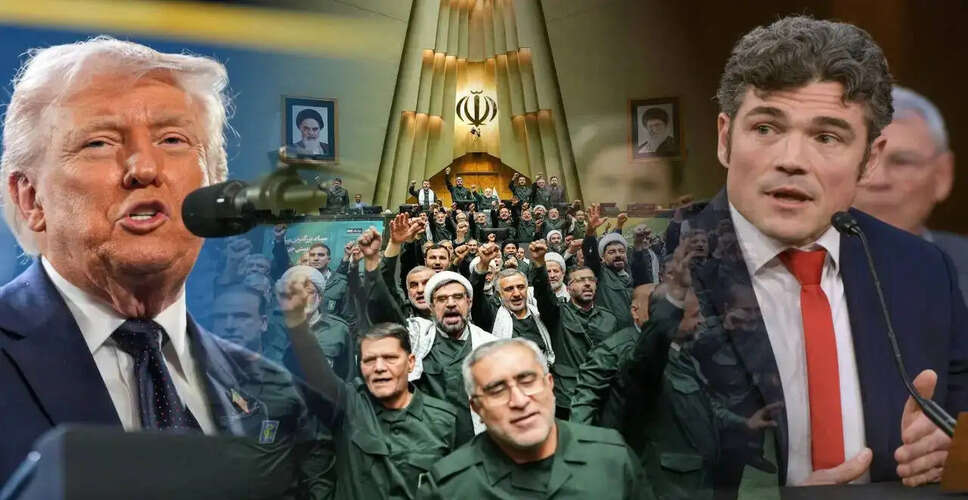
Trump's Bold Claims on Iran
During a recent Republican fundraiser in Washington, US President Donald Trump articulated one of his most direct justifications for the ongoing conflict with Iran. He asserted that the United States had no alternative but to confront Iran, labeling the potential for a nuclear-armed Tehran as a “cancer” that must be eradicated. His rhetoric was notably severe, framing the situation not as a strategic choice but as an essential action. Trump stated, “We had to cut out the cancer,” emphasizing that immediate economic repercussions, such as rising oil prices and market instability, were not a priority in his decision-making process. He admitted to anticipating a more significant economic impact but maintained that the perceived threat was far more pressing.
Internal Criticism of War Justification
Internal Criticism of War Justification
However, this justification is not universally accepted, even within Trump's administration. Joe Kent, the former director of the National Counterterrorism Center, resigned earlier this month, using his departure to voice a strong critique. In his resignation letter, he argued that Iran did not pose an imminent threat to the US, directly challenging the urgency that has been a cornerstone of the war's rationale. This stark contrast highlights a significant divide: on one side, a president who views the conflict as unavoidable, and on the other, a senior counterterrorism official who believes the threat does not warrant such drastic measures.
US Military's Assessment of the Conflict
US Military's Assessment of the Conflict
In contrast, US military leaders have focused on the scale and impact of their operations. Admiral Brad Cooper, head of US Central Command, reported that American forces have targeted over 10,000 military sites in Iran since the conflict's onset. His operational update indicated that the campaign has significantly weakened Iran’s military capabilities, including its naval forces and weapons production facilities. Cooper noted that approximately 92% of Iran’s largest naval vessels have been destroyed, and more than two-thirds of its missile, drone, and naval production sites have been damaged or rendered inoperative. He also mentioned that US forces have achieved air superiority, conducting over 10,000 combat flights. While these claims are difficult to independently verify in real-time, they illustrate how Washington is portraying the war's progress as a comprehensive effort to dismantle Iran's military strength.
Navigating Between Strategy and Reality
Navigating Between Strategy and Reality
This situation places the conflict at a crucial juncture between declared intentions and the evolving reality on the ground. Trump's narrative is strategic and preventative, suggesting that the war aims to eliminate a future threat before it arises. Conversely, the military's perspective is operational, focusing on the targets hit and the capabilities diminished. The unresolved question remains: what lies ahead? Despite US officials highlighting battlefield successes, the war continues, with Iran's retaliatory capabilities still intact. Regional tensions have escalated rather than subsided. Additionally, the economic implications, which Trump downplayed, continue to reverberate, with energy markets remaining unstable and supply routes under strain. Global attention is fixed on whether the situation will escalate further.
Defining the Ongoing Conflict
Defining the Ongoing Conflict
Trump's statements do not indicate a change in policy; rather, they reinforce his stance. By characterizing Iran's nuclear ambitions as a “cancer,” he has framed the conflict in a manner that allows little room for compromise or quick resolutions. This language suggests a complete eradication rather than mere containment. However, wars seldom adhere to the clarity of their initial justifications. As the conflict with Iran progresses, it will increasingly be shaped not only by leaders' narratives about its origins but also by the realities revealed on the battlefield and the political dynamics that underpin it.