
Trump's Shift in Stance Sparks Debate Amid US-Iran Tensions

Political Tensions Between the US and Iran
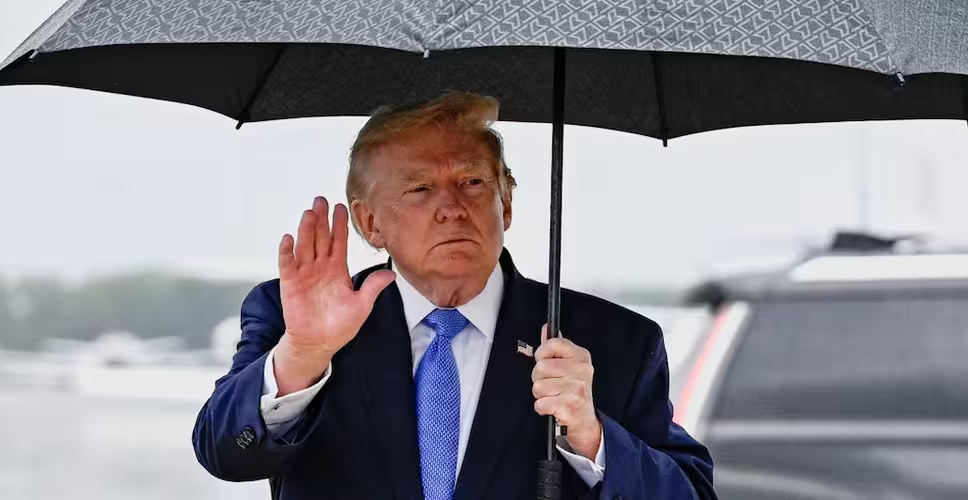
Amid ongoing tensions between the United States and Iran, President Donald Trump's recent declaration of 'No War' has ignited a new political discourse. Trump indicated that the US would not pursue new military actions against Iran for the time being and would seek solutions through dialogue. Following this announcement, Iranian media launched a scathing critique of Trump, mocking him for shifting from threats of war to advocating for peace and negotiations.
Numerous Iranian state and pro-government media outlets interpreted Trump's change in stance as a sign of American weakness. Reports suggested that the US's aggressive policies had failed, forcing the White House to consider diplomatic avenues. Some media platforms sarcastically remarked that 'Trump's air has deflated,' as he now appeals for dialogue instead of conflict.
In recent statements, Trump mentioned that if Iran is willing to negotiate on its nuclear program soon, the US could avoid new military strikes. He also claimed that a dialogue process was on the horizon, potentially paving the way for both sides to move towards a resolution. This statement has raised hopes globally that the long-standing tensions might ease.
However, Iran has publicly conveyed that it will not yield to pressure tactics. Iranian officials and media assert that while the US previously issued warnings of military action, it is now advocating for talks. They have framed this as a strategic advantage, claiming that the US's pressure tactics have proven ineffective.
Experts believe that several factors may have influenced Trump's altered position. Concerns from regional allies, potential impacts on the global oil market, and the economic costs of prolonged military conflict are significant elements that have prompted the US to reconsider military action in favor of diplomatic options.
The world is now closely watching the proposed talks between the US and Iran. If negotiations progress, there could be a reduction in tensions in the Middle East. Nevertheless, deep-seated differences between the two nations remain, making it unlikely that a lasting agreement will be easily achieved.