
Trump's Military Strategy in the Middle East: A Shift in Approach
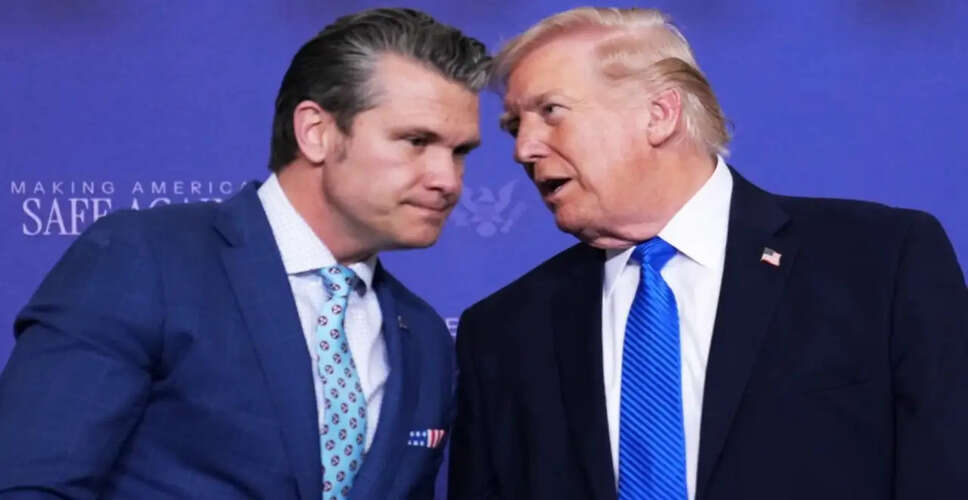
US President Trump Faces Scrutiny Over Military Actions
Washington DC: As the conflict in the Middle East extends into its fourth week, there is growing concern regarding President Donald Trump's choice to initiate military operations against Iran. During a recent roundtable in Tennessee, Trump shifted the blame onto his Defense Secretary, Pete Hegseth, claiming he was the first to advocate for military action. Trump remarked, “Pete, I think you were the first one to speak up, and you said, ‘Let’s do it because you can’t let them have a nuclear weapon,’” while Hegseth was present.
Hegseth has been a key figure in communicating about the war and has defended the military campaign against ISIS. Trump mentioned, “I called Pete. I called General Kane. I called a lot of our great people.” He acknowledged the ongoing issues in the Middle East, suggesting that decisive action could eliminate significant threats. Interestingly, he noted that Vice President JD Vance was not fully supportive of the military initiative, although Vance did not express his dissent publicly.
Trump has provided varying justifications for the military intervention. At times, he indicated that the strikes were essential to prevent Iran from developing nuclear capabilities, while at other moments, he described the airstrikes as preemptive measures to avert a larger regional conflict. Additionally, he disclosed that the US administration was caught off guard by Iran's retaliatory actions against Gulf nations.
Temporary Halt on Strikes Against Iran's Energy Sector: On the same day, Trump moderated his stance, announcing a five-day postponement of military strikes targeting Iranian power plants and energy infrastructure. He stated that this decision was dependent on the progress of ongoing negotiations aimed at achieving a comprehensive resolution to the hostilities. Trump expressed optimism about the recent discussions, stating, “I am pleased to report that the United States of America and the country of Iran have had, over the last two days, very good and productive conversations regarding a complete and total resolution of our hostilities in the Middle East.”
He further instructed the Department of War to delay any military actions against Iranian energy facilities for five days, contingent on the success of the ongoing talks. The conflict initially erupted on February 28, following US and Israeli airstrikes on Iran that resulted in the deaths of several high-ranking officials, including Supreme Leader Ayatollah Ali Khamenei. In retaliation, Iran launched attacks on Gulf nations and effectively blocked the Strait of Hormuz.