
Trump's Military Background: A Closer Look at His Non-Service
Trump's Military Background Under Scrutiny
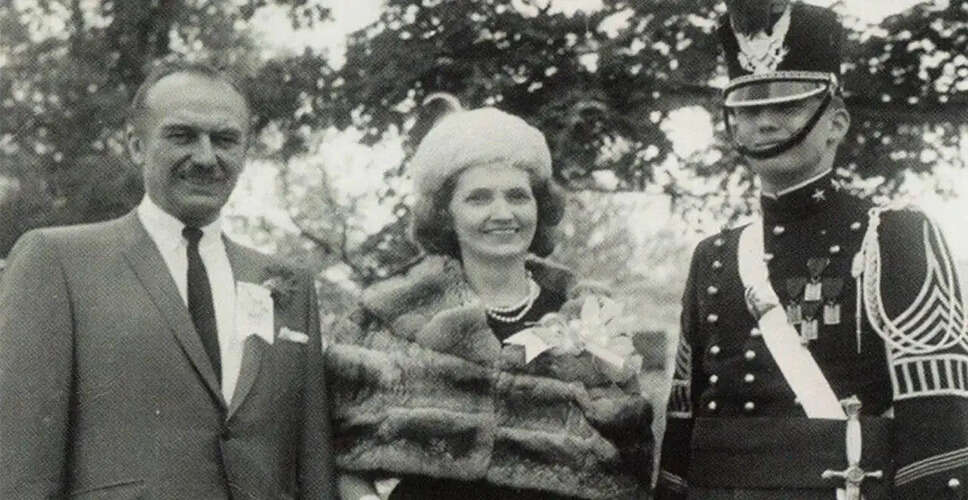
As military operations intensify under President Donald Trump, discussions have resurfaced regarding his military background. This renewed interest was sparked by a recent post on his social media platform, Truth Social, where he shared a photo of himself with his parents outside the New York Military Academy, captioned: “At Military Academy with my parents, Fred and Mary!”
— Rapid Response 47 (@RapidResponse47) March 13, 2026
Education and Military-Style Training
Trump began his education at the New York Military Academy (NYMA) in 1959 at the age of 13, graduating in 1964. The academy is structured to mimic military discipline, featuring strict inspections, marching drills, and rank hierarchies. During his tenure, Trump ascended through the cadet ranks, eventually taking on responsibilities akin to a supply sergeant, where he enforced rules among younger cadets and engaged in leadership activities. Former classmates have described the academy as highly regimented, with uniforms, parades, and daily drills shaping the student experience.
Draft Deferments During the Vietnam War
As Trump reached draft age amid the Vietnam War, he, like many of his peers, received multiple deferments while pursuing his education. He secured a total of four educational draft deferments while in college. Upon graduating from Wharton in 1968, he was granted a medical exemption due to a diagnosis of bone spurs in his heels, which ultimately disqualified him from military service. Following his education, Trump joined his father’s real estate business, managing numerous residential properties in New York, and by the early 1970s, he had taken over the family business, later known as the Trump Organization.
Military Actions During His Presidency
Despite not serving in the military, Trump's presidency has been marked by significant military policy initiatives. Since returning to office in 2025, his administration has initiated or expanded several high-profile military operations abroad, including:
- Operation Epic Fury, aimed at Iranian military infrastructure and the Islamic Revolutionary Guard Corps.
- Increased counterterrorism operations in Somalia, Nigeria, Syria, and Iraq.
- Military actions against Houthi positions in Yemen.
The administration has also authorized a more active military presence within the United States, deploying National Guard units for border security and internal security missions, reflecting a shift in national defense priorities. Reports indicate that Trump has allowed field commanders greater operational flexibility in various regions, favoring quicker and more aggressive military responses.
A Commander-in-Chief Without Military Experience
Trump's absence of military service is not an isolated case among U.S. presidents; several recent presidents, including Bill Clinton and Barack Obama, also held office without military experience. Nonetheless, this topic remains contentious as Trump often emphasizes military strength and has overseen substantial defense operations during his terms. Supporters argue that his time at the New York Military Academy provided him with early exposure to discipline and leadership, while critics frequently highlight his Vietnam-era deferments when discussing his relationship with military service. Ultimately, while Trump has never donned a military uniform, his decisions as commander-in-chief continue to influence the role of the U.S. military both domestically and internationally.