
Trump's Fluctuating Stance on Iran Conflict: A Timeline of Events
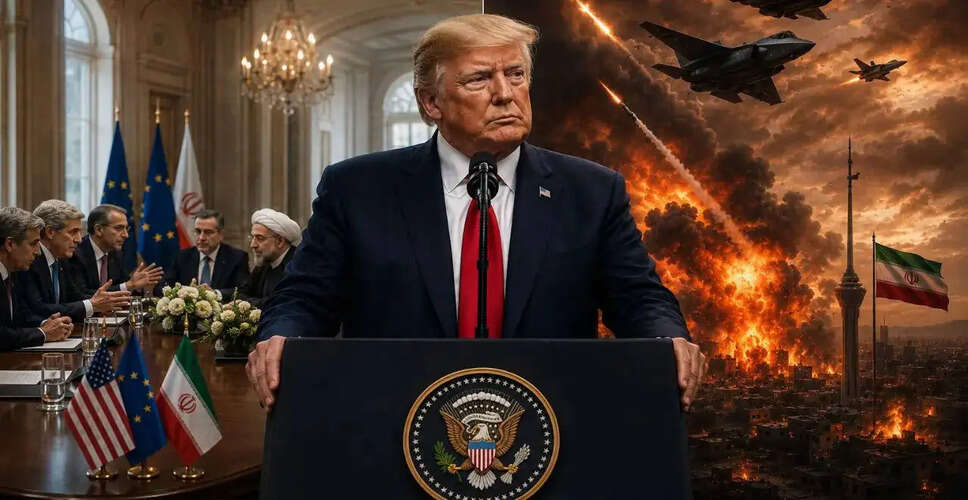

Overview of Trump's Iran Strategy
President Donald Trump has consistently asserted that the conflict with Iran is approaching its conclusion, despite ongoing military actions, threats, and stalled diplomatic efforts. In recent months, Trump has oscillated between advocating for diplomacy, threatening military action, and declaring victory in the ongoing conflict—sometimes making these statements within mere hours of each other. In March, he stated on social media: "There will be no deal with Iran except UNCONDITIONAL SURRENDER!" Shortly thereafter, he claimed that Iran was "totally defeated and wants a deal." On March 23, he announced a temporary halt to planned strikes against Iranian energy and power facilities, which led to a significant drop in oil prices, with Brent crude decreasing by over 10% as investors interpreted this as a potential de-escalation. On the same day, Trump informed reporters that there had been "very, very strong talks" with Tehran and hinted at a "real possibility" of reaching an agreement. However, Iranian officials publicly dismissed these assertions, with the speaker of Iran's parliament accusing the U.S. of disseminating "fake news" to sway oil and financial markets.
Escalation of Tensions
Despite the optimistic rhetoric, tensions escalated once more within days. On March 30, Trump warned via social media that Iran's energy infrastructure could be targeted unless the Strait of Hormuz was reopened immediately. This warning caused a sharp reaction in financial markets, with the S&P 500 experiencing its worst day of the year before partially recovering after Trump later suggested that U.S. forces would be departing the region "very soon." In a televised address on April 1, he reiterated that diplomacy was his preferred approach and stated that U.S. military objectives would be achieved "very shortly." However, the following days brought further mixed messages. On April 4, he threatened that "all Hell will reign down" within 48 hours, only to later claim that Iran had made "a significant proposal." On April 7, he warned that "a whole civilization will die tonight," but subsequently announced a two-week ceasefire facilitated by Pakistan. Although markets initially reacted positively to the truce, it soon faced challenges as Tehran accused Israel of breaching the agreement through ongoing conflicts involving Hezbollah in Lebanon, while Iran continued to keep the Strait of Hormuz closed despite earlier commitments to reopen it.
Impact on Global Oil Trade
Prior to the onset of hostilities, approximately one-fifth of the world's oil and gas shipments transited through the Strait of Hormuz. Since the conflict began, shipping traffic has significantly declined. Following stalled negotiations on April 11, the Trump administration declared a blockade aimed at Iranian ports and oil exports. Iranian officials responded by asserting that the strait would remain closed as long as the blockade was in effect. By late April, Trump extended the ceasefire indefinitely and indicated that U.S. officials would return to Pakistan for further discussions. However, those talks were canceled shortly thereafter. By May, market reactions to Trump's repeated claims of diplomatic progress appeared to diminish. On May 3, Trump suggested that discussions with Iran "could lead to something very positive for all." Yet, just days later, he dismissed a letter from Tehran as "a piece of garbage" after it reportedly lacked new concessions. Over the Memorial Day weekend, Trump again indicated that a deal to extend the ceasefire and reopen the Strait of Hormuz was imminent, while cautioning that negotiations might take additional time. On the following Monday, U.S. forces conducted new strikes in southern Iran, and Trump warned that military actions could escalate once more. As of Tuesday, discussions between Washington and Tehran were still ongoing.