
Trump's Controversial Claims on Apache Helicopter Deliveries to India
Trump's Claims on Defense Relations with India
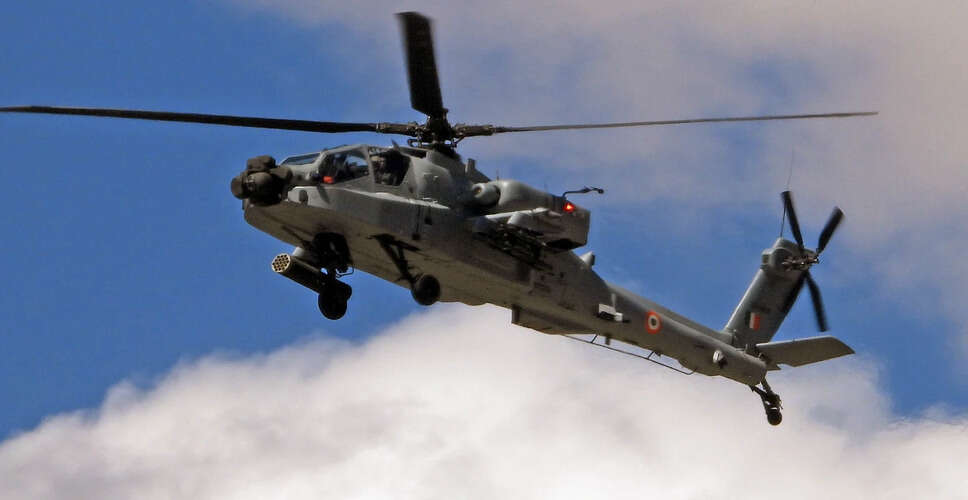
U.S. President Donald Trump has made sensational claims regarding defense ties with India. During a recent House GOP retreat, he stated that Prime Minister Narendra Modi requested him to expedite the delivery of 68 Apache attack helicopters, which have reportedly been delayed for over five years. However, sources from the Indian Ministry of Defence and official documents have cast doubt on Trump's assertions.
Clarifying the Apache Helicopter Orders
In his address, Trump claimed that Modi addressed him as 'Sir' while expressing concerns about the delays in helicopter deliveries. However, Indian officials have clarified that India had ordered only 28 Apache helicopters in two batches—22 in 2015 and 8 in 2020, with all deliveries scheduled to be completed by December 2025.
Concerns Over Costs Rather Than Delays
The real concern for India regarding these helicopters is not the delay but the cost. The AH-64E Apache is a state-of-the-art attack helicopter equipped with advanced radar and sensors, capable of launching Hellfire missiles and Hydra rockets from a distance of 10 kilometers. The price tag for each helicopter, including missiles and ammunition, is approximately $150 million (around ₹1,350 crores), which has led the Indian Army to reduce its initial plan of acquiring 39 helicopters to just 28.
The Price of Apache vs. Indigenous Alternatives
In contrast, the indigenous HAL Prachand helicopter costs about $48 million (around ₹400 crores). This significant price difference has compelled the Indian Army to scale back its procurement plans, with only six out of the originally planned 17 helicopters being purchased.
Expert Opinions on Apache's Role
Former DG of Army Aviation Corps, Lieutenant General Ajay Kumar Suri, noted that while the Apache is a formidable machine for close-air support, the cost could hinder further acquisitions. The Apache was designed during the Vietnam War era to support ground troops with heavily armed helicopters.
Apache's Historical Context and Modern Challenges
The Apache was developed to counter Soviet tanks in Europe, but its vulnerabilities became apparent during urban warfare scenarios. Recent conflicts have raised questions about the Apache's effectiveness, especially with the rise of drone technology that poses new threats to helicopters.
The Future of Apache Helicopters
With over 2,700 Apaches produced, the U.S. Army is shifting focus towards next-generation platforms, indicating a potential decline in Apache production. Despite its high cost, the Apache is often referred to as a 'flying tank' due to its advanced weaponry and capabilities.