
Trump's Commitment to Lebanon Amid Ongoing Tensions with Israel and Hezbollah

Trump's Pledge to Lebanon
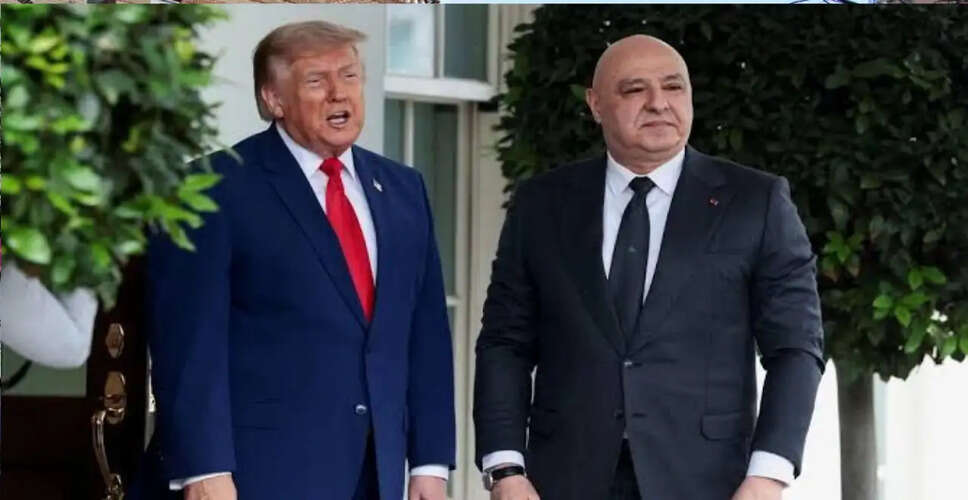
During a meeting at the White House on Tuesday, President Donald Trump assured Lebanese leader Joseph Aoun of significant support for Lebanon. Aoun's visit aimed to seek long-term stability following the recent conflict involving Israel and the Iran-backed Hezbollah group. While the U.S. has historically promoted peace in Lebanon, it has recently been preoccupied with escalating tensions in Iran, which have destabilized the broader Middle East. Trump expressed a diminished interest in negotiating with Iranian officials to resolve the ongoing conflict.
In a notable development, Lebanon and Israel engaged in rare direct discussions facilitated by the U.S. Trump remarked, “Lebanon has been treated poorly, and we will ensure it receives the respect it deserves.” He emphasized, “We’re going to help it a lot,” although he did not provide specific details. Reports indicate that the possibility of resuming direct U.S. flights to Lebanon is being considered.
Shortly after the meeting, Trump announced that American airlines would be permitted to resume direct flights to Lebanon for the first time in over 40 years, a route that had been suspended since 1985 due to security concerns following the hijacking of TWA Flight 847. He stated, “I am directing my Administration to allow all U.S. airline carriers to fly directly to Lebanon so that Americans can easily visit this beautiful land.” However, the likelihood of airlines operating in Lebanon soon remains uncertain due to the ongoing situation in Iran and Hezbollah's influence in the region.
Ongoing Negotiations and Military Presence
Lebanon is hopeful that discussions in Washington will lead to the withdrawal of Israeli troops from significant areas of southern Lebanon and provide support for the Lebanese military to regain control over regions previously dominated by Hezbollah militants. Trump mentioned that Israeli forces are in the process of withdrawing but did not elaborate further.
Aoun praised Trump’s vision for peace, referring to it as part of his legacy, to which Trump humorously agreed, complimenting Aoun's charm. On June 26, Lebanon and Israel had announced a framework agreement outlining a plan for Israeli troop withdrawal and the disarmament of Hezbollah, which has maintained a stronghold in southern Lebanon for decades. The U.S. State Department confirmed that operations in three villages designated as pilot zones had commenced, although the situation remains complex.
Confusion persists regarding the actual withdrawal of Israeli troops. A Lebanese military official indicated uncertainty about Israeli presence in Zawtar al-Gharbieh, while an Israeli military spokesperson claimed that their forces had not been in that area for some time. The pilot zone implementation has faced challenges, with reports of Israeli troops firing near Lebanese military deployments, leading to disputes over territorial boundaries.
Local Perspectives and Future Implications
Abed Ezzeldine, the mayor of Zawtar al-Gharbieh, expressed caution regarding the safety of displaced residents returning to their homes, noting significant infrastructure damage. He mentioned that civilians would only visit briefly to assess the situation.
Secretary of State Marco Rubio met with Aoun, reaffirming U.S. support for the framework agreement while cautioning that lasting peace in Lebanon hinges on resolving the Hezbollah issue. Rubio emphasized the need for a strong government capable of replacing Hezbollah as the sole armed force in the country, a sentiment echoed by many who fear that military confrontation could lead to civil unrest.
Israeli officials have indicated intentions to maintain a long-term military presence in southern Lebanon, while Hezbollah has dismissed U.S.-mediated talks, favoring negotiations with Iran. Lebanon's government, which came to power on a reformist agenda, is under pressure to disarm non-state groups like Hezbollah, which it blames for escalating tensions with Israel. The leadership insists that Israeli withdrawal and international support for the Lebanese military are essential for achieving sustainable security.