
Trump's Comments on Irish Unification Draw Criticism from UK Leaders

Trump's Controversial Remarks on Irish Unification
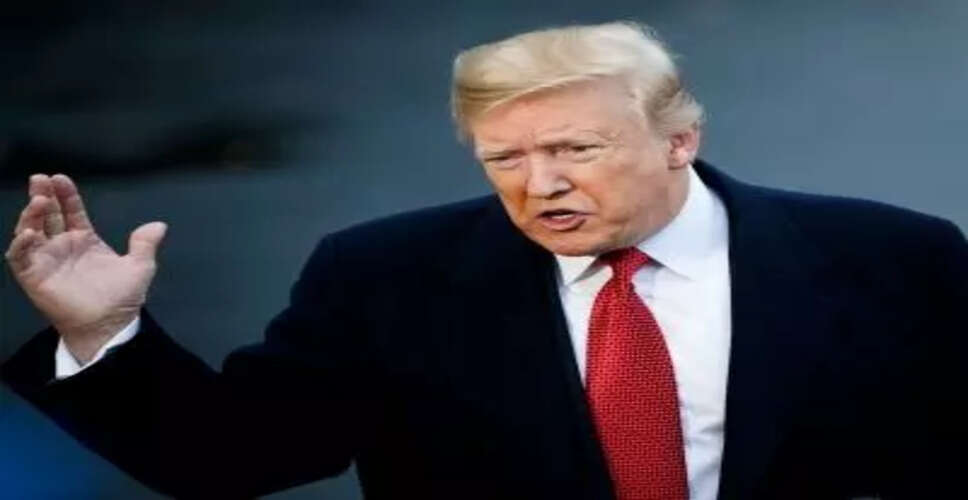
A file image of US President Donald Trump (Photo: X)
Washington, Sep 14: US President Donald Trump's recent comments regarding the potential unification of Ireland and Northern Ireland have ignited significant backlash from the United Kingdom.
During his visit to Ireland, Trump expressed his desire for the two regions to unite, stating he would "love to see" this happen. At a press conference alongside Irish Prime Minister Micheal Martin in Dublin, he remarked, "I don't want to cause any problems, but I will tell you, I'd love to see it unified." He further suggested that unification might occur sooner rather than later, believing it would "happen eventually."
Recognizing the sensitivity of the topic, Trump admitted that there was "no good answer" to the question of unification.
In response, Prime Minister Martin called for a measured approach to Trump's statements, emphasizing that there was no need for excessive reactions. He noted that Trump's perspective aligns with his previous comments, according to reports from a news agency.
Kemi Badenoch, the leader of the British Conservative Party, criticized Trump on social media, suggesting he was speaking impulsively, similar to his past comments about Greenland and Canada becoming the 51st state.
Gavin Robinson, head of the Democratic Unionist Party, firmly rejected Trump's views, asserting on social media that the future of Northern Ireland should be determined by its residents, not by opinions from London, Dublin, or Washington. He reiterated that Northern Ireland remains part of the United Kingdom due to the democratic will of its people.
Reform UK leader Nigel Farage also expressed his disagreement with Trump, stating that Northern Ireland is a vital and proud component of the United Kingdom.
The British government has consistently maintained that there is currently inadequate support for a referendum regarding Northern Ireland's constitutional status. Prime Minister Andy Burnham indicated in late August that a referendum on Irish unification is not being considered at this time.
It is important to note that Ireland and Northern Ireland function as distinct political entities. The 1998 Belfast Agreement established a principle of consent, which dictates that Northern Ireland will remain part of the United Kingdom unless a majority of its population votes for a united Ireland.