
Trump's Bold Move: New Tariffs on Pharmaceuticals and Metals Could Reshape Trade
Executive Order on Pharmaceutical Tariffs
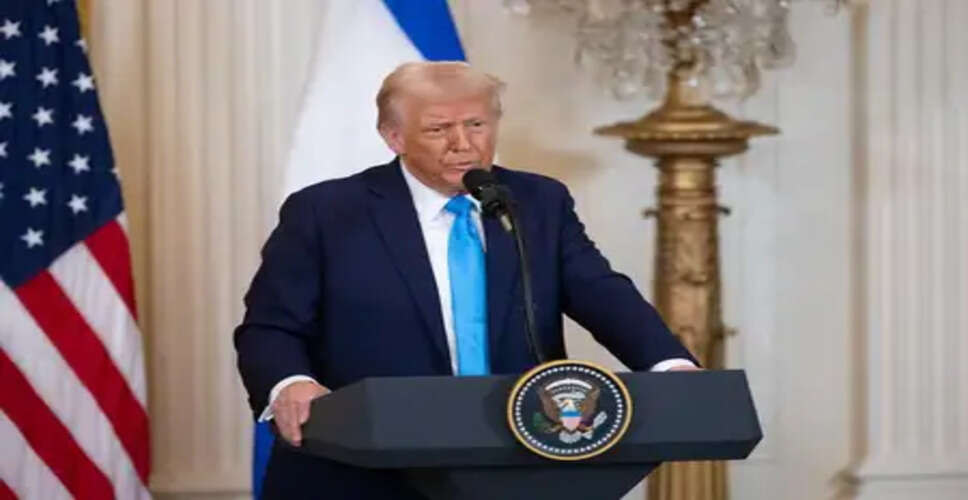
New York: On Thursday, President Donald Trump enacted an executive order that may impose pharmaceutical tariffs of up to 100% on certain patented medications from companies that fail to negotiate agreements with his administration in the upcoming months.
Pharmaceutical firms that have entered into a 'most favored nation' pricing agreement and are actively establishing production facilities in the US will face no tariffs. However, those without such agreements but still investing in US projects will incur a 20% tariff, which could escalate to 100% over four years.
A senior official from the administration informed reporters that companies have a limited timeframe to negotiate before the full tariffs are implemented—120 days for larger corporations and 180 days for others.
The official, who requested anonymity to discuss the executive order prior to its release, did not specify which companies or drugs might be affected but mentioned that 17 pricing agreements had already been established with major pharmaceutical manufacturers, with 13 of those signed.
In the executive order, Trump stated that these measures were essential to mitigate the national security risks posed by pharmaceutical imports. This announcement coincided with the anniversary of Trump's 'Liberation Day,' when he introduced extensive import taxes that had previously unsettled the stock market. The Supreme Court later overturned those tariffs in February.
Concerns have been raised regarding the potential impact of the newly announced tariffs. Stephen J. Ubl, CEO of the pharmaceutical trade group PhRMA, warned that taxes on innovative medicines could lead to increased costs and threaten billions in US investments. He emphasized that the majority of medicines sourced from abroad come from reliable US allies.
Since the beginning of his second term, Trump has implemented a series of new import taxes on trading partners and has consistently promised that high tariffs on foreign-made drugs were forthcoming. The administration has also leveraged the threat of new tariffs to negotiate deals with major companies like Pfizer, Eli Lilly, and Bristol Myers Squibb, resulting in commitments for lower prices on new medications.
Updates on Metal Tariffs
In addition to the pharmaceutical tariffs, Trump announced an update to the existing 50% tariffs on imported steel, aluminum, and copper. Starting Monday, the tariff rates on these metals will be calculated based on the 'full customs value' that US customers pay for foreign metals, according to the latest order. Administration officials claim this change will prevent importers from circumventing higher payments.
Products made entirely of steel, aluminum, and copper will continue to be subject to a 50% tariff for most countries. However, the administration is altering how tariffs are assessed for derivative metals—finished goods that contain some of these metals but are not solely composed of them.
For items where metal constitutes less than 15% of the total weight (like a perfume bottle cap), only country-specific tariffs will apply. Conversely, for products with a higher metal content, such as a steel washing machine, a 25% tariff will be imposed on the entire value.
These recent orders exemplify Trump's ongoing strategy of utilizing sectoral duties. The president invoked Section 232 of the 1962 Trade Expansion Act to impose these levies, the same authority he used to implement tariffs on cars, lumber, and kitchen cabinets. Many anticipate additional product-specific import taxes in the future.
This follows a Supreme Court ruling that invalidated tariffs Trump had imposed under the 1977 International Emergency Economic Powers Act, which allowed for immediate tariffs on any country at nearly any level.
Despite the February 20 court decision being a significant setback for Trump's economic strategy, he still possesses various options to continue imposing aggressive import taxes. In addition to sectoral levies, Trump enacted a 10% tariff on all imports shortly after the Supreme Court ruling, although this duty can only remain in effect for 150 days. Approximately two dozen states have already challenged the new tariffs.
Trump has maintained that his steep import taxes are crucial for reclaiming wealth he believes has been 'stolen' from the US. He argues that these tariffs will reduce America's long-standing trade deficit and encourage manufacturing to return to the country. However, he has also resorted to tariffs in response to personal grievances or political opposition, and the disruption of the global supply chain has proven costly for businesses and households already facing rising prices.