
Trump Urges Global Cooperation for Strait of Hormuz Security
Call for International Support
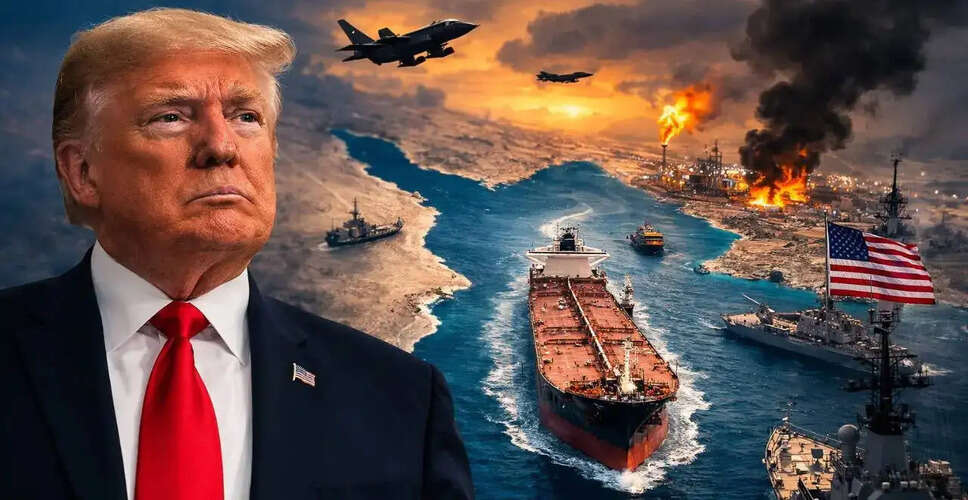
On Saturday, President Donald Trump reiterated his appeal for nations worldwide to assist in safeguarding commercial shipping through the Strait of Hormuz, a crucial energy passage. He stated on Truth Social, "The United States has significantly weakened Iran militarily and economically, but countries that rely on oil from the Hormuz Strait must ensure the safety of this route, and we will provide substantial assistance!" Trump emphasized that the U.S. would collaborate with other nations to ensure operations proceed efficiently, highlighting that this should have always been a collective effort.
Importance of the Strait
A Vital Shipping Route
The Strait of Hormuz is essential for global oil transportation. Tensions have escalated in this narrow channel due to ongoing conflicts with Iran, prompting the Trump administration to prioritize the restoration of commercial shipping in this area. Iran's Foreign Minister, Abbas Araghchi, clarified that the waterway remains open to all except U.S. and Israeli vessels, stating, "It is only closed to American and Israeli ships, not to others." However, attacks in the region have severely disrupted commercial shipping, impacting oil exports and creating instability in global energy markets. Officials from the U.S., Israel, and other Western nations have expressed growing concern over the situation.
Increased Military Presence
Military Buildup
The U.S. is enhancing its military footprint in the region. Defense Secretary Pete Hegseth has ordered the amphibious assault ship USS Tripoli and its Marine expeditionary unit to the Middle East. This Marine unit is prepared for ground operations if necessary, although a U.S. official refrained from confirming any immediate plans for such actions.
Recent Military Actions
Strike on Kharg Island
On Friday, U.S. forces executed what was described as a significant strike on Kharg Island, a key site for Iran's oil exports. The U.S. Central Command reported that this "large-scale precision" operation targeted naval mine storage, missile bunkers, and other military facilities, hitting around 90 military targets. This action was interpreted as a warning to Iran to cease activities that could further hinder shipping through the Strait of Hormuz, which has already affected global oil prices. Trump noted in a separate message that while oil infrastructure on the island was not the target, it could be if Iran continued its aggressive actions against vessels in the region.
Future Operations
What Comes Next
U.S. officials are contemplating operations aimed at neutralizing Iranian land-based anti-ship missiles positioned along the strait before commencing escort missions for commercial vessels. Trump appeared to endorse these plans in another Truth Social post, stating, "In the meantime, the United States will be aggressively targeting the shoreline and will continue to engage Iranian boats and ships. We will ensure the Hormuz Strait is OPEN, SAFE, and FREE!"