
Trump Signals Potential End to US-Iran Conflict Amid Rising Tensions
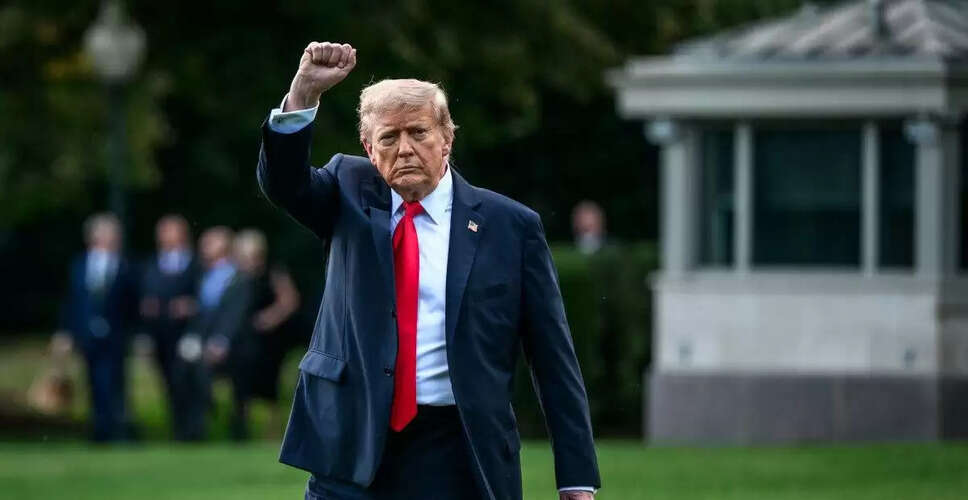
Trump's Announcement on US-Iran Relations
On Tuesday, President Donald Trump announced that the United States plans to cease its military actions against Iran within the next two to three weeks, suggesting that a formal agreement is not essential to resolve the ongoing conflict in West Asia.
During a press briefing at the White House, Trump stated, "We’ll be leaving very soon."
This statement coincided with remarks from Iranian Foreign Minister Abbas Araghchi, who told Al Jazeera that there are currently no negotiations occurring with the US, despite some messages being exchanged. These communications reportedly included threats conveyed through intermediaries.
Key Developments in the West Asia Conflict
The Islamic Revolutionary Guard Corps of Iran issued a warning on Tuesday, stating that it would target US corporations, not just military installations, starting Wednesday if further Iranian leaders were killed. The list of targeted companies includes major names like Microsoft, Google, and Apple.
Following Trump's comments, Asian stock markets experienced a significant uptick. By 9:30 AM, India's Sensex had surged over 1,800 points (2.6%), while the Nifty rose by more than 500 points (nearly 2.9%). Other indices, including Hong Kong's Hang Seng and Japan's Nikkei, also reported gains.
US Secretary of State Marco Rubio remarked that the US has minimal reliance on the Strait of Hormuz and emphasized that other nations should take responsibility for ensuring the safe passage of energy exports.
Rubio stated, "We depend very little on the strait," and suggested that if Iran attempts to control the Strait of Hormuz, it would be up to the president to decide on a response.
He added that this issue is a global concern and that countries worldwide should address it collectively.
The price of Brent crude oil dropped to $105 per barrel on Wednesday, down from approximately $115 the previous day, reflecting the market's reaction to the conflict.
China and Pakistan jointly called for an immediate cessation of hostilities and urged all parties involved in the West Asia conflict to engage in peace talks, emphasizing the need to protect territorial integrity and civilian infrastructure.
They also advocated for the safe passage of ships and crews stranded in the Strait of Hormuz.
The European Commission advised the public to work from home and reduce travel, warning of a prolonged energy crisis as the situation escalates.
According to the United Nations High Commissioner for Refugees, over 200,000 individuals fled to Syria in March due to the Israeli attacks in southern Lebanon, with a significant number being Lebanese and Syrian refugees.
Overview of the Ongoing Conflict
The conflict escalated on February 28 when the US and Israel launched an offensive against Iran, citing Tehran's actions as a direct threat to Israel's existence. The US has positioned itself as a protector of Israeli security.
In retaliation, Iran has targeted both Israel and US military bases in the region, as well as major cities in Gulf nations.
Tehran has effectively restricted access to the Strait of Hormuz, a crucial maritime route for international trade, exacerbating the global energy crisis, as approximately 20% of the world's oil supply transits through this chokepoint.
Israel has raised alarms about Iran nearing the capability to develop a nuclear weapon, which could disrupt the regional security landscape, while Iran insists that its nuclear ambitions are solely for peaceful purposes.