
Trump Promises Swift Reopening of Strait of Hormuz Amid Iran Talks
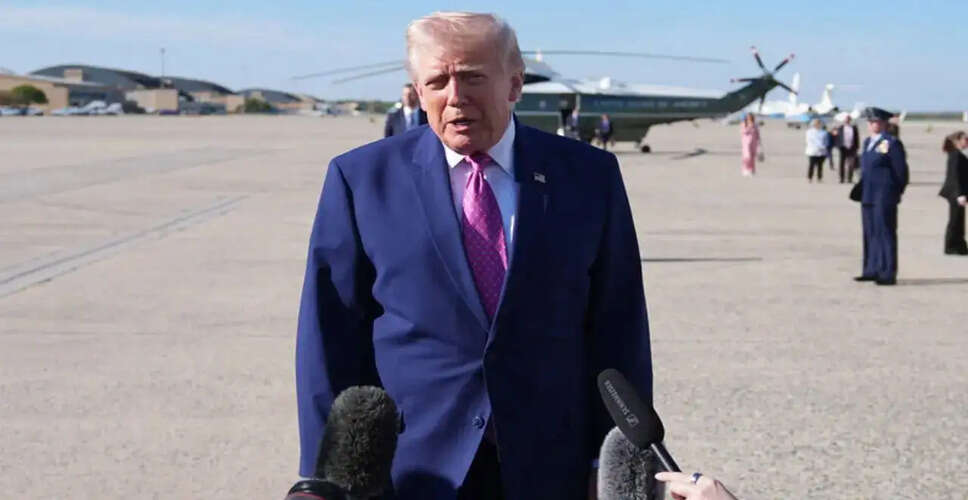

Trump's Assurance on Strait of Hormuz
President Donald Trump has announced that the Strait of Hormuz will be reopened "fairly soon," regardless of Iran's involvement, as he prepares for upcoming negotiations in Pakistan. He stated, "We're going to open up the gulf with or without them... or the strait as they call it. I think it's going to go pretty quickly, and if it doesn't, we'll be able to finish it off," during a press briefing on Friday. When questioned about this vital shipping lane, Trump emphasized, "We will have that open fairly soon." He also made it clear that the U.S. would not permit Iran to impose tolls on ships navigating through the strait, asserting, "No, we're not going to allow that; it's international water. If they're doing that, we're not going to let that happen." Trump reiterated his belief that Iran's military capabilities have been diminished and stated that any agreement should focus on preventing Iran from developing nuclear weapons. He described a favorable deal as one where Iran possesses "no nuclear weapon," adding, "I think it's already been pretty big regime change but we never had that as a criteria. No nuclear weapon, that 99% of it."
Iranian Delegation's Arrival in Islamabad
Iran Delegation Arrives in Islamabad
Pakistan has confirmed the arrival of a senior Iranian delegation in Islamabad in anticipation of negotiations with the United States. The delegation, led by Mohammad Bagher Ghalibaf, was welcomed by Ishaq Dar and other high-ranking officials, according to a statement from Pakistan’s foreign ministry. The ministry expressed hope that the involved parties would engage in constructive dialogue and strive for a "lasting and durable solution to the conflict." Prime Minister Shehbaz Sharif characterized the talks as a pivotal moment for the region, stating, "This is a make-or-break moment." He urged the public to pray for the success of the discussions, emphasizing that countless lives could be saved and peace could be achieved. Sharif also commended the efforts of Pakistan’s military leadership, including army chief Asim Munir and Foreign Minister Ishaq Dar, for their roles in "putting out the flames of war." He assured that the Pakistani leadership would exert their utmost efforts to ensure the talks' success, adding, "It is all in God’s hands." Earlier, JD Vance confirmed his travel to Pakistan to lead the American delegation, expressing his eagerness for the discussions. "As the president of the United States said, if the Iranians are willing to negotiate in good faith, we’re certainly willing to extend the open hand," he remarked before his departure.