
Trump Orders Total Blockade on Venezuela Amid Rising Tensions
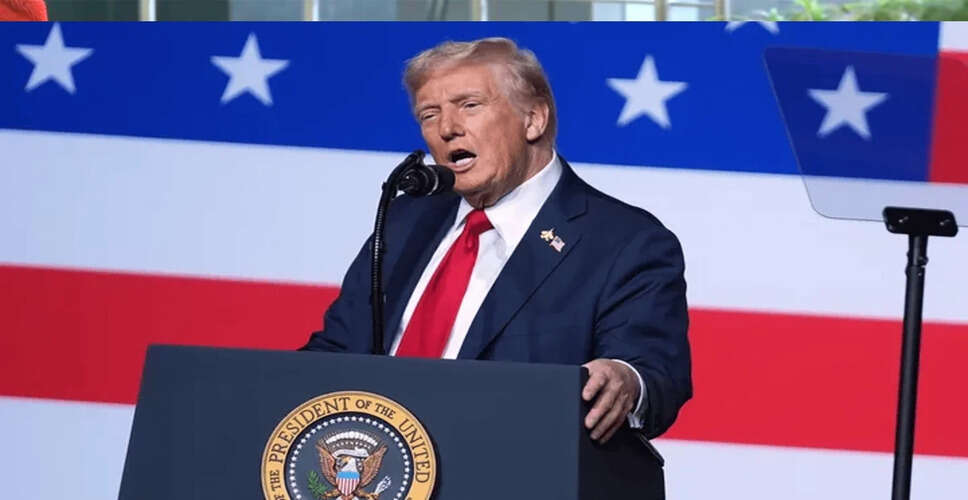
Trump's Strong Measures Against Venezuela
In a decisive move, U.S. President Donald Trump has mandated a complete blockade on the entry and exit of sanctioned oil tankers in Venezuela. Alongside this, he has labeled President Nicolás Maduro's administration as a 'foreign terrorist organization' and announced an increase in U.S. military presence in the region.
Allegations Against the Venezuelan Government
The Trump administration accuses the Venezuelan government of utilizing oil revenues to fund drug trafficking and organized crime. Prior to this announcement, tensions had already escalated in the Caribbean, marked by incidents such as the deployment of U.S. naval forces, aerial patrols, and the seizure of an oil tanker near Venezuela's coast.
Impact on Oil Tankers
Following the recent seizure of a tanker carrying approximately 2 million barrels of crude oil, traders have effectively regarded this as a ban. Consequently, several oil tankers have halted in Venezuelan waters to avoid the risk of being intercepted.
U.S. Military Deployment
The U.S. has stationed thousands of troops, nearly a dozen warships, and a warship in the Caribbean. Additionally, maritime surveillance aircraft and helicopters are monitoring shipping routes. While the White House has not provided detailed methods for enforcing the blockade, experts believe that the U.S. Navy and Coast Guard will play crucial roles.
Market Reactions
Oil markets have reacted cautiously to these developments, with a slight increase in prices due to fears of a significant drop in Venezuelan exports. Venezuela produces about 1 million barrels of oil daily, a substantial portion of which is exported. Prolonged disruptions could lead to a decrease of around 1 million barrels per day in global supply, although current supply levels are reported to be adequate.
Cyber Attack on PDVSA
Meanwhile, a cyber attack on Venezuela's state oil company PDVSA has also disrupted export operations. Economists warn that if the blockade persists, the halt in foreign currency income could exacerbate humanitarian issues, leading to shortages of food and medicine.
Maduro's Response
The Maduro government has condemned the U.S. actions as illegal, labeling them as maritime piracy and economic warfare. Caracas has stated its intention to bring this issue before the United Nations. Prior to Trump's announcement, Maduro accused the U.S. of attempting to seize Venezuela's oil, gas, and mineral resources, reiterating his commitment to defend the country's sovereignty.
U.S. Justification for Military Action
Washington claims that this military operation aims to combat drug trafficking in the U.S. According to official data, over 95 individuals have died in more than 20 operations in the Caribbean and Eastern Pacific since September. The Pentagon has described these operations as legal and effective, although they have raised questions in the U.S. Congress.