
Trump Imposes 25% Tariff on Nations Trading with Iran Amid Protests
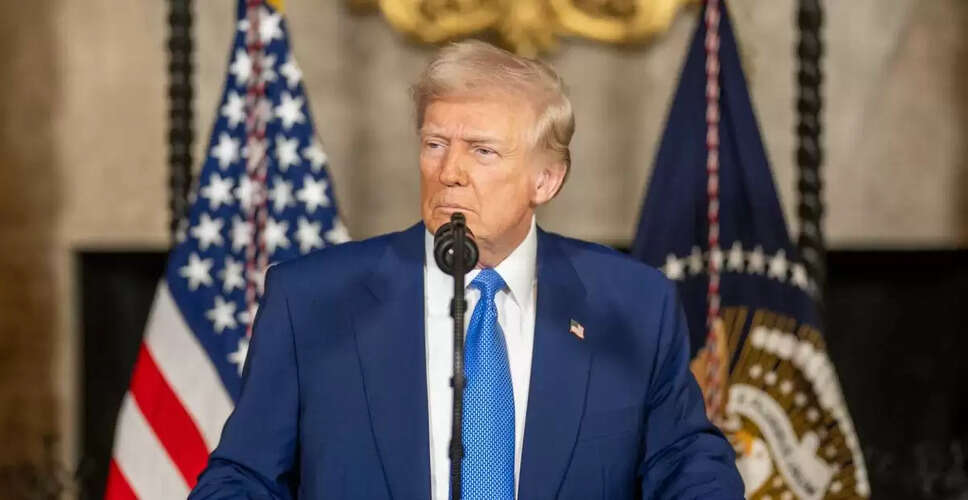
New Tariff Announcement
On Monday, President of the United States, Donald Trump, declared a 25% tariff on goods from nations conducting business with Iran. This decision coincides with ongoing anti-government demonstrations in Iran, which have now persisted for three weeks.
Impact on Trade Relations
China stands as Iran's largest trading partner, while India ranks among the top five nations maintaining trade relations with Tehran in recent years.
Without a formal trade agreement with the US, Indian exports are already subjected to a cumulative tariff rate of 50%. This includes a 25% reciprocal duty imposed on August 7, followed by an additional 25% punitive tariff on August 27.
Trump's Firm Stance
Trump stated on social media, “Effective immediately, any country doing business with the Islamic Republic of Iran will pay a tariff of 25% on any and all business being done with the United States of America. This order is final and conclusive.”
Earlier that day, Trump had also threatened military intervention if Iranian authorities harmed protesters, with White House spokesperson Karoline Leavitt indicating that military options, including air strikes, remain a possibility.
Protests in Iran
The protests, which began on December 28, initially focused on rising inflation but have since expanded to calls for an end to clerical governance, with demonstrations occurring in over 100 cities.
Iranian authorities have accused the US and Israel of inciting these protests, leading to a government-imposed internet blackout that has largely isolated the country from external communication.
Reports indicate that over 640 protesters have lost their lives in the past three weeks, with nearly 10,700 arrests made, according to sources from a US-based human rights organization.
Iran's Diplomatic Position
On the same day, Iranian Foreign Minister Abbas Araghchi expressed Tehran's willingness to engage in negotiations with the US, emphasizing the need for discussions based on mutual respect and interests.
He reiterated, “We are also ready for negotiations – but fair and dignified negotiations, from an equal position, with mutual respect and based on mutual interests.”
Araghchi also cautioned that Iran is prepared for conflict but dismissed the notion of a preemptive strike, stating that readiness is essential to prevent miscalculations by adversaries.
India’s Trade Dynamics with Iran
Since the reintroduction of US sanctions on Iran in 2019, India's trade with Tehran has drastically decreased by 87%, dropping from $17.6 billion in 2019 to $2.3 billion in 2024.
India's imports of mineral fuels, which previously constituted over 90% of bilateral trade, have plummeted by 99% since the sanctions were reinstated.
Currently, India imports approximately $1 billion worth of goods from Iran, with organic chemicals, edible fruits, and nuts now making up over 80% of these imports, replacing energy as the primary category.
Exports from India to Iran have also seen a significant decline, down 68% since 2018. In 2024, India exported $1.3 billion worth of goods to Iran, compared to $3.9 billion in 2019 and $5.4 billion in 2013.