
Trump Faces Crucial Decisions Amid Ongoing Conflict with Iran
Overview of the Conflict
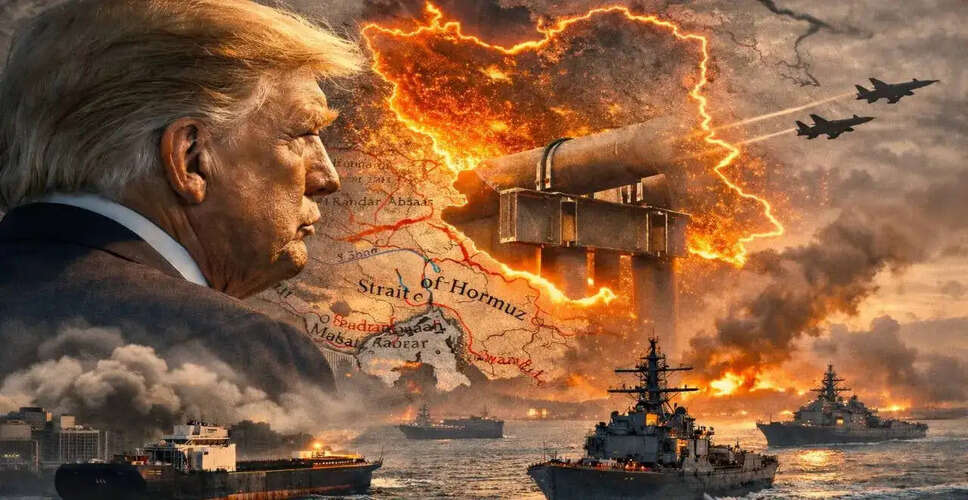
Following the initiation of a military operation against Iran in collaboration with Israel, President Donald Trump is now faced with several challenging choices regarding the conflict's future. What started as a swift attempt to weaken Iran's military capabilities and thwart its nuclear ambitions has escalated into a wider conflict affecting the entire Middle East. Although US officials report significant damage to Iran's conventional military forces, Tehran continues to disrupt international trade and extend the conflict's reach. Here are five critical options confronting Trump as the war enters its third week.
Option 1: Continue Military Operations
Continue the War to Achieve All Goals
One possibility is to persist with the military campaign, aiming to fulfill the administration's objectives. According to US officials, joint operations with Israel have significantly diminished Iran's missile capabilities, air defenses, and naval strength. Defense Secretary Pete Hegseth noted that Iran is now launching "90% fewer missiles" and "95% fewer" drones compared to the war's onset. He stated, "Iran has no air defenses, air force, or navy," during a Pentagon briefing.
Option 2: Reduce US Involvement
Begin Pulling Back
Trump might also consider scaling back US involvement in the conflict, although this could leave several objectives unachieved. A significant concern remains Iran's stockpile of highly enriched uranium, with approximately 970 pounds believed to be stored in tunnels near Isfahan. Secretary of State Marco Rubio previously indicated that someone would eventually need to retrieve this material, hinting at the possibility of a ground operation. Trump has stated that no decision has been made regarding this matter.
Option 3: Secure Shipping Routes
Reopen the Strait of Hormuz
Another urgent issue is the restoration of shipping through the Strait of Hormuz, a crucial passage for global energy supplies. Iran has hindered traffic in the strait through attacks on commercial vessels and threats against tankers. A recent analysis revealed that at least 16 ships have been targeted in the Persian Gulf since the conflict began, causing oil prices to approach $100 per barrel and hampering global trade. One proposal involves the US Navy escorting commercial vessels through the strait, although officials warn that assembling the necessary forces could take weeks. Trump has publicly urged countries like China, France, Japan, South Korea, and Britain to contribute ships to secure this vital route.
Option 4: Target Kharg Island
Seize Kharg Island
The President is also contemplating an operation against Kharg Island, Iran's primary oil export terminal. Capturing this island would grant the US control over the port responsible for most of Iran's oil exports, thereby intensifying economic pressure on Tehran. However, maintaining control over the island could necessitate a prolonged military presence to defend against potential attacks from the Islamic Revolutionary Guard Corps, which could lead to a longer-term US deployment in the region—something Trump has previously sought to avoid.
Option 5: Conduct a Targeted Raid
Launch Raid to Secure Iran's Nuclear Fuel
Another option is to execute a targeted raid to seize Iran's enriched uranium stockpile, believed to be stored in deep underground tunnels near Isfahan, as per the International Atomic Energy Agency. Special forces would need to infiltrate the complex and extract canisters of uranium gas, a process that could take several days or even weeks. Officials caution that this operation carries significant risks; if the canisters were compromised and moisture entered, the material could become both highly toxic and radioactive. As the conflict escalates, the US has begun deploying additional forces to the region, including around 2,500 Marines joining the approximately 50,000 American troops already stationed in the Middle East. Trump has sent mixed signals regarding the war's progress, sometimes suggesting that victory is imminent while at other times acknowledging that fighting may persist. He mentioned that he would ultimately rely on his instincts to decide when to conclude the conflict, stating, "I'll feel it in my bones," during an interview.