
Trump Enforces Blockade on Venezuelan Oil Vessels Amid Rising Tensions
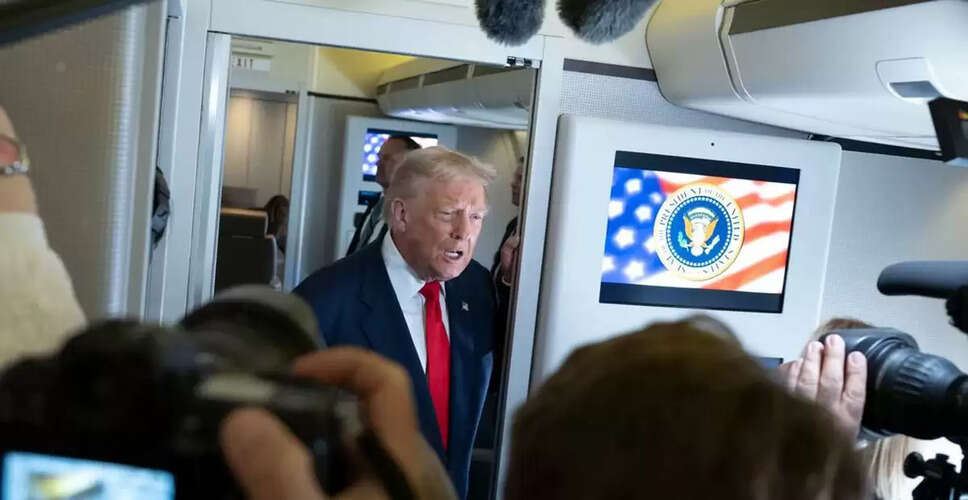
Trump's Blockade Order
On Tuesday, President Donald Trump announced a blockade targeting oil vessels that are either entering or leaving Venezuela, intensifying the United States' military and economic pressure on the government led by Nicolás Maduro.
This move comes as Venezuela's economy heavily relies on oil exports, which have been significantly affected by U.S. sanctions.
Trump claimed that Venezuela is now surrounded by the largest naval force ever assembled in South America, stating that this presence will only increase.
Since late August, the U.S. has deployed a substantial military presence off the coast of Venezuela, primarily aimed at combating drug trafficking, although the focus has shifted towards Venezuela itself.
During his announcement, Trump expressed a desire to reclaim oil that he alleged had been taken from the U.S. by the Venezuelan government.
He warned that the Maduro administration would face unprecedented consequences until they return all oil, land, and other assets that they allegedly appropriated from the U.S.
It remains unclear which specific oil or land Trump was referencing, as Venezuela nationalized its oil and gas sectors back in the 1970s.
Trump accused the Maduro regime of using oil from these nationalized fields to fund various criminal activities, including drug trafficking and human rights abuses.
As a result, he declared the Maduro government a Foreign Terrorist Organization and ordered a comprehensive blockade on all sanctioned oil tankers associated with Venezuela.
Countries such as the U.S., Canada, and several European nations do not recognize Maduro as the legitimate president of Venezuela and have consistently supported the opposition.
Despite facing U.S. sanctions for over a decade, Venezuela has managed to sell oil at discounted prices on the black market.
In response to Trump's actions, the Maduro government accused him of attempting to seize the nation's resources.
Recent weeks have seen heightened tensions, particularly after Trump indicated a willingness to consider military intervention in Venezuela.
On November 30, Trump declared that Venezuelan airspace should be regarded as closed, and on December 10, U.S. military forces seized an oil tanker off the coast, alleging it was transporting sanctioned oil from both Venezuela and Iran.
The U.S. military's deployment in the Caribbean, aimed at tackling drug trafficking, includes the USS Gerald R Ford, the largest aircraft carrier strike group, along with advanced F-35 fighter jets.