
Trump Critiques Starmer's Leadership Amid Resignation Announcement
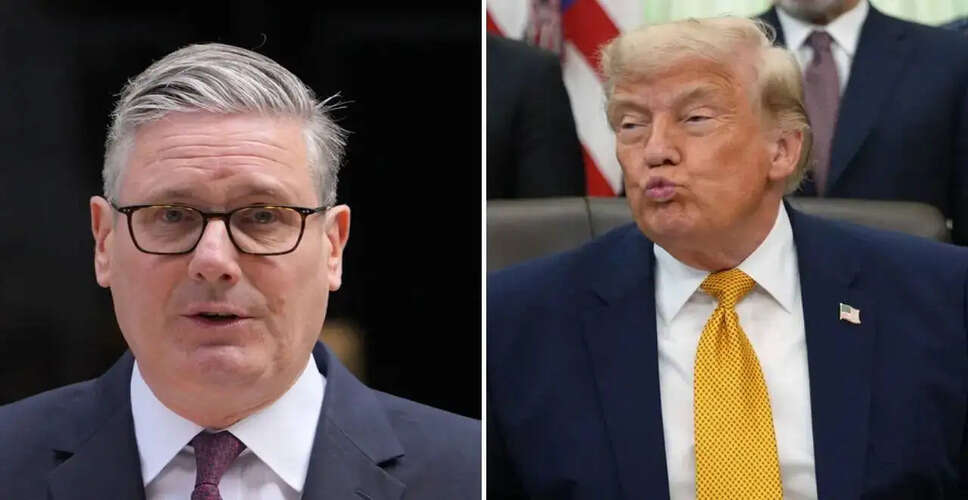

Trump's Remarks on Starmer's Resignation
Following British Prime Minister Keir Starmer's announcement of his resignation, US President Donald Trump expressed his discontent, claiming Starmer failed to support the US during its conflict with Iran. In a press briefing at the Oval Office, Trump referred to Starmer as a "lovely man" and a "sort of friend," wishing him well while simultaneously criticizing the UK government's policies on energy, immigration, and its stance during the Iran war.
Trump specifically addressed Starmer's reliance on wind energy, stating, "You're really messing up energy. You have windmills all over the place," reiterating his long-standing opposition to wind turbines, which he deems inefficient and detrimental to the environment. He also highlighted immigration as a significant issue under Starmer's leadership, suggesting that current policies could adversely affect the UK. "He's got two problems, energy and immigration ... and crime," Trump remarked.
Reporter: You've been quite critical of Prime Minister Starmer, and he's now resigned. Your thoughts and who would you like to see as the next Prime Minister? Trump: I wish him well, but he's got two problems energy and immigration and crime pic.twitter.com/VRzkfaozfo
— Acyn (@Acyn) June 22, 2026
Additionally, Trump criticized Starmer for his reluctance to assist the US and Israel in their military efforts against Iran, stating, "Starmer wasn't there, and the people of the UK did not like that he wasn't there. Starmer said, 'We will be there as soon as you win.' I said, 'We don't need you when we win.'" He humorously remarked, "This is not Winston Churchill we're dealing with, that I can tell you."
Reasons Behind Starmer's Resignation
Why Did Keir Starmer Resign?
Starmer's resignation comes after enduring significant pressure regarding immigration, welfare, defense spending, and declining support for Labour in traditional working-class regions, where Nigel Farage's Reform UK has positioned itself as a representative for disenchanted voters. Andy Burnham, the former mayor of Greater Manchester, who recently returned to parliament after winning the Makerfield by-election, is currently the leading candidate to succeed Starmer.
Nominations for the Labour leadership are set to open on July 9, with Burnham potentially stepping into the role within weeks if he faces no substantial opposition. Addressing the media outside 10 Downing Street, Starmer stated, "the question my party is asking now is whether I am best placed to lead us into the next general election." He acknowledged the response from his parliamentary party, saying, "I accept that answer with good grace," which led to his decision to resign as Labour Party leader.
Since the Brexit referendum in 2016, the UK has seen a succession of leaders, including David Cameron, Theresa May, Boris Johnson, Liz Truss, Rishi Sunak, and now Starmer, with a new prime minister on the horizon. In his farewell speech, Starmer highlighted the Labour Party's accomplishments during his tenure, such as an improving economy relative to Europe, increasing wages, reduced public hospital waiting times, and stricter immigration policies. He also mentioned enhanced defense spending, an area where he had previously faced criticism from President Trump.