
Trump Claims to Have Ended Eight Wars, Eyes Resolution for Ukraine Conflict

Trump's Assertion as a Global Peacemaker
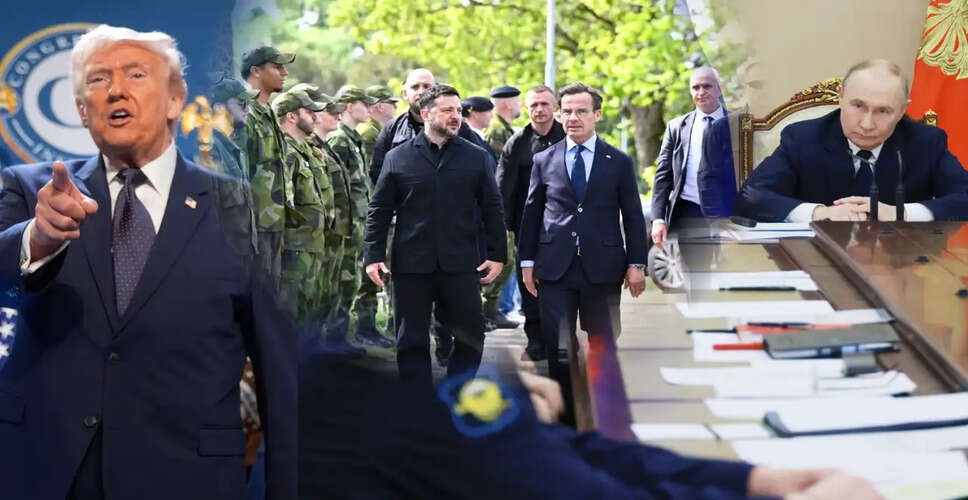
In a recent statement, US President Donald Trump positioned himself as a peacemaker on the global stage, asserting that he has successfully "ended eight wars" and is optimistic that the ongoing Russia-Ukraine conflict could soon be the ninth. Reflecting on his tenure, Trump acknowledged his initial lack of national security experience but expressed confidence in his administration's achievements. He stated, "A lot of national security. I wasn't greatly experienced in national security, and I think I've done a really great job with it. I've ended eight wars and soon to be a ninth. I hope that works out too. You know, frankly, it's probably... and there's another one also. It could be ten." These comments come as the White House advocates for a negotiated resolution between Russian President Vladimir Putin and Ukrainian President Volodymyr Zelenskyy, with Trump encouraging direct dialogue between the leaders.
"I have ended eight wars, soon to be a ninth. I hope Russia-Ukraine conflict works out too."- US President Donald Trump pic.twitter.com/wMEsS8jMK6
— News Arena India (@NewsArenaIndia) June 5, 2026
Congress Expresses Discontent with Administration's Approach
Congress Signals Frustration With White House Strategy
Trump's remarks coincided with significant developments in Congress, where the House of Representatives passed a bill aimed at bolstering US support for Ukraine. Proposed by Democratic Congressman Gregory Meeks, the legislation allocates over $1 billion for security and reconstruction efforts, alongside an additional $8 billion in defense loans. The measure was approved with a vote of 226-195, utilizing a discharge petition to bypass Republican leadership, highlighting bipartisan frustration with the administration's pace in Ukraine diplomacy. Proponents argued that ongoing military support would empower Kyiv in negotiations rather than compel it to make concessions. "We all want this war to end," Meeks stated during discussions. "The question is how. Will we abandon Ukraine and force it into a terrible deal? That is what Vladimir Putin is counting on."
Divisions Among Republicans Over Ukraine Assistance
Republicans Split Over Ukraine Funding
While most Republican lawmakers opposed the bill, arguing that it undermines the president's diplomatic efforts, some, like House Foreign Affairs Committee Chairman Brian Mast, criticized it as a tool against Trump, based on outdated views of the conflict. However, a few Republicans, including Congressman Don Bacon, diverged from the party line, framing the issue as a moral choice between supporting good or evil. This vote underscored a growing rift within the Republican Party regarding military support for Ukraine versus Trump's preference for a negotiated resolution.
Trump's Peace Claims Under Scrutiny
Trump's Peace Narrative Faces A Major Test
Since his return to office, Trump has consistently portrayed himself as a leader capable of resolving international disputes through direct engagement and pressure diplomacy. His assertion of having ended eight wars seems aimed at reinforcing this image as negotiations regarding Ukraine progress. Whether Ukraine will indeed become the "ninth war" Trump claims he can resolve remains uncertain, as Russia insists that any peace agreement must address its territorial claims, while Ukraine maintains that any settlement must uphold its sovereignty and security. Currently, Washington appears divided between those advocating for increased military aid to foster a stronger peace and those prioritizing diplomatic solutions.