
Trump Claims Iran Agrees to Nuclear Inspections Amidst Ongoing Tensions
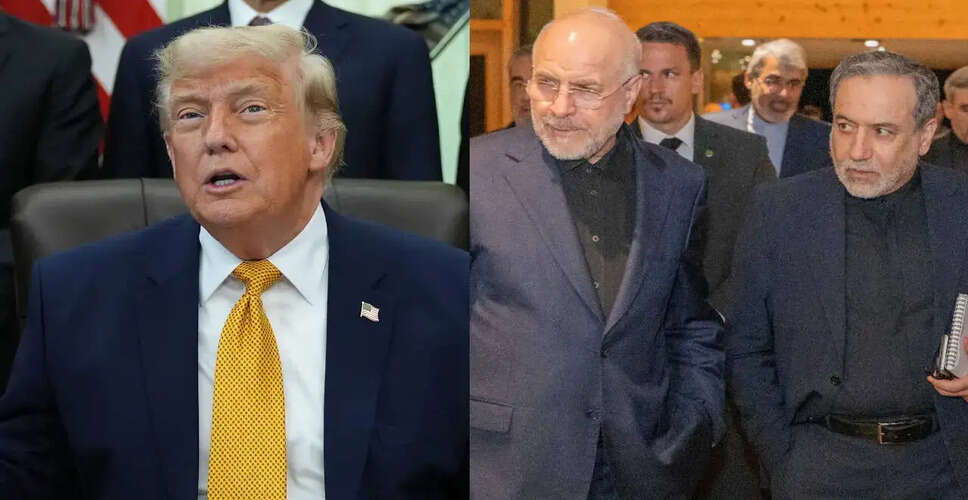

Trump's Assertions on Iran's Nuclear Program
On Tuesday, US President Donald Trump reiterated his assertion that Iran has consented to allow officials from the International Atomic Energy Agency (IAEA) to inspect its nuclear program. This statement came shortly after Tehran disputed his claims. Trump emphasized that Iran has agreed to a long-term framework for inspections and monitoring of its nuclear infrastructure. This development follows a memorandum of understanding (MoU) aimed at reducing tensions in the Middle East and fostering a long-term peace agreement. Recent high-stakes negotiations in Switzerland have concluded, resulting in this MoU, which includes provisions for the US to ease shipping restrictions in the Strait of Hormuz and release financial concessions under strict American oversight.
In a post on Truth Social, Trump elaborated on various topics, including Iran's nuclear strategy, while also criticizing those questioning the outcomes of his policies. He labeled media reports that challenge his actions as 'fake news,' asserting, 'Despite their protestations and false statements, Iran has fully agreed to the highest level of nuclear inspections for the foreseeable future.' He further stated, 'This will ensure Nuclear Honesty. If they did not agree to this, there would be no further negotiations!' Trump also mentioned that he has decided to keep the Strait of Hormuz open without imposing a naval blockade, although he noted that ships would remain in position should the blockade need to be reinstated.
Trump explained that the funds and sanctions being released by the US Treasury will be placed in escrow, managed by the US, and used solely for purchasing food and medical supplies from American producers, including essential items like corn, wheat, and soybeans. He described the situation in Iran as a humanitarian crisis that necessitates immediate assistance. 'Talks are progressing well!' he added.
Additionally, Trump disclosed that the US has allowed the strategic maritime corridor to remain open, ceasing further naval containment operations while maintaining military readiness in the region. However, the White House's statements have faced swift backlash from the Iranian government regarding the extent of the proposed nuclear monitoring.
Iran's Rejection of Trump's Claims
Iranian Foreign Ministry spokesperson Esmaeil Baqaei responded by stating that Tehran has not agreed to any IAEA oversight of its nuclear facilities, particularly those impacted by previous military actions from the US and Israel. 'We have not met with the IAEA's director general, nor do we plan for the agency to inspect facilities damaged by military aggression,' Baqaei asserted. Iran's Permanent Representative to the United Nations, Ali Bahreini, echoed this sentiment, highlighting the significant gap between Washington's narrative and Tehran's official stance.
The ongoing discussions aim to address longstanding issues, including Iran's nuclear enrichment activities, the lifting of sanctions, and overall regional stability. Despite the apparent momentum in diplomatic efforts, fundamental disagreements remain, particularly concerning international verification access, the management of the Strait of Hormuz, and the return of frozen Iranian assets.