
Trump Announces Potential Strikes on Iran's Oil Hub Amid Rising Tensions
Escalating Tensions in West Asia
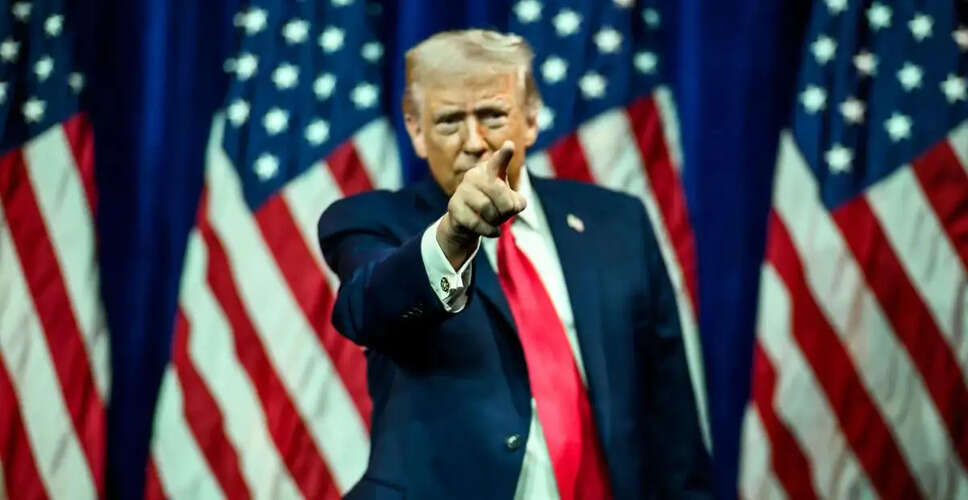
On Saturday, President Donald Trump of the United States indicated that American military forces might target Iran's crucial oil export site, Kharg Island, stating it would be done "just for fun" as tensions in West Asia continue to rise, according to reports from a news outlet.
Trump claimed that recent American airstrikes on Friday had significantly damaged much of the military infrastructure on the island but intentionally spared the oil facilities that are responsible for the majority of Iran's crude exports.
Kharg Island, located off the Iranian coast, is vital as it accounts for approximately 90% of Iran's crude oil exports.
Latest Developments in the West Asia Conflict:
- Trump mentioned that Iranian officials have discreetly reached out for negotiations to conclude the ongoing conflict, but he expressed reluctance to agree to a ceasefire at this time. He stated, "Iran wants to make a deal, but I’m not ready because the terms aren’t satisfactory yet," during an interview.
- When pressed for details on favorable terms, Trump indicated that any agreement would necessitate Iran completely abandoning its nuclear ambitions, although he refrained from disclosing specific conditions.
- Iran's Foreign Minister, Abbas Araghchi, accused the US of launching strikes from two locations in the UAE—Ras Al Khaimah and an area near Dubai—targeting Kharg Island and Abu Musa. He remarked that it was perilous to use densely populated regions for such military actions.
- Tehran has urged civilians to evacuate Jebel Ali, the busiest port in Dubai, along with two other UAE ports, claiming that the US utilized these locations to conduct strikes on Kharg Island. This marked a significant escalation as Iran openly threatened non-US assets in a neighboring country.
- The Islamic Revolutionary Guard Corps of Iran vowed to pursue and eliminate Israeli Prime Minister Benjamin Netanyahu, labeling him a "child-killing criminal" in a statement released on their official platform.
- Japan has indicated that the threshold for deploying warships to secure the Strait of Hormuz is "extremely high," with officials emphasizing the need for careful consideration under Japan's legal framework.
- This statement followed Trump's call for other nations to send warships to assist in securing the Strait of Hormuz amidst the ongoing conflict.
Overview of the Conflict
The conflict in West Asia escalated on February 28 when Israel and the US initiated a joint operation aimed at degrading Iran's military capabilities.
In retaliation, Tehran targeted Israeli and US military installations in the region, as well as major cities in neighboring Gulf countries and various vessels.
The joint military actions by Israel and the US were prompted by rising tensions surrounding Iran's nuclear program, with Washington acting as a security guarantor for Israel. Israel has consistently claimed that Iran is nearing the capability to develop a nuclear weapon, which could disrupt the regional security landscape.
Iran has consistently asserted that its nuclear endeavors are solely for peaceful purposes.
Currently, Iran has effectively blocked the Strait of Hormuz, a crucial maritime route for international commercial shipping, through which about 20% of the world's oil supply transits.
The International Energy Agency recently reported that the ongoing conflict has resulted in the largest disruption to global oil supply in history.
Since the onset of hostilities, global oil prices have surged, with the benchmark Brent crude oil price exceeding $100 per barrel, a significant increase from approximately $72.8 per barrel just before the conflict began.