
Trump Announces Potential Iran Agreement Amidst Ongoing Tensions
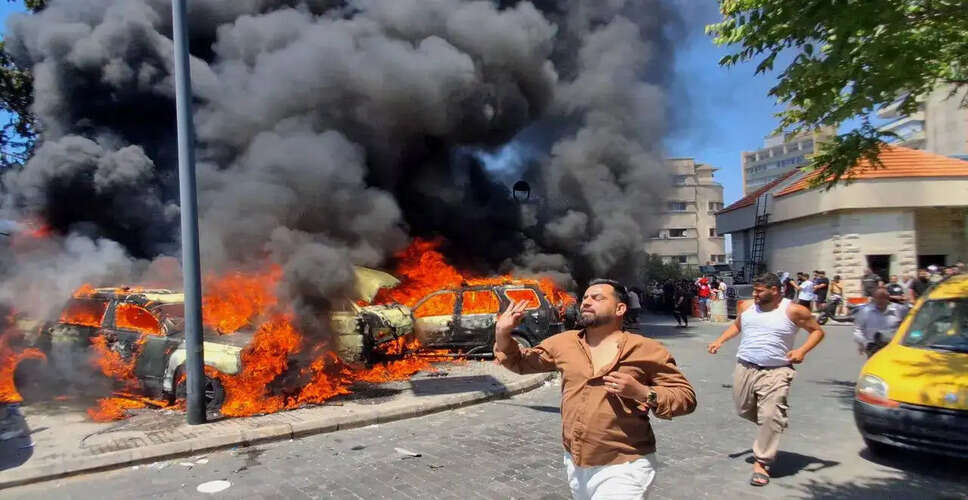

Trump's Announcement on Iran Deal
On Saturday, US President Donald Trump revealed that a new agreement with Iran is expected to be signed on Sunday. He characterized this deal as a means to prevent Iran from acquiring nuclear weapons and to reopen the Strait of Hormuz for international shipping. In a post on Truth Social, Trump stated that Iran has no intention of pursuing a nuclear weapon through any means. He emphasized that once the deal is finalized, the Strait of Hormuz will be accessible to all.
However, Iranian officials have expressed skepticism regarding this timeline. Esmaeil Baghaei, a spokesperson for the Foreign Ministry, indicated that the signing would not occur on Sunday, suggesting that while a date may be set soon, caution is necessary due to uncertainties from the other party.
As the world anticipates a resolution to the ongoing conflict, significant issues remain regarding the specifics of the agreement and its implementation.
1. Central Concerns of Iran's Nuclear Program
The future of Iran's nuclear ambitions is a pivotal aspect of any potential agreement. The Trump administration has insisted that Iran must commit to not developing nuclear weapons indefinitely. However, the enforcement and verification of this commitment remain unclear. A senior US official mentioned that a new inspection regime would be part of the deal, although specifics have not been disclosed. A key question is whether Iran will need to dismantle its entire nuclear program or simply agree to restrictions on uranium enrichment. The US has indicated it does not oppose civilian nuclear energy in Iran.
Verification processes are likely to be contentious. Iran has consistently claimed it does not seek nuclear weapons. Politically, Trump faces challenges as he has criticized the previous 2015 nuclear deal as inadequate. Any new agreement will be compared to this prior accord, which imposed limits on Iran's enrichment activities and relied on UN inspections.
2. Iran's Enriched Uranium Stockpile
Another critical issue is Iran's current stockpile of enriched uranium. The Trump administration has argued that Iran must relinquish this material, much of which is stored underground. Trump has suggested that the US may not recover all of it physically, proposing instead to seal off certain sites and monitor them. Discussions have included the possibility of downblending, which would lower uranium enrichment levels, allowing the material to be used as reactor fuel rather than for weapons.
A senior official stated that the interim arrangement would involve destroying uranium on-site before removing it from the country, acknowledging that the logistics of this process will take time. Trump later mentioned that the US would eventually retrieve what he termed Iran's remaining 'Nuclear Dust' for downblending and destruction.
3. Financial Aspects: Frozen Assets and Sanctions
Financial negotiations could also be contentious. Iran is reportedly seeking access to approximately $24 billion in frozen assets as part of a broader agreement. Trump has asserted that no money will change hands, contrasting his proposal with the previous administration's nuclear deal and a 2016 settlement that faced Republican criticism. He emphasized that unlike the previous administration's substantial payments, this deal will not involve cash transactions.
Nonetheless, questions linger about whether frozen Iranian assets could be released as part of sanctions relief. Vice-President JD Vance stated that if Iran meets its obligations, economic benefits would follow for both Iran and the region. Iranian officials have indicated that sanctions relief and access to frozen assets are crucial for any agreement, especially given their claims of $270 billion in damages from recent US and Israeli actions.
4. The Strategic Strait of Hormuz
The Strait of Hormuz has emerged as a significant symbol of the ongoing conflict. This vital waterway, through which a large portion of the world's oil and gas supplies transit, has experienced major disruptions during the crisis. Trump has claimed that the route will reopen immediately after the agreement is signed. Iranian media have reported that discussions about reopening the strait are underway, although Tehran has not publicly agreed to relinquish control over it.
Reports suggest that reopening could occur within thirty days, with Iran clearing mines and the US lifting its naval blockade. However, Iranian state media have indicated that the draft terms do not require Iran to give up its management of the strait.
5. Regional Conflicts and Proxy Groups
The conflict in Lebanon has added complexity to the negotiations. Iran has linked Israel's actions in Lebanon to any potential ceasefire with the US. Earlier this month, Iran briefly halted negotiations in response to Israeli military operations. A US-brokered ceasefire between Israel and Lebanon has been in effect since April 16, but both sides have accused each other of violations, with ongoing Israeli strikes reported.
Another unresolved issue is Iran's support for armed groups in the region, such as Hezbollah and Hamas. While US officials have stated that ending Iranian support for these groups is a priority, Iran has not publicly confirmed any commitment to this effect. The situation remains tense, particularly in Lebanon, where conflict continues despite intermittent ceasefires. Both sides have indicated progress, but significant gaps still exist.