
Trump Announces Oil Deal with Venezuela Amid Tensions
Trump's Oil Agreement with Venezuela
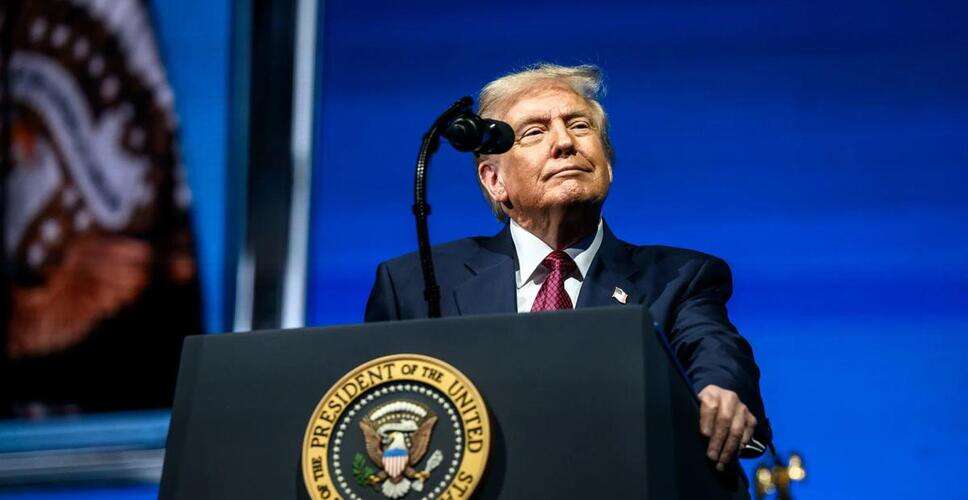
On Wednesday, President Donald Trump revealed that the United States is set to receive between 30 million and 50 million barrels of oil from Venezuela. This announcement came via a post on social media, where he mentioned that the interim government in Caracas would be transferring this sanctioned oil to the US.
Trump indicated that the oil would be sold at prevailing market rates, with the proceeds being managed by him to ensure they benefit both the Venezuelan and American people.
At the current oil price of $56 per barrel, this deal could amount to approximately $2.8 billion.
The President has instructed Energy Secretary Chris Wright to expedite the implementation of this agreement.
In a related development, the US military reportedly abducted Venezuelan President Nicolás Maduro and his spouse, Cilia Flores, during an operation linked to alleged drug trafficking.
Following this, Trump warned that Delcy Rodríguez, the acting President of Venezuela, would face severe consequences if she failed to act appropriately.
Rodríguez, a close ally of Maduro, assumed the presidency after his abduction.
The US government, along with several Western nations, does not recognize Maduro's administration and has consistently supported the Venezuelan opposition.
Washington has accused Maduro of engaging in narco-terrorism and drug trafficking, claims that the Venezuelan government vehemently denies.
In response to these actions, Caracas has labeled the US's maneuvers as military aggression and has called for the immediate release of Maduro and Flores.
Since late August, the US has been conducting a significant military operation off the coast of Venezuela, aimed at combating drug trafficking, particularly focusing on Venezuela.
On December 10, the US military seized an oil tanker near Venezuela, alleging it was transporting sanctioned oil from both Venezuela and Iran. Subsequently, Trump ordered a blockade on vessels associated with sanctioned oil trade to and from Venezuela.
This decision intensified the military and economic pressure exerted by Washington on Maduro's regime, which heavily relies on oil exports for its economy.
Despite having the largest proven oil reserves globally, Venezuela does not rank among the top ten oil producers.
Trump previously claimed that the US aimed to reclaim oil that he alleged had been misappropriated by Venezuela, although it remains unclear what specific oil or land he was referencing, given that Venezuela nationalized its oil and gas sector in the 1970s.
On Sunday, Secretary of State Marco Rubio stated that the US would not take on a direct governance role in Venezuela, aside from enforcing an existing oil quarantine on the nation.
This statement marked a shift from Trump's earlier assertion that the US would be 'running' Venezuela following Maduro's capture.