
Trump Advocates for New White House Ballroom Following Shooting Incident
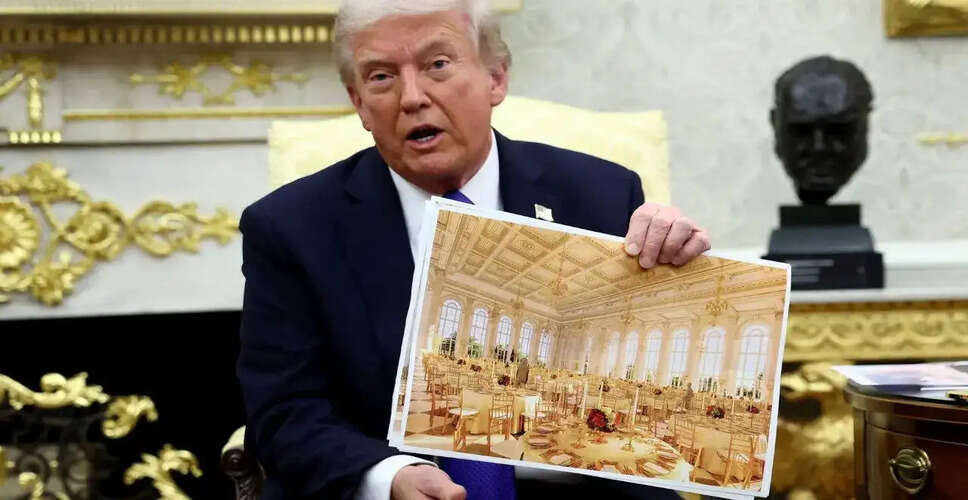

Security Concerns Prompt Ballroom Project Discussion
President Donald Trump expressed concerns about safety during a CBS News interview on Sunday, stating, "I have to say, it's not a safe ballroom. I'm building a safe ballroom, and one of the reasons I'm building it is exactly what happened last night." This statement came shortly after a self-identified "friendly federal assassin" breached security at the Washington Hilton, where Trump was attending the White House Correspondents’ Dinner.
The shooter, identified as Cole Tomas Allen, 31, from Torrance, California, was apprehended after engaging in gunfire with Secret Service agents. Fortunately, a Secret Service agent sustained injuries but was protected by a bulletproof vest, and there were no fatalities.
By Sunday morning, the administration was already shifting its narrative. Acting Attorney General Todd Blanche shared a letter on social media from the DOJ’s civil division chief, Brett Shumate, directed to the National Trust for Historic Preservation. This letter argued that the recent shooting underscored the necessity of the $400 million ballroom project, emphasizing that once completed, it would allow the President and future leaders to host events without leaving the White House's secure perimeter.
However, the letter overlooked the fact that the annual White House Correspondents’ Dinner, traditionally sponsored by the press association, is unlikely to be held at the White House, regardless of any new construction on the North Lawn. This detail has not hindered the project's momentum.
Senator Tim Sheehy (R-Montana) announced plans to introduce legislation this week to expedite approval for the ballroom's construction, stating, "It is an embarrassment to the strongest nation on earth that we cannot host gatherings in our nation’s capital, including ones attended by our President, without the threat of violence and attempted assassination." This political maneuvering is hard to ignore, especially since a federal judge had recently ruled that Trump needed congressional authorization to move forward with the project, prompting an immediate appeal from the White House.
A poll conducted by Economist/YouGov from March 27–30, 2026, revealed that 56 percent of Americans disapproved of the renovations, with over 35,000 public comments submitted to a federal review commission, more than 97 percent of which were critical of the plan. As midterm elections approached, congressional Republicans had largely avoided discussing the issue.
Then came the shooting incident at the correspondents’ dinner. Christopher O’Leary, a former FBI special agent and national security analyst, remarked that Trump seemed to be leveraging the shooting to promote the ballroom project while neglecting to address the fundamental security issues. He noted that when questioned about the Secret Service's performance and the broader context of political violence, the administration's response remained focused solely on the ballroom as the solution.
Social media erupted with speculation, with users on platforms like X, Facebook, and TikTok suggesting the attack was "staged" to distract from Trump's declining approval ratings and the ongoing conflict with Iran. The term "staged" saw over 300,000 mentions on X by midday Sunday, according to social media analytics data.
On Sunday, Trump took to Truth Social to assert, "This event would never have happened with the Militarily Top Secret Ballroom currently under construction at the White House," reiterating this claim in various formats. He sent mixed messages regarding the Hilton's security, at one point labeling it "not a particularly secure building," while also claiming that the security measures were effective and that the assailant "didn’t even get close to getting to those doors." His acting attorney general described the incident as both "a narrow miss" and "a massive security success story," using it as justification for the ballroom's construction.
What is clear is that the administration acted swiftly following the incident. The DOJ's letter to the preservation group was dispatched within hours, and Senate Republicans, previously silent on the ballroom, began to show support. Critics noted the timing of this shift from a stalled project to a perceived national security necessity.
Representative Jared Huffman (D-California) remarked that the recent court ruling would force Trump to adhere to the legal process and seek congressional approval, a situation he had previously resisted. However, the dynamics may have shifted dramatically overnight. Whether this change is due to a genuine security concern or a political opportunity created by the shooting remains to be seen. Allen, the shooter, is expected to be arraigned on Monday, while the future of the ballroom project hangs in the balance, pending court and congressional decisions.