
Trinamool Congress and Samajwadi Party Decline Participation in Joint Parliamentary Committee
Opposition Parties Reject Joint Committee Involvement
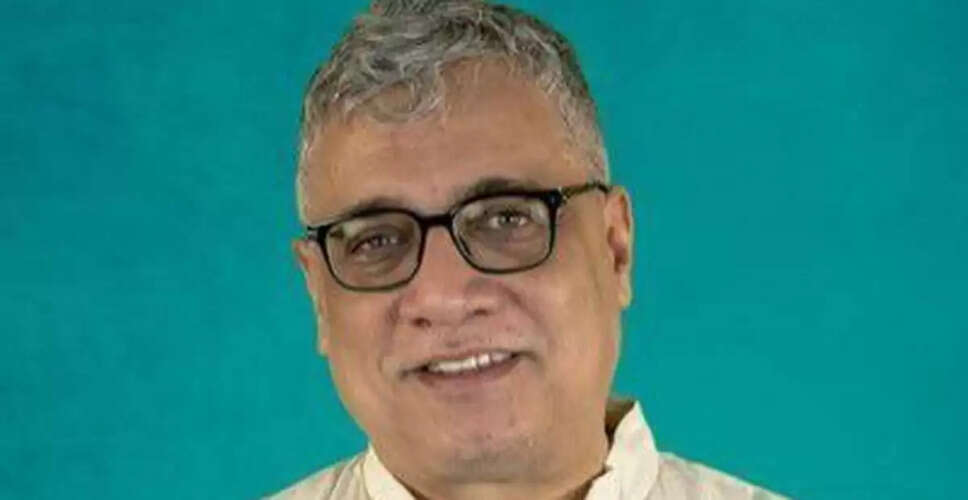
Derek O’Brien, a Rajya Sabha MP representing the Trinamool Congress, announced on Saturday that both his party and the Samajwadi Party will not put forward any candidates for the newly formed joint committee of Parliament. This committee is tasked with reviewing three significant bills aimed at preventing ministers, chief ministers, or the prime minister from retaining their positions if they are arrested.
As of now, the Samajwadi Party has not issued any formal statement regarding this decision.
The three proposed bills – namely the Constitution 130th Amendment Bill, the Jammu & Kashmir Reorganisation Amendment Bill, and the Government of Union Territories Amendment Bill – stipulate that any sitting minister, chief minister, or prime minister could be removed from office within a month if they are detained for 30 consecutive days due to an offense punishable by five years or more in prison.
These bills were introduced in the Lok Sabha on August 20, amidst significant opposition protests. Various opposition factions have labeled the legislation as 'draconian' and 'destructive.'
The bills have been assigned to a 31-member Joint Committee of Parliament, which includes 21 members from the Lok Sabha and 10 from the Rajya Sabha.
In a blog post on Saturday, O’Brien criticized the proposed committee, referring to it as a 'farce.'
He remarked that joint parliamentary committees were initially designed as democratic tools, established through motions approved by both Houses of Parliament.
These committees were granted special powers, such as the ability to summon witnesses, request documents, and consult experts, to promote transparency and accountability to the public. However, O’Brien noted that this has changed since 2014, with the current government allegedly manipulating these committees.
He stated, 'Now, in the same committee that is supposed to ensure public accountability, procedures are overlooked, opposition amendments are dismissed, and meaningful discussions are replaced with partisan rhetoric.'
O’Brien further asserted that the Modi coalition's push to establish this joint committee to review an 'unconstitutional bill' is merely a distraction from the ongoing special intensive revision of voter rolls in Bihar. 'Someone needed to call a stunt a stunt. I am glad we did,' he added.
This special revision process requires individuals whose names were absent from the 2003 voter list to provide proof of their eligibility to vote.
Numerous opposition parties have expressed concerns that this process could lead to the disenfranchisement of many voters, as they may struggle to present the required documentation.