
Transforming Indian Politics: The Push for Women's Reservation
The Modi government's initiative to implement women's reservation in the Lok Sabha is set to transform Indian politics. With plans to increase the number of seats from 543 to 816, approximately 33% will be reserved for women, significantly altering the political landscape. This ambitious proposal aims for implementation by the 2029 elections, but faces challenges such as the need for constitutional amendments and opposition consensus. If successful, this reform could mark a historic shift in representation, making women's voices central to governance in India. Explore how this initiative could redefine political strategies and empower women across the nation.
| Mar 24, 2026, 11:14 IST
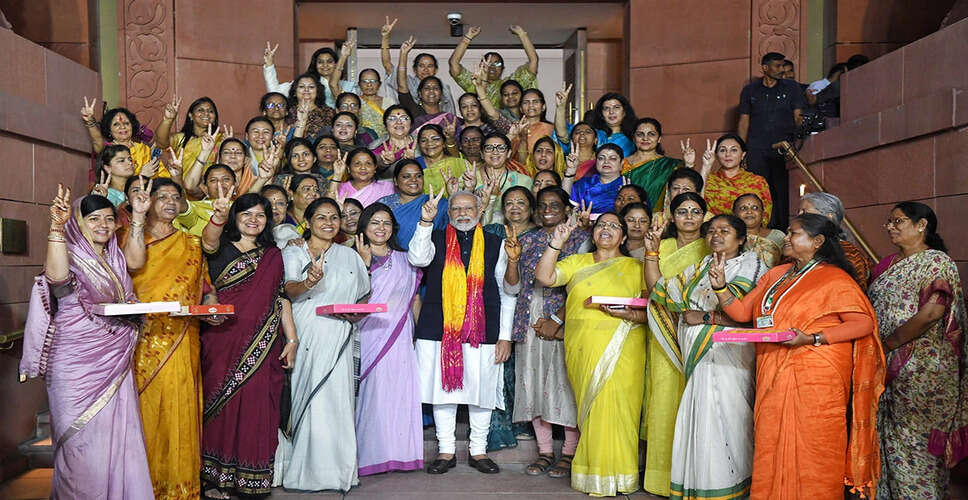
A Pivotal Moment in Indian Politics
Indian politics is at a significant crossroads as the Modi government accelerates efforts to implement women's reservation, sparking a nationwide debate and igniting fresh hopes among half the population. According to the latest proposal, the total number of Lok Sabha seats could increase from 543 to 816, allowing for approximately 33 percent of these seats to be reserved for women.
Potential Changes in Parliament
If this proposal is enacted, the composition of Parliament will undergo a dramatic transformation. Currently, there are 543 members in the Lok Sabha, but under the new arrangement, this number could rise to 816. This change would mean that around 273 seats would be designated for women. Consequently, the majority threshold would also increase to 409, fundamentally altering the political landscape and strategies for forming a government. This initiative is not merely about increasing numbers; it represents a significant step towards making India's democratic framework more inclusive.
Legislative Steps Ahead
Reports indicate that the Modi administration is preparing to introduce at least two crucial bills to facilitate this change: one related to delimitation and the other concerning a constitutional amendment. Achieving a constitutional amendment will require a two-thirds majority in both houses of Parliament, which is why the government is actively seeking consensus with the opposition. Ongoing meetings between Union Home Minister Amit Shah and opposition leaders are seen as part of this strategy.
Looking Towards the 2029 Elections
The primary objective of this entire initiative is the upcoming general elections in 2029. The government aims to implement women's reservation by that election. Plans are underway to expedite the delimitation process and utilize census data, with some proposals suggesting that the process should be based on the 2011 census. An increase in the number of MPs from each state will alter political dynamics significantly. For instance, many states may witness a substantial rise in their current seat allocations, potentially reshaping the strategies of regional parties and electoral equations.
Challenges Ahead
However, the path to achieving this goal is fraught with challenges. The need for a majority for constitutional amendments, opposition consensus, the complexities of delimitation, and conflicting political interests all pose significant hurdles. Additionally, balancing representation for women from Scheduled Castes and Scheduled Tribes within the reservation framework remains a critical issue.
A Historic Reform in the Making
There is no doubt that if this plan is fully realized, it could represent the most significant political reform in independent India’s history. Currently, women's representation in the Indian Parliament is relatively low, despite them constituting nearly half of the country's population. Thus, a Parliament with 816 seats would not just be a numerical increase but a symbol of a new India where women's voices are central to power. The focus now shifts to whether the Modi government can successfully implement this ambitious plan with political consensus. However, it is clear that this initiative for women's reservation is poised to steer Indian politics in a new direction, with its impact likely resonating for decades to come.