
Transforming India: The Role of Universities in National Development through Panch Parivartan

A Historic Transition for India
India is currently navigating a significant historical transition, where it is essential to not only focus on economic growth and scientific advancement but also to reinforce social awareness, cultural identity, family values, environmental responsibility, and civic duties. The true progress of a nation is not solely defined by its economic wealth, infrastructure, or technological achievements, but also by the sensitivity, responsibility, inclusiveness, self-reliance, and environmental consciousness of its citizens. A crucial concept to actualize this comprehensive national vision is Panch Parivartan, which encompasses five key dimensions: social harmony, family enlightenment, environmental protection, self-awareness, and civic duty. These five transformations are not isolated activities; rather, they serve as complementary foundations for social and national reconstruction. The core message of Panch Parivartan is that nation-building is not solely the responsibility of governments, institutions, or policies; it is a collective responsibility of every individual, family, society, and educational institution. In this context, the role of universities becomes paramount, as they are not merely degree-awarding institutions but centers of national consciousness that shape ideas, values, personalities, and future citizens.
1. Social Harmony: Promoting Unity through Education
Social harmony goes beyond the absence of social discrimination; it involves establishing the dignity of every individual, equal opportunities, mutual respect, and a shared national identity. It is crucial to bridge the gaps that exist based on caste, language, region, economic status, gender, or other social factors. Universities can initiate innovative measures in this direction:
a. Harmony Dialogue Forum: Regular dialogues should be organized within each department among students, teachers, social workers, and representatives from various communities to discuss social issues and develop a collective understanding of solutions.
b. Educational Model of Ek Bharat–Shreshtha Bharat: Comparative studies and student exchange programs focusing on the languages, literature, folk traditions, history, cuisine, and cultural heritage of different states should be conducted.
c. Promoting Unity through Literature and Culture: Incorporating comparative literature, translation studies, folk literature, saint literature, and tribal literature into the curriculum to familiarize students with India's pluralistic cultural consciousness.
d. Shared Social Responsibility: University students should engage with marginalized rural and urban communities in activities related to education, health awareness, digital literacy, and social development.
e. Inclusive Campus Campaign: Create an environment on campus where every student experiences equal respect, opportunities, and participation.
Maharshi Dayanand Saraswati University, Ajmer is expanding its academic and social role in this direction. A special study and dialogue program has been developed that connects the ideas of Maharshi Dayanand Saraswati regarding equality, rationality, education, human dignity, and social reform with contemporary social challenges.
2. Family Enlightenment: Making Families the First School of Social Values
In Indian civilization, the family is not just a group of individuals but the fundamental institution for the transfer of values, emotions, cooperation, and life principles. Modern lifestyles, technological dependence, increasing generational gaps, consumerism, and loneliness have posed new challenges to familial relationships. The goal of family enlightenment is to empower the family institution, enhance mutual communication, and cultivate responsible and sensitive citizens in the new generation. Universities can undertake the following initiatives:
a. Family Dialogue Program: Designate one day each month as Family Dialogue Day, encouraging students to spend time with family members, share experiences, and establish intergenerational communication.
b. Knowledge Exchange between Generations: Encourage students to document the life experiences, traditional knowledge, folklore, and cultural heritage of their grandparents and senior family members.
c. Digital Discipline: Conduct awareness programs on the prudent use of mobile phones, social media, and artificial intelligence within families, ensuring technology complements family communication.
d. Family Values and Life Skills: Include activities related to empathy, family responsibilities, gender sensitivity, respect for the elderly, and emotional understanding in the curriculum.
e. Family and Society Study Center: Promote interdisciplinary research on family, social relationships, generational changes, and Indian family traditions within the university.
Maharshi Dayanand Saraswati University has integrated family enlightenment with its value enhancement courses, yoga, Indian knowledge traditions, and student welfare activities, aiming to harmonize traditional values with modern life requirements.
3. Environmental Protection: Cultivating a Culture of Co-existence with Nature
Climate change, water scarcity, air pollution, biodiversity loss, and uncontrolled exploitation of natural resources present serious challenges to human civilization. Environmental protection cannot be limited to tree planting or cleanliness campaigns; it requires a change in lifestyle, consumption, and development concepts. In Indian thought, nature is not merely an object of consumption but an integral part of life. Respect for earth, water, fire, air, and sky is embedded in the core consciousness of Indian knowledge traditions. Universities should adopt the following paradigms in this direction:
a. Zero Carbon Emission Campus: Each university should annually assess its carbon emissions and set time-bound goals for energy conservation, solar energy, green transportation, and energy-efficient buildings.
b. One Student–One Tree–One Year Responsibility: Assign students the responsibility of planting, nurturing, and developing trees, measuring success not by the number of plants but by their survival rate.
c. Water Sovereignty Campaign: Make rainwater harvesting, groundwater recharge, water budgeting, and wastewater reuse mandatory environmental activities for universities.
d. Zero Waste University: Eliminate single-use plastics, implement waste segregation, organic composting, and recycling as part of institutional practices.
e. Environmental Research and Local Solutions: Initiate special research projects on the Aravalli mountain range, desertification, traditional water conservation, local flora, medicinal plants, and the ecology of Rajasthan.
f. Nature-Based Learning: Conduct regional studies and community projects related to the environment in each department.
Maharshi Dayanand Saraswati University has advanced initiatives like the zero carbon emission campus concept and the development of khejri gardens. Strengthening the culture of trees, green spaces, and nature conservation on campus is a significant step in this direction. Now, it is essential for universities to transform their environmental efforts into a comprehensive green campus and green society campaign, where each affiliated college adopts a village or urban area to develop ideals for water, greenery, cleanliness, and biodiversity conservation.
4. Self-Awareness: Reviving Indian Knowledge, Culture, and Self-Reliance
The fourth dimension of Panch Parivartan is self-awareness. This involves not just pride in one's cultural identity but understanding and creatively utilizing one's civilization, languages, knowledge traditions, history, thought processes, and strengths in contemporary contexts. India's ancient knowledge tradition encompasses a rich repository of philosophy, mathematics, astronomy, medicine, agriculture, linguistics, architecture, yoga, environmental thought, and ethics. It is essential to bring this knowledge into dialogue with modern science, technology, and research methodologies. Universities can implement the following transformative initiatives:
a. Integrated Inclusion of Indian Knowledge Traditions: Integrate Indian knowledge traditions not as a separate subject but across all faculties. For instance, Indian leadership thought in management, ancient scientific achievements in science, Indian poetics in literature, and traditional conservation methods in environmental studies.
b. Knowledge Creation in Indian Languages: Encourage research, translation, technical vocabulary, and digital content development in Indian languages. The democratization of knowledge is only possible when it is available in the languages of society.
c. Indigenous Innovation and Entrepreneurship: Promote startups based on local resources, handicrafts, agricultural products, traditional techniques, and local industries.
d. Maharshi Dayanand Study and Research: Encourage modern research on the thoughts of Maharshi Dayanand Saraswati related to truth, reasoning, scientific perspective, social reform, education, and self-reliance.
e. Local to Global Knowledge Paradigm: Scientifically document Rajasthan's water management, folk architecture, traditional agriculture, folk medicine, handicrafts, and cultural heritage for national and international presentation.
f. Artificial Intelligence and Indian Knowledge Traditions: Digitally archive rare manuscripts, translate Indian languages, preserve folk literature, and systematically document traditional knowledge through artificial intelligence.
Maharshi Dayanand Saraswati University has developed a distinctive identity in this direction. The university's Vedic Gurukul concept, yoga, Indian knowledge traditions, and the thoughts of Maharshi Dayanand Saraswati are being integrated with modern research and technological innovation to create a unique system for studying Indian knowledge and civilization. Here, self-awareness is not a mere repetition of the past but a process of building the future with the knowledge of the past.
5. Civic Duty: Awareness of Responsibilities Alongside Rights
The success of democracy does not solely depend on the rights granted to citizens but also on how diligently they fulfill their duties. The fundamental duties outlined in Article 51A of the Constitution instill a sense of responsibility towards the nation, society, environment, public property, scientific outlook, and national unity in every citizen. Universities should not confine civic duties to textbooks but make them a part of daily practice. The following innovations can be beneficial:
a. Responsible Citizen Program: Each student should be required to complete at least one community service project during their academic tenure.
b. Practicing the Constitution: Organize lectures on the Constitution, fundamental rights, and duties, along with activities based on real-life situations.
c. Public Property is Our Shared Responsibility: Foster a sense of protection for public property, cleanliness, traffic discipline, and prudent use of public resources among students.
d. Digital Citizenship: Incorporate responsible behavior on social media, identification of misleading news, cybersecurity, digital ethics, and verification of information into civic education.
e. Democratic Participation: Provide opportunities for students to engage in parliamentary sessions, youth policy dialogues, village assembly participation, and communication with local administration.
f. Duty-Based Campus Culture: Make punctuality, honesty towards work, discipline, transparency, and preservation of institutional property integral to the university's work culture.
Maharshi Dayanand Saraswati University organizes its student welfare programs, National Service Scheme, yoga, cleanliness, and community participation under a shared civic responsibility campaign.
6. Maharshi Dayanand Saraswati University: A Living National Model of Panch Parivartan
Maharshi Dayanand Saraswati University, Ajmer has ample potential to develop Panch Parivartan not just as an ideological campaign but as an institutional work culture. The university's identity should be determined not only by its academic outcomes but also by its social impact, cultural consciousness, environmental commitment, and citizen development. A comprehensive Maharshi Dayanand Saraswati University Panch Parivartan campaign can be initiated, linking all five dimensions to the university's activities. Some specific innovations for this campaign could include:
a. Panch Parivartan Academic Credit Model: Develop possibilities for linking community participation, environmental protection, social harmony, family values, and civic duties to academic credits through value enhancement and experiential learning, in accordance with the National Education Policy.
b. One Department–One Social Change Project: Each department should adopt an annual social project relevant to its subject. For example, the Hindi department could focus on preserving folk literature, the science department on water testing, the commerce department on enhancing financial literacy, the management department on promoting local entrepreneurship, and the education department on spreading value-based education in schools.
c. Panch Parivartan Innovation Center: Establish an interdisciplinary center within the university where students, researchers, teachers, social organizations, industries, and local administration collaborate to develop practical solutions to social problems.
d. Panch Parivartan Village and City Campaign: Encourage affiliated colleges to work in rural and urban areas in accordance with the five transformations. Each year, their social impact should be evaluated.
e. Panch Parivartan Index: Develop an annual index to measure social harmony, environmental performance, civic participation, cultural awareness, and community responsibility. This will allow for assessing not just the number of activities but the actual changes achieved.
f. Panch Parivartan Digital Progress Board: Create a digital platform on the university's website to document the activities, achievements, impacts, and best innovations of departments, colleges, and students.
g. Panch Parivartan Annual Festival: Organize a national-level Panch Parivartan conference at the university each year, inviting representatives from academia, policymakers, social organizations, youth, and the industry.
7. Universities: From Centers of Knowledge to National Character Building
Today, the greatest challenge for universities is to ensure that education does not merely become a means to obtain employment. While vocational education is necessary, the purpose of education is much broader. It should also prepare citizens who are discerning, sensitive, self-reliant, ethical, and responsible. Panch Parivartan provides a practical direction for this broader objective. It connects education to society, knowledge to life, culture to modernity, and individual achievement to collective responsibility.
Institutions like Maharshi Dayanand Saraswati University can become effective carriers of this transformation. The university campus should serve as a vibrant example where social harmony is evident in practice, respect for family is part of the lifestyle, environmental protection is an institutional commitment, Indian knowledge traditions are linked to modern research, and civic duties are reflected in the behavior of every individual.
In this direction, the participation of the Vice-Chancellor, teachers, staff, students, parents, alumni, and affiliated colleges is essential. Panch Parivartan should not be a program of a single department or committee but a shared commitment of the entire university.
In conclusion: The dream of a developed India is not merely about building a powerful nation economically and technologically. It envisions an India that is knowledgeable yet value-driven, modern yet rooted in its traditions, prosperous yet sensitive, and powerful yet responsible. Panch Parivartan presents the social and moral foundation for this comprehensive national development. Social harmony connects society, family enlightenment strengthens values, environmental protection secures future generations, self-awareness fosters cultural confidence, and civic duty strengthens democracy. Universities must lead this transformation, becoming not just disseminators of knowledge but active participants in societal reconstruction. Maharshi Dayanand Saraswati University, driven by the inspiration of truth, reason, education, and social reform, can shape Panch Parivartan into an institutional movement, extending positive change from its campus to villages, towns, cities, and the broader society.
Real change will occur when Panch Parivartan transcends university programs to become part of students' behavior, family values, societal work culture, and the collective character of the nation. Ultimately, the essence of Panch Parivartan lies in five resolutions: a harmonious society, a cultured family, a protected nature, a nation filled with self-respect, and responsible citizens. This is the significance of Panch Parivartan and the path to building a developed, self-reliant, harmonious, and empowered India.
Conclusion
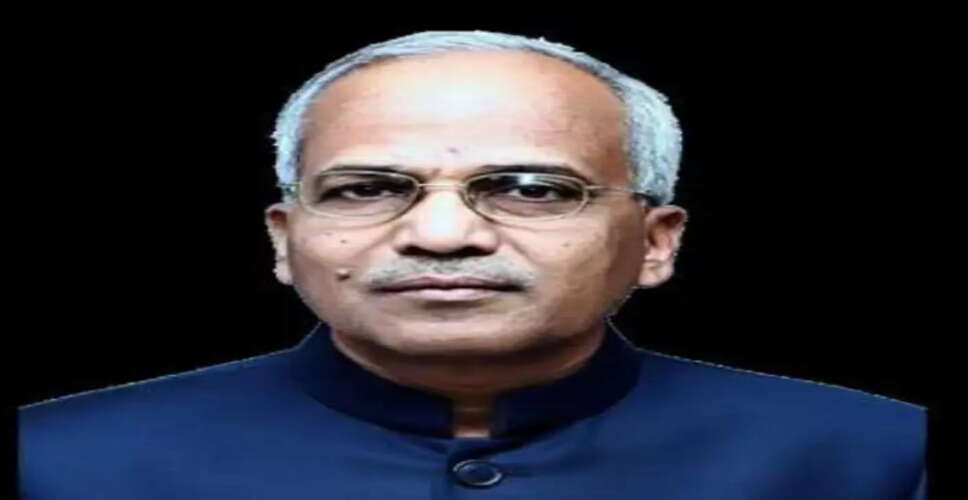
Prof. Suresh Kumar Agarwal
Vice-Chancellor
Maharshi Dayanand Saraswati University, Ajmer