
Transformative Changes in Assam's Tea Gardens: A New Era for Workers
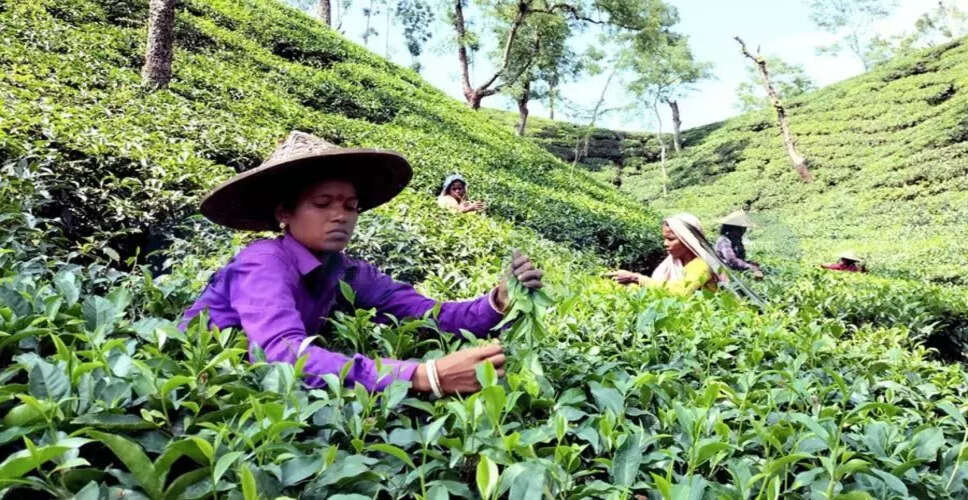
A New Dawn for Assam's Tea Garden Workers
Doomdooma, Jan 1: For almost 200 years, the tea plantations in Assam have flourished thanks to the hard work and dedication of countless laborers who have made these gardens their home, often without ownership. However, a significant transformation is currently taking place across these lush landscapes, bringing with it job opportunities, land rights, and a renewed sense of hope.
In an open discussion, Assam Cabinet Minister Rupesh Gowala highlighted that the tea garden communities are experiencing an unprecedented wave of inclusion under Chief Minister Himanta Biswa Sarma's leadership.
He emphasized, "No prior Chief Minister has prioritized the tea garden sector to this extent," pointing out a change that many believe is long overdue.
Central to this transformation is the introduction of a three percent reservation, which has, for the first time, opened government job opportunities for the youth from tea gardens.
Gowala stated, "This is not just a policy change; it represents dignity. After years of being marginalized, young men and women from tea gardens are now finding employment and dreaming of futures beyond daily wage work.
Reflecting on the historical journey of the tea tribes and Adivasi communities, the minister noted their arrival in Assam nearly two centuries ago with nothing. For generations, they lived in accommodations provided by garden management, lacking land or personal assets.
He remarked, "An entire community existed without ownership. Thus, the decision to allocate land to tea garden workers is both historic and transformative in its implications."
Under this new initiative, each qualified tea garden worker will receive up to one bigha of land. However, this land cannot be sold for 20 years, and even after that, it can only be transferred within the tea garden community, a measure designed to protect workers from exploitation and distress sales.
As the Minister for Labour Welfare, Tea Tribes, and Adivasi Welfare, Gowala acknowledged that wage issues remain a critical concern. He described it as a 'burning issue' and revealed that the government has already begun the process to raise tea workers' wages, with formal actions expected to commence in January.
Currently, daily wages are set at Rs 228 in the Barak valley and Rs 250 in the Brahmaputra valley. "We are optimistic that the new year will bring improved wages and relief for the workers," he added.
Gowala, who is also the central general secretary of the Assam Chah Mazdoor Sangha, the largest organization for tea garden laborers in the Brahmaputra valley, expressed confidence that other long-standing issues faced by tea garden workers would be resolved gradually.
The sweeping changes in Assam's tea gardens, from job reservations to land ownership and wage reforms, signify more than mere administrative adjustments. They represent a pivotal moment in a centuries-old narrative, where the laborers who have nurtured Assam's tea are finally being recognized, empowered, and granted a rightful stake in the land they have long inhabited.