
Tragic Loss: Over 200 Parrots Die from Food Poisoning in Madhya Pradesh
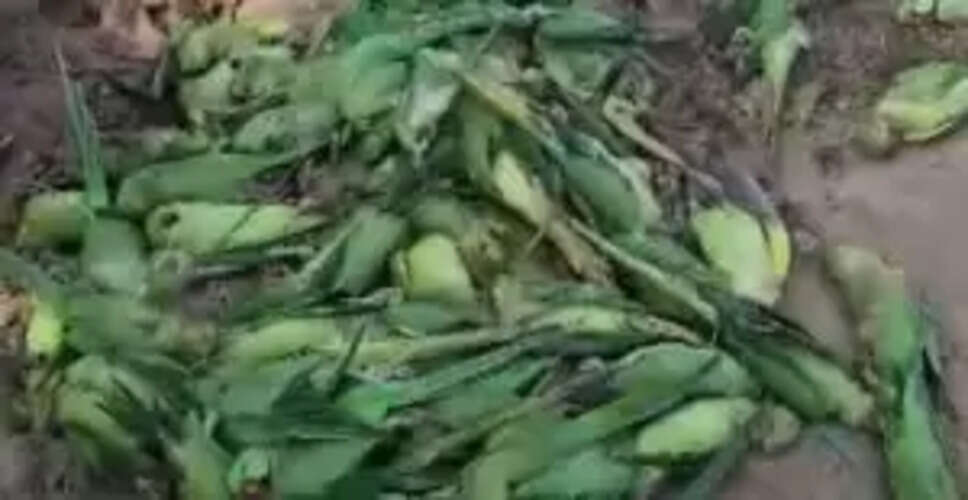
Mass Parrot Deaths in Khargone District
Khargone: In a distressing incident, officials reported that more than 200 parrots have succumbed to food poisoning along the banks of the Narmada River in Madhya Pradesh's Khargone district.
The deceased birds were discovered over the past four days near an aqueduct bridge in the Badwah region, and a post-mortem examination has confirmed that bird flu is not the cause of death.
During rescue efforts, some parrots were found alive, but the toxicity of their food was so high that they died shortly after being rescued, according to District Wildlife Warden Tony Sharma.
The alarming deaths sparked fears of a bird flu outbreak in the community; however, veterinary assessments revealed no signs of the virus. In response, forest department officials have prohibited feeding near the aqueduct bridge and have stationed personnel to enforce this ban.
Samples from the birds' viscera have been sent to Jabalpur for additional testing, as stated by officials.
Veterinary department representatives indicated that food poisoning and an inadequate diet were responsible for the fatalities.
For the last four days, teams from the veterinary and forest departments, along with the wildlife division, have been monitoring the area following alerts from local residents.
Veterinarian Dr. Manisha Chauhan, who performed the post-mortems, noted that symptoms consistent with food poisoning were present in the parrots, with no evidence of bird flu.
She emphasized that people often unknowingly provide harmful food to birds, which can be detrimental to their health.
Veterinary extension officer Dr. Suresh Baghel reported that rice and small stones were found in the stomachs of the deceased birds.
The preliminary assessment suggests that the deaths are linked to improper feeding practices, with pesticide exposure from feeding in treated fields and contaminated water from the Narmada River being potential factors.
Officials indicated that visitors feeding cooked or leftover food to the birds may have contributed to this tragic situation.