
Tragic Death of Election Officer in West Bengal Highlights Work Pressure Issues
Suicide of Booth-Level Officer Raises Concerns
A booth-level officer tragically took his own life in Bankura district, West Bengal, on Sunday, as reported by local news sources.
Haradhan Mandal, aged 53, left a note indicating that the overwhelming stress from the intensive revision of electoral rolls was a contributing factor to his decision, according to police officials who spoke on condition of anonymity.
His family discovered his body in a classroom where he served as headmaster.
Mandal was responsible for booth number 206 in Rajakata village, and his relatives expressed concerns about his mental health, citing the excessive demands of the voter roll revision process.
His son, Soham Mandal, mentioned that his father struggled with various health issues but continued to work late into the night, often until 3 or 4 AM, which added to his mental burden.
Soham stated that his father could no longer endure the psychological pressure.
Mandal's wife, Mala, claimed that he did not receive adequate support for the voter roll revision tasks, which she believes contributed to his tragic decision.
His body has been sent for a post-mortem examination, as reported by other media outlets.
This incident marks at least ten suicides among booth-level officers and two deaths attributed to strokes, all linked to work-related stress during the electoral roll revision in West Bengal, Uttar Pradesh, Kerala, and Rajasthan.
The Election Commission is currently overseeing the revision of electoral rolls across 12 states and Union Territories, with booth-level officers beginning the distribution of enumeration forms on November 4.
So far, approximately 3.6 crore electors have been removed from the rolls in the ongoing exercise, with the draft electoral roll for Uttar Pradesh set to be published on December 31.
The final electoral rolls for all involved states and Union Territories are expected to be released on February 14.
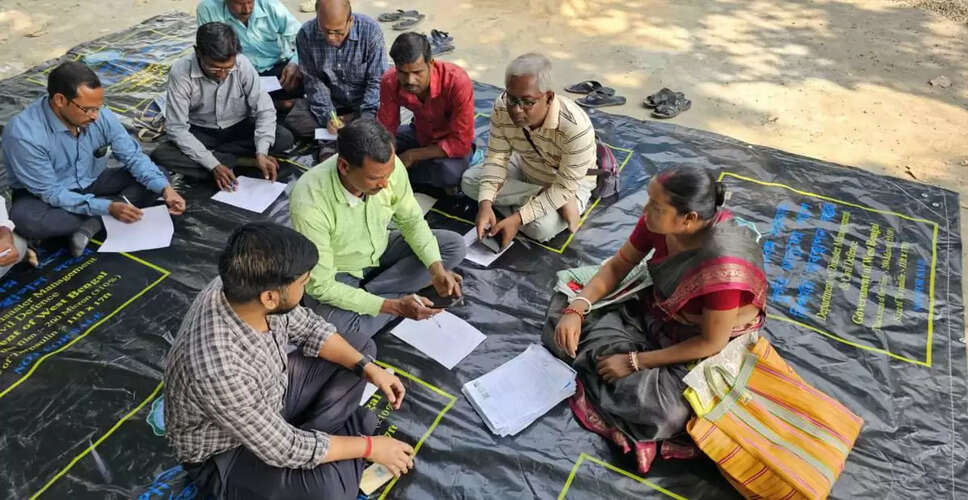
Typically, the responsibility of preparing voter lists falls to primary school teachers and health workers, who are tasked with verifying the identities of new voters and updating records for those who have passed away or relocated.
These individuals are referred to as booth-level officers and are accountable for maintaining the voter list for a single polling booth, which can include up to 1,500 registered voters.
In response to Mandal's death, Trinamool Congress leader Abhishek Banerjee criticized the electoral roll revision process, stating it should have been conducted methodically rather than hastily.
On the other hand, Mangal Pandey, the Bharatiya Janata Party’s observer for West Bengal, attributed the pressure on booth-level officers to the ruling party's leadership, asserting that this has resulted in several unfortunate incidents.
He emphasized that the state government and the Trinamool Congress must be held accountable for these tragic events.