
Tragic Air India Plane Crash: Investigations Reveal Fuel Switch Failure
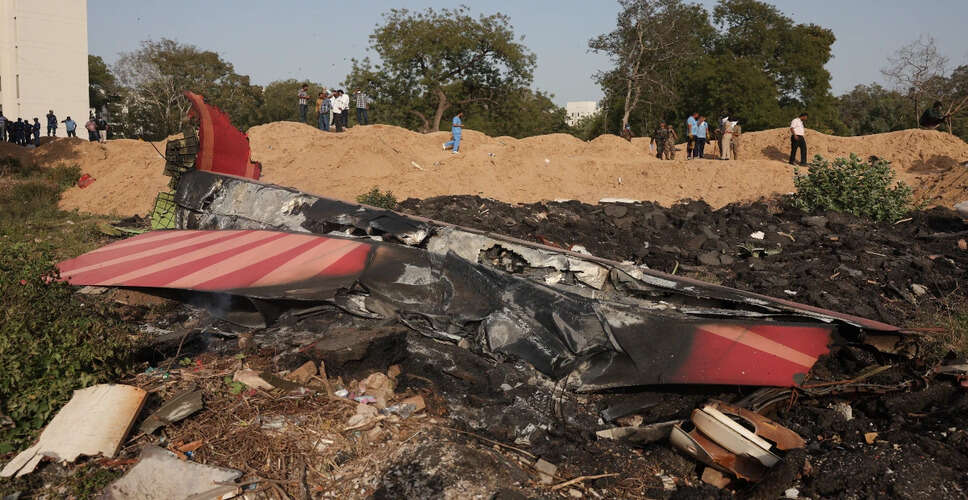
Overview of the Air India Incident
The recent Air India plane crash in Ahmedabad is being described as one of the most tragic aviation disasters to date. Questions are arising about how this incident occurred, leading to the loss of 270 lives, and whether the airline is jeopardizing passenger safety. Preliminary investigation reports indicate that the crash was caused by the fuel switch being turned off. New information has emerged revealing that Air India replaced the Throttle Control Module (TCM) of the Boeing 787-8 aircraft twice in the past six years, following directives issued by Boeing in 2019.
In a statement, Air India confirmed its cooperation with the ongoing investigation. The TCM is responsible for controlling fuel flow.
Details from the Investigation Report
A report released by the Aircraft Accident Investigation Bureau (AAIB) on Saturday stated that both engines' fuel control switches transitioned from 'run' to 'cutoff' within a second, resulting in a rapid descent of the aircraft.
This situation created confusion in the cockpit of Air India flight 171. The cockpit voice recording revealed one pilot questioning the other about why the fuel switch was turned off, to which the second pilot denied having done so. The aircraft crashed shortly after taking off from Ahmedabad on June 12, resulting in the deaths of 260 individuals, including 241 passengers.
Only one passenger survived the incident. The AAIB released its preliminary report late Friday. Sources informed that Boeing had issued a revised Maintenance Planning Document (MPD) for all operators of the Dreamliner in 2019, mandating the replacement of the TCM after every 24,000 flight hours.
Air India's Response and Future Cooperation
According to sources, Air India replaced the TCM of the aircraft in 2019 and again in 2023, following the MPD guidelines. Specific details regarding the MPD are still unclear. An Air India spokesperson stated that the airline is working closely with regulators and all involved parties.
The spokesperson mentioned, 'As the investigation progresses, we are fully cooperating with the AAIB and other authorities.' They also noted that due to the active nature of the investigation, they are unable to comment on specific details, emphasizing that all inquiries should be directed to the AAIB.
In response to questions sent to Boeing, a company spokesperson reiterated their commitment to cooperating with the investigation and adhering to the protocols set by the International Civil Aviation Organization.